How Aircraft Landing Gear Retracts?
By Aviation Explained · 2026-10-31
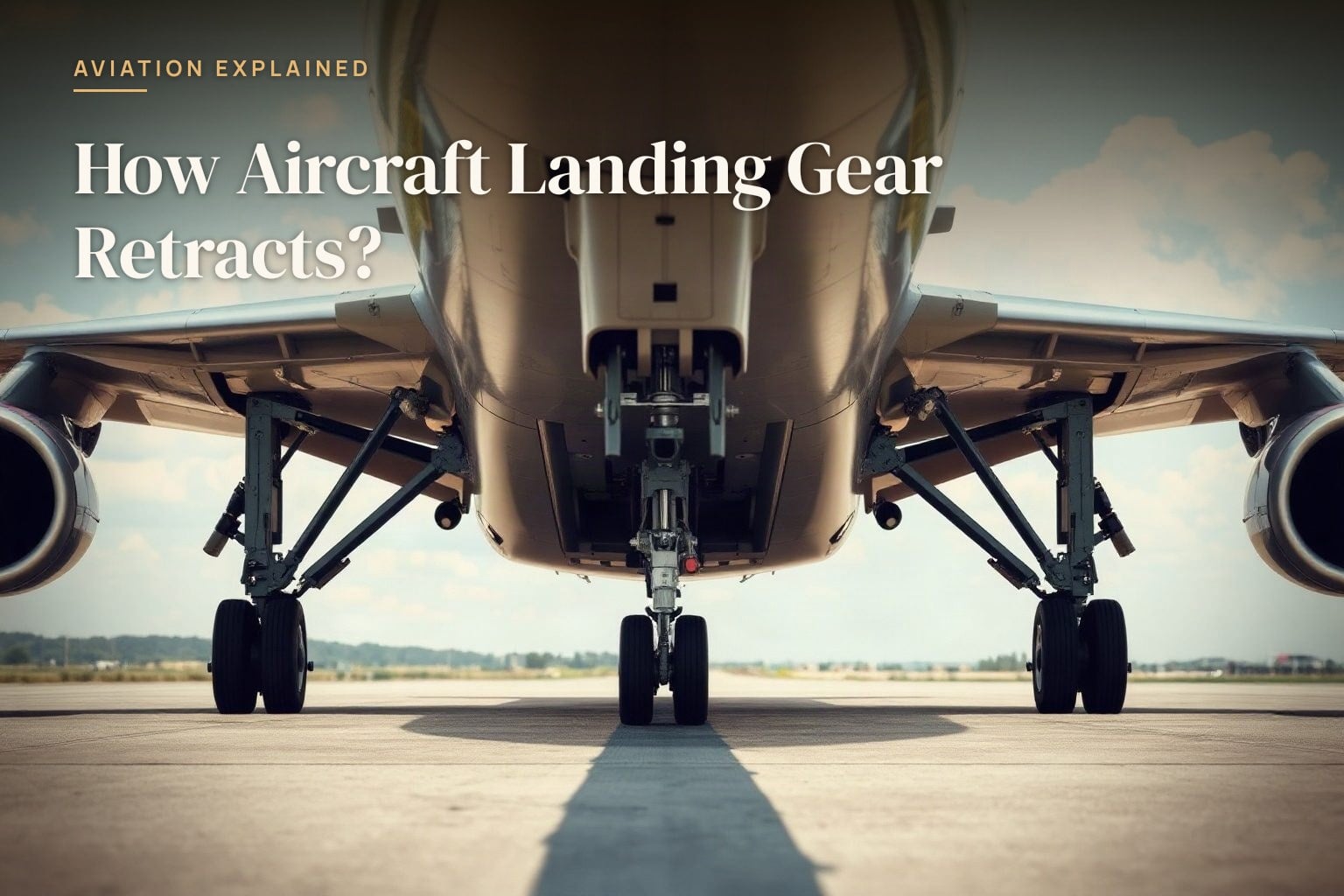
When a plane lifts off the runway, one of the first things pilots do is retract the landing gear. It seems simple, but the mechanism that folds wheels, tires, and struts back into the fuselage is a masterpiece of mechanical engineering designed to fight one of flying's biggest invisible enemies: drag.
The Problem Gear Creates
Landing gear sticking out in the wind is like running on a bicycle with the kickstand down. Aerodynamic drag increases dramatically, forcing engines to work harder and burn more fuel to maintain speed and climb. For a long-haul flight burning thousands of gallons, that penalty adds up fast. Even on short flights, retracting the gear is about fighting air resistance to get the plane up efficiently.
How The Retraction Works
The landing gear is powered by hydraulic fluid, the same pressurized liquid that powers aircraft brakes, flight control surfaces, and dozens of other systems. When the pilot or autopilot commands gear up after takeoff, hydraulic pumps send pressurized fluid through lines to hydraulic cylinders attached to each landing gear assembly. These cylinders act like muscle, extending and retracting on demand. The nose gear tucks straight up into the fuselage. The main landing gear on the wings has a more complex geometry, usually rotating inward and upward into wheel wells built into the wing structure or fuselage.
The Mechanical Sequence
The gear doesn't just collapse randomly. It's a choreographed sequence. First, the pilot raises the landing gear handle in the cockpit. This signals hydraulic solenoids, which are electromagnetic valves that direct pressurized fluid. Doors called gear doors open first to create space. Then the main landing gear cylinders fire, pulling the massive wheel assemblies up. Last, the nose gear retracts. A series of mechanical linkages and hinges guide each component along a precise path. Once fully retracted, the gear doors close, creating a smooth aerodynamic surface again.
Why Retraction Takes Time
You might notice gear doesn't snap up instantly. That's by design. The sequence takes roughly 20 to 40 seconds depending on the aircraft. Why? Because controlled motion prevents shock loads on the hydraulic system and the aircraft structure. Hydraulic flow rates are set deliberately to move the gear smoothly. Pressure relief valves limit force to safe levels. Rapid retraction would spike pressures, strain components, and shorten equipment life.
Safety Redundancy Built In
Because landing gear is literally life critical, retraction systems have backups. Most transport aircraft have multiple hydraulic systems, often three independent ones. Gear can retract on any of them. If all hydraulic power fails, standby systems exist. Some planes use a hand pump in the cockpit that lets pilots manually lower gear in emergencies. Others have gravity and air pressure methods. The gear is also mechanically locked in the down position on the ground, so it stays put at rest without power.
The Payoff