How Airspeed Indicators Actually Work?
By Aviation Explained · 2026-09-30
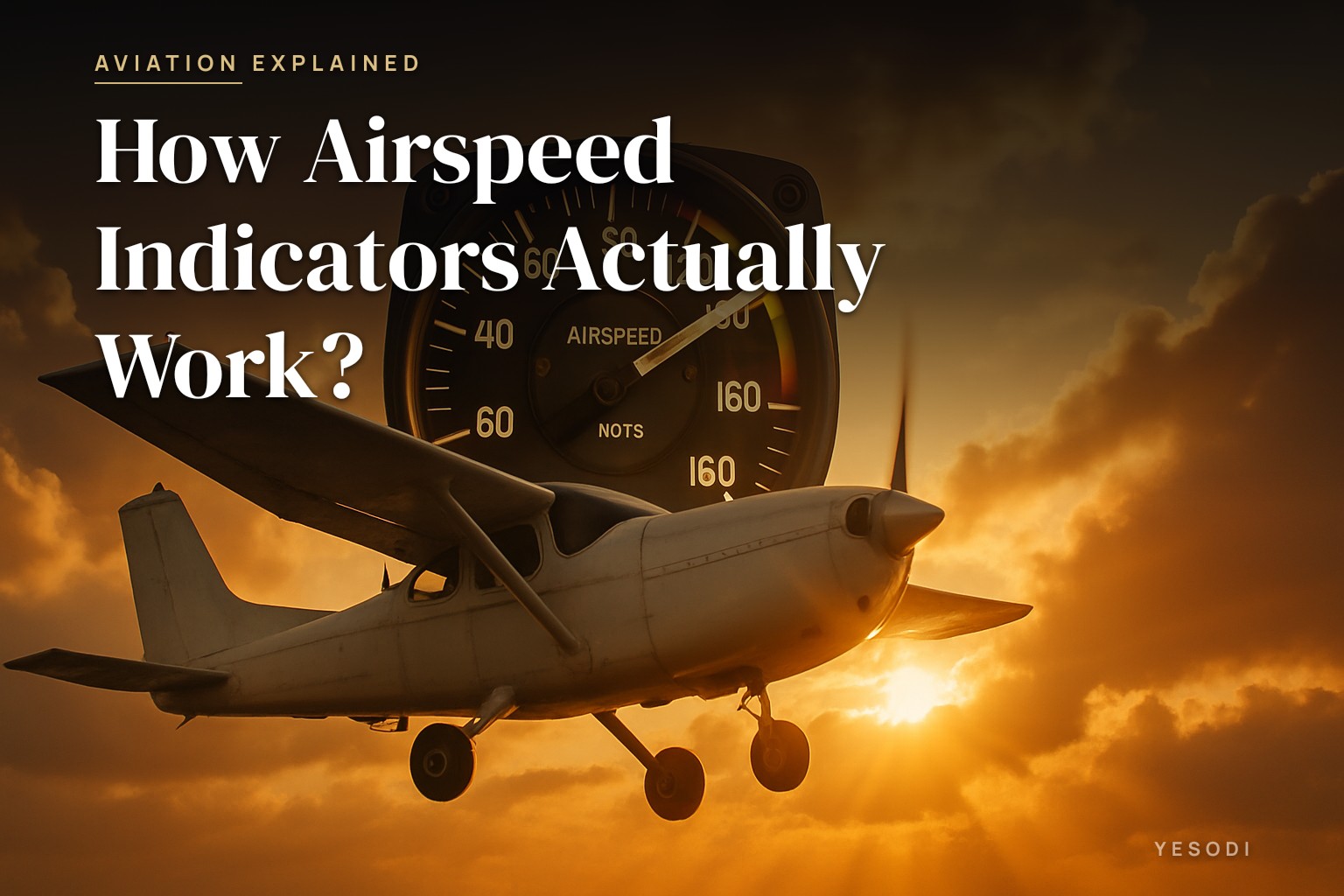
Every pilot watches one instrument more closely than almost any other during flight: the airspeed indicator. But here's the thing that surprises most people: it's not actually measuring how fast the plane is moving through the air. It's measuring pressure. And that pressure difference is what tells a pilot whether the wings are generating enough lift to stay airborne.
Here's how it works. At the very front of the aircraft, typically on the fuselage or wing, there are two small openings called pitot probes. One opening faces directly into the airflow. As the plane moves forward, air rams into this opening, and that ram air creates pressure. The second opening is positioned to measure static air pressure, the pressure of the still air around the plane. The pitot probe measures dynamic pressure, which is the pressure created by motion. The difference between these two pressures is what matters.
Inside the airspeed indicator, these two pressure lines feed into an instrument that measures that difference. As airspeed increases, the ram air pressure grows stronger while static pressure stays constant, so the difference widens. The gauge needle moves to show higher airspeed. It's basically a pressure gauge that's been calibrated and labeled in miles per hour or knots so pilots can read it instantly. The faster the plane pushes through the air, the greater that pressure difference becomes.
Why is this so critical to flying safely? Because airspeed tells a pilot two essential things. First, it tells whether the wings have enough airflow moving over them to generate lift. Every aircraft has a minimum airspeed, called the stall speed, below which the wings won't generate enough lift and the plane will fall. Second, it tells whether the plane is going too fast for its structure or control surfaces, which is called the never exceed speed. Pilots live in the safe window between these two numbers.
The clever part is that the airspeed indicator actually reads what's called indicated airspeed, which accounts for air density. At high altitude, the air is thinner, so ram pressure is lower even though the plane is flying at the same true airspeed through space. This is actually useful to pilots because what matters for lift and stall is how much air is flowing over the wing, which depends on the density of that air. So the instrument naturally gives pilots the information they actually need to fly safely.