How Amazon Bet on Losing Money?
By Business Stories · 2026-10-01
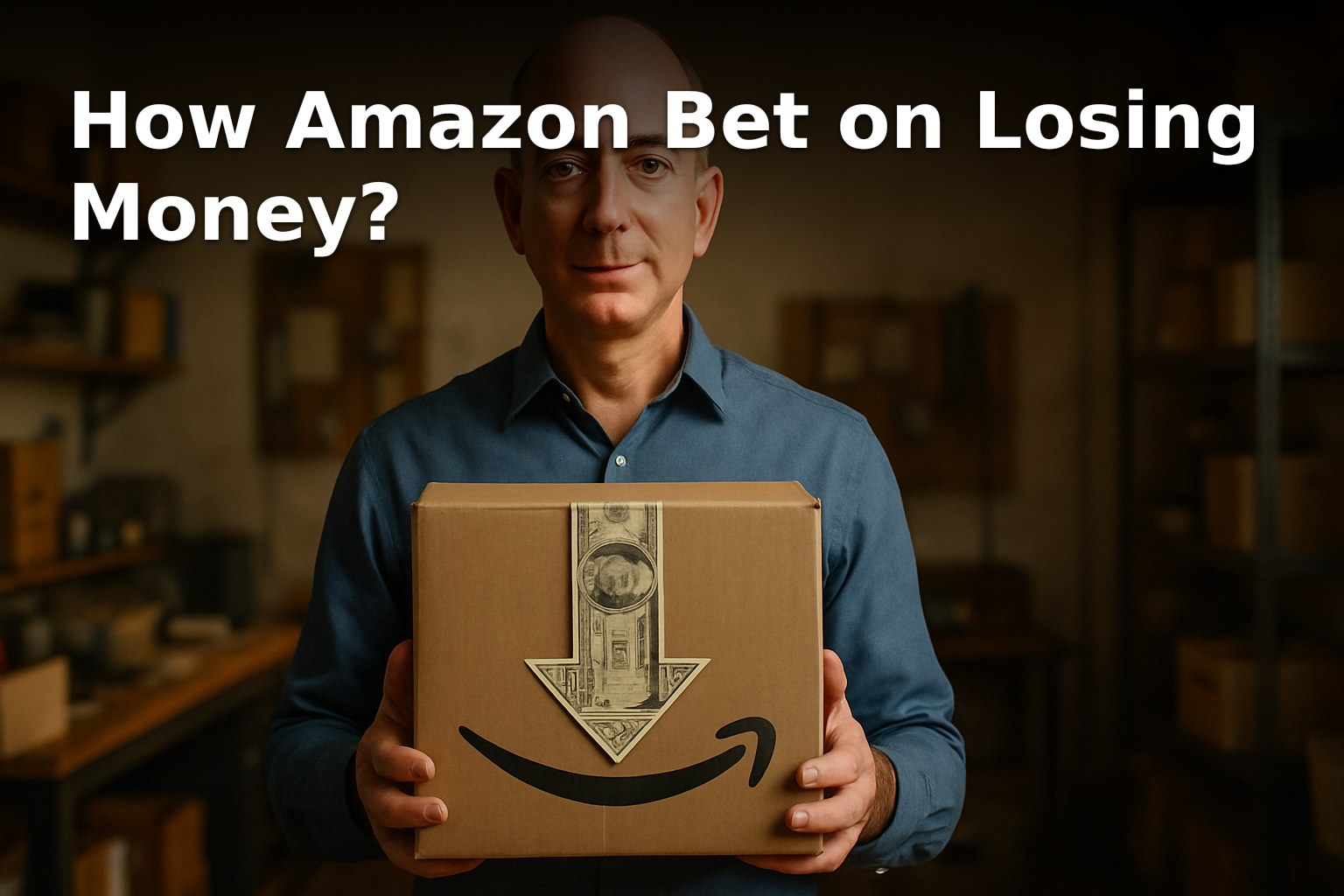
In 1997, Amazon was a three year old online bookstore burning cash. That year, Bezos wrote a letter to shareholders that became the most important business document of the era. He told investors something radical: we are not trying to make profit yet. We are trying to grow. We are trying to own the future. And we will lose money to do it.
The letter opened with a statement that still defines Amazon: "It's always Day 1." Bezos wrote that the company would focus on long term value creation over short term earnings. He promised shareholders losses would continue. Wall Street analysts were furious. Investors who wanted quarterly profits had to sell or accept a company playing a completely different game. Amazon's stock price was volatile and criticized for years because the numbers looked broken. The company was expanding into new categories, building infrastructure, investing in technology that wouldn't pay off for years. Every quarter showed losses. Every quarter Bezos doubled down.
This strategy was not accidental. Bezos understood that in a new market, the winner would be whoever could operate at the largest scale first and own customer relationships. Amazon needed to build that scale even if it meant losing money. They needed distribution centers in every region. They needed to offer fast shipping before anyone expected it. They needed customer service that set a new standard. None of this was profitable in the short term. All of it was essential for dominance later.
For fourteen years, Amazon operated at a loss or razor thin margins while competitors and Wall Street expected it to collapse. Then in 2002, something shifted. The infrastructure was built. The customer base was enormous. Suddenly, that same infrastructure could be profitably monetized. AWS, cloud services, and expanded categories all started generating real profit margins on top of that massive revenue base. The bet had worked completely. Investors who had held through the years of losses saw a company that was now both huge and profitable, a combination almost no one had achieved.
What made Bezos' strategy work was clarity of purpose and investor patience. He was crystal clear about the trade-off: we will lose money to build scale. He didn't hide losses or pretend they weren't happening. He explained why they mattered and what they were building toward. That honesty, paired with early revenue growth that showed the model could eventually work, kept enough shareholders aligned. The strategy changed how founders thought about business. You didn't have to be profitable immediately. You had to be honest about your path and have a believable plan for profitability at scale.