How Patagonia Gave Itself Away?
By Business Stories · 2026-09-29
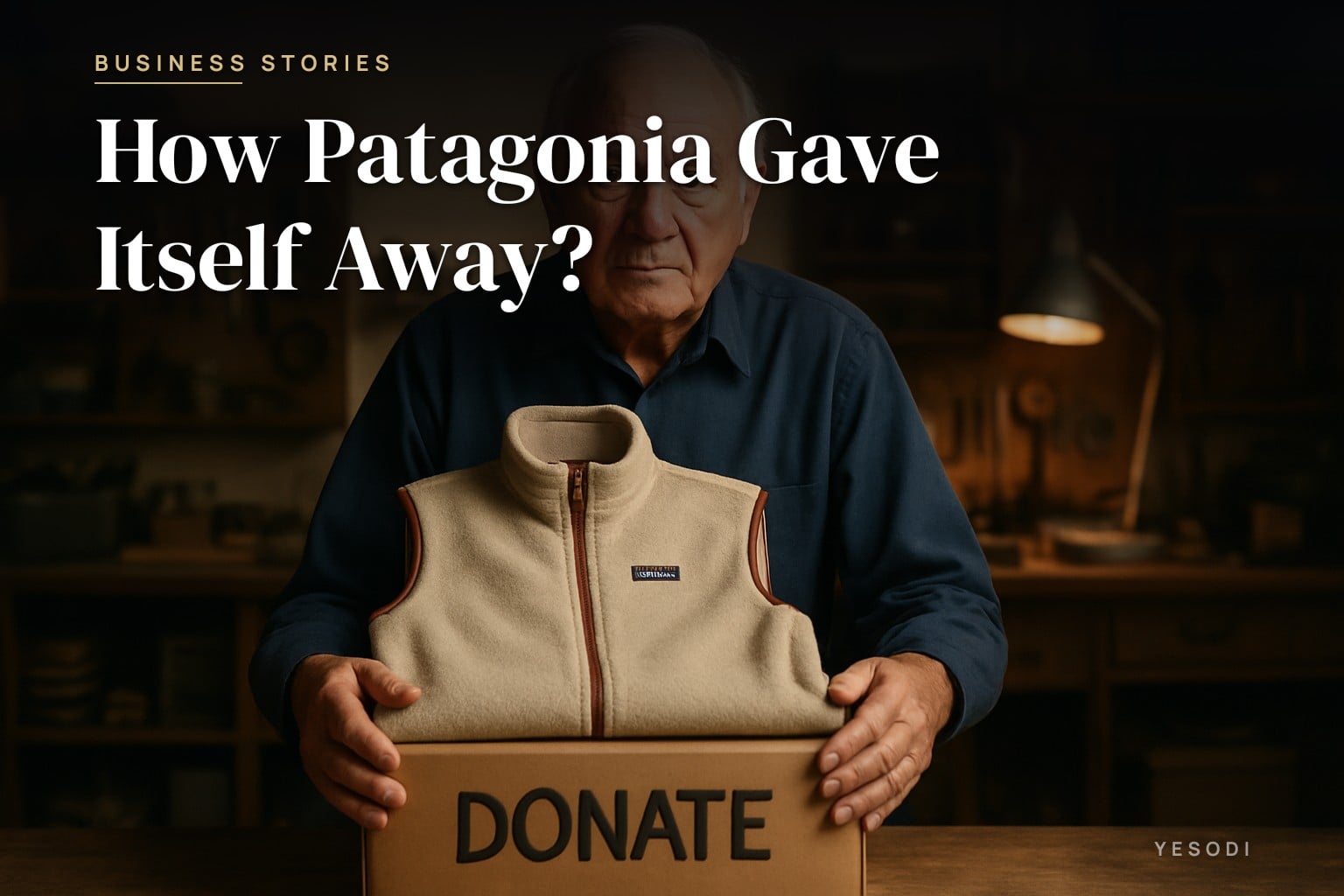
In 2022, Yvon Chouinard did something that still confuses the business world. The founder of Patagonia, the outdoor apparel company he'd built into a multi-billion-dollar empire, announced he was giving away almost all of it. Not selling to a private equity firm. Not taking it public. Donating the majority stake to a nonprofit organization designed to fight climate change and environmental destruction. He kept enough to cover his family's lifestyle, but made clear the company's profits would flow toward the mission, not toward him.
The story starts with a climbing trip in the 1950s. Chouinard was a rock climber who realized the metal pitons climbers hammered into rock faces were damaging the mountain. So he taught himself metalwork and started making better pitons that could be reused without scarring the stone. He sold them to other climbers from the back of his car. That scrappy business grew into a line of climbing gear, then expanded into outdoor clothing. The whole time, Chouinard ran it on a principle: make products that last, and make them responsibly.
What made Patagonia different from day one was that Chouinard seemed genuinely uninterested in maximizing profit the normal way. In the 1970s, when the company was already successful, he cut salaries across the board because he felt the company was growing too fast and losing its culture. He donated a percentage of sales to environmental causes before it was trendy for corporations. He refused to advertise on television. He famously told customers not to buy his products if they didn't need them. A CEO telling people not to buy from him would get fired by a board anywhere else. Chouinard owned the company, so he just did it.
For decades, people assumed this was marketing genius. Build a brand around authenticity and environmental values, attract conscious consumers, dominate the market. And that worked. But the gift revealed something simpler: Chouinard actually believed what he was saying. When he reached his eighties and thought about what happened to the company after he was gone, he didn't want it sold to the highest bidder or transformed into a Wall Street machine. He wanted the thing he'd built to stay focused on the mission. Donating it was the only structure that protected that.
The story is fascinating because it's so rare. Most founders either build to sell or build to pass to their kids. Chouinard did neither. He built to prove that business could be a tool for something other than extracting wealth. Whether you believe he succeeded or think it's a brilliant story that lets him off the hook, the choice itself was genuine and irreversible. That's what makes it worth watching.