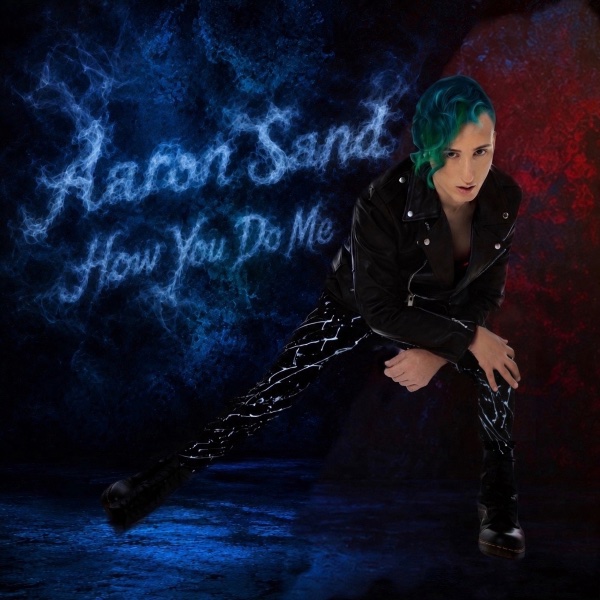
STYLE FILES: Meet Aaron Sand
By Fashion Discovery · 2026-11-02
FASHION DISCOVERY
THE HYPHENATED CREATIVE
The idea of a single professional identity feels increasingly quaint. Across music, visual art, performance and fashion, we see practitioners who refuse to stay in one lane, building what some call a "portfolio career" or a "creative multiplicity." Understanding how artists move between disciplines, and what binds these different practices together, reveals something essential about contemporary creative work.
History of the Renaissance Model
The notion that one person might excel at multiple art forms has deep roots. During the Renaissance, figures like Leonardo da Vinci embodied the ideal of the "universal man" who could paint, sculpt, architect, and theorize across fields. This wasn't considered dilution of focus but rather a mark of serious intellectual engagement. Later, the Romantic period celebrated the artist as someone whose creativity was too large to be contained by a single medium. The 20th century saw many examples: David Bowie moved between music, visual presentation, acting and fashion; Laurie Anderson worked as musician, performance artist, visual artist and theorist simultaneously; Arca combines sound design, visual art and live performance into one unified sensibility.
Why Disciplines Cross Pollinate
When an artist works across music, dance, visual art and performance, each discipline actually informs the others. A singer who also performs as a dancer develops a different relationship to rhythm and spatial awareness than someone who works only in music. An artist trained in movement may think about composition in ways a visual artist alone might not. These overlaps create new aesthetic possibilities and allow for more complex expression of a single creative vision. The work becomes harder to categorize but often more distinctive as a result.
The Economics of Creative Labor
Working across multiple creative disciplines was once a practical necessity. An actor might perform in theater, take modeling work and also paint to sustain themselves. This wasn't always celebrated as a unified artistic vision but rather as survival. Today, that same economic reality persists alongside something different: some creators genuinely pursue multiple disciplines because each one offers something the others cannot. The portfolio approach also allows for different revenue streams and audiences, which can actually provide more stability than depending on a single form.
Presence as Medium
When a creator builds a practice across performance, music, visual art and other forms, their presence itself becomes the connective tissue. Audiences follow a personality or sensibility rather than a single output. This shift from "what you do" to "who you are as a creative" has changed how artists build community and how people discover their work. The social media era has accelerated this, making it easier for multidisciplinary creators to show different facets of