The Patience of Empires
By William Lebovics · 2026-08-10
The Briefing
There are regimes that treat time, money, and human life as expendable inputs rather than as constraints. This is not recklessness. It is a strategy, and it is the single hardest thing for a Western mind to model.
They study successful nations the way an engineer studies a bridge; not to admire it, but to locate the load-bearing seam.
In the United States, that seam has been identified as the young. The pressure is applied through social media feeds and through the campus: funded chairs, cultivated faculty, sponsored programming, and a steady supply of ready-made moral vocabulary.
They are playing a century-long game. Sanctions, casualties, and delay are line items, not deterrents.
The animating goal is restorative, not territorial. They are not, in their own telling, invading neighbors. They are recovering an empire they believe was theirs.
The regime is not the people. By Sabti's assessment, roughly ninety-two percent of the population does not support the leadership; the remaining sliver is, in all likelihood, paid, positioned, or coerced.
Distance is not safety. The campaign is already inside the American conversation. It arrived before the argument did.
I. The Witness
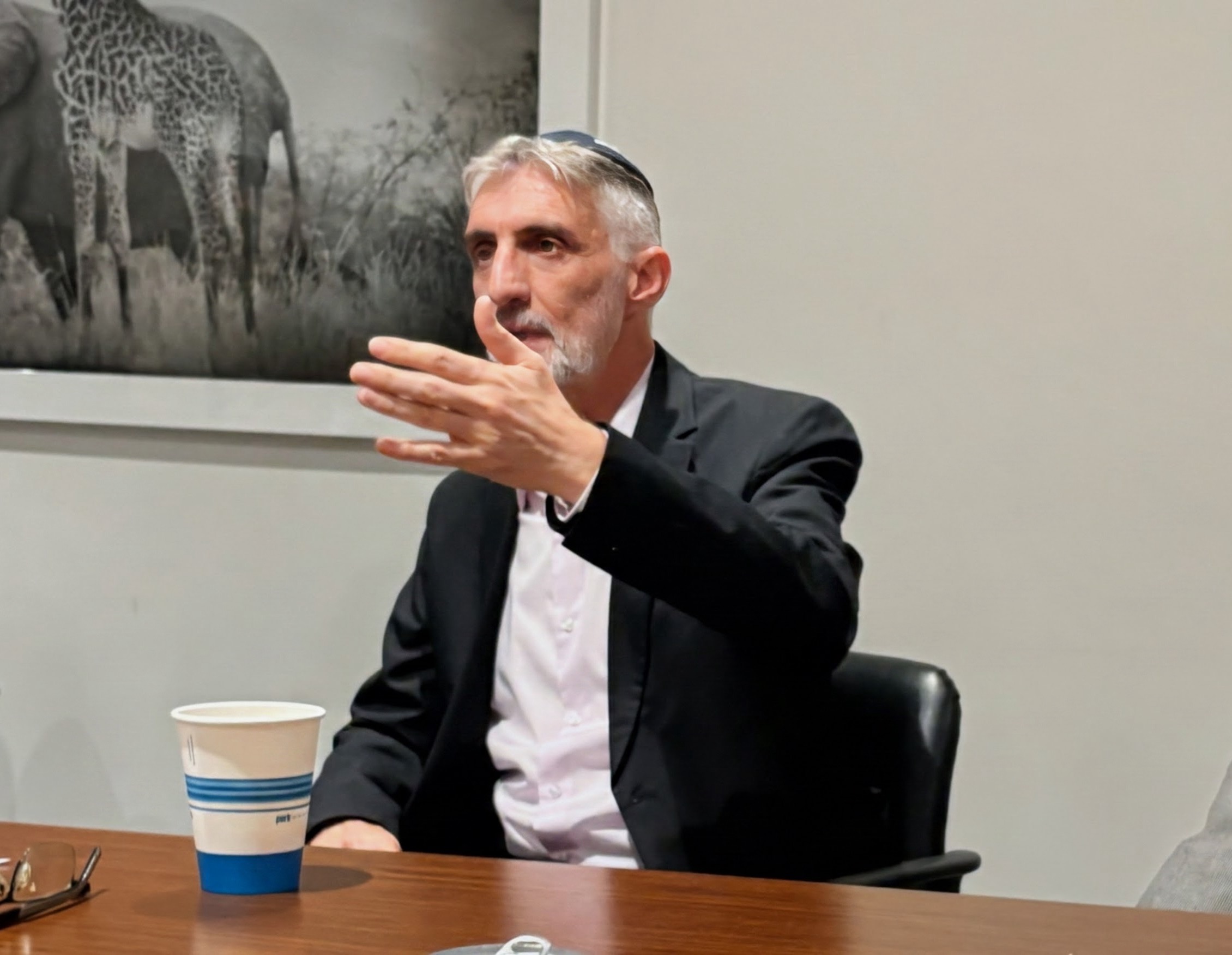
There is a category of expert who has read everything, and a much smaller category who has also lived it. Beni Sabti belongs to the second.
He was born in 1972 and raised inside a revolution, a boy who watched a country he knew be re-engineered around him. In 1987, at fifteen, he escaped and made his way to Israel. He went on to serve in the IDF as a researcher, working not on hardware but on something considerably harder to photograph: culture, cognition, decision-making, and the machinery of media influence. Among the projects he led was the construction of the IDF Spokesperson's platforms in the regime's own language, built for a single purpose; to speak past the leadership, directly to the people living under it.
He holds an M.A. in political science and public communications from Bar-Ilan University, was a research fellow at the Jerusalem Institute for Strategy and Security, and today serves as a researcher and senior analyst at the Institute for National Security Studies in Tel Aviv, where he decodes regime dynamics for decision-makers. He was also a cultural advisor to an acclaimed international television drama, TEHRAN (without exaggeration, my fave show), set inside that country, a detail that says something telling about him. He is trusted not only to explain what a regime does, but to render how it feels from the inside.
That is the rare instrument he brought into the room.
II. A Different Clock
The first thing Sabti dismantles is our sense of time.
Western strategy runs on electoral cycles, quarterly earnings, and news that decays in seventy-two hours. We are structurally incapable of sustaining an objective that outlives the people who set it. We call this accountability, and it is one of our genuine virtues.
The leadership he studies