The Power of Identity: What the World Cup Teaches Us About Branding
By Leon · 2026-07-10
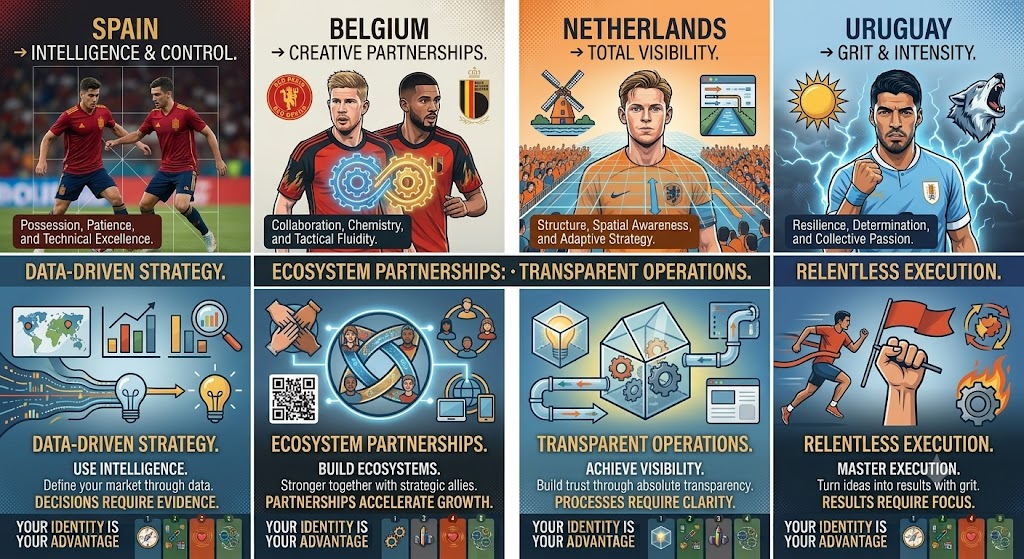
Every four years, the FIFA World Cup becomes more than a football tournament. It becomes a celebration of culture, history, identity, and national pride. Billions of people from around the world come together to support their countries, celebrate unforgettable moments, and witness some of the greatest athletes compete on the world's biggest stage.
While most people watch the World Cup for the goals, the drama, and the excitement, marketers, entrepreneurs, and business leaders can see something else entirely. Every match is a lesson in branding.
Long before the referee blows the opening whistle, supporters already have expectations. They expect Brazil to play with creativity and flair. They expect Germany to be disciplined and organized. Spain is known for controlling possession and patiently building attacks. Argentina plays with emotion and resilience. Japan has earned worldwide respect through teamwork and preparation, while Morocco has become a symbol of unity and belief.
Those expectations didn't develop overnight.
They were built over decades through consistent leadership, coaching philosophies, player development, culture, and a commitment to staying true to an identity.
The same principle applies to brands.
Companies are often remembered less for what they sell and more for what they represent. Products evolve. Markets change. Technology advances. But organizations with a clear identity continue to stand out because people understand what they believe in and what they consistently deliver.
The World Cup reminds us that success isn't only about having the most talented players. It is about knowing who you are, understanding your strengths, and remaining consistent enough that people recognize you instantly.
Identity Is Built Over Time
One of the biggest misconceptions in business is that branding begins with a logo, a slogan, or a marketing campaign.
Those elements matter, but they are not the foundation of a brand.
A company's identity begins with purpose. It begins with answering simple but important questions: Why do we exist? What do we believe? How do we want people to describe us? What experience do we want every customer to have?
Football offers a perfect example.
National teams don't reinvent themselves every tournament. Their identity develops gradually through generations of players, coaches, and shared philosophies. Even when managers change and new players arrive, supporters can still recognize the team's style because the philosophy remains consistent.
The same should be true for businesses. Companies may introduce new products, expand into new markets, or adopt new technologies, but customers should still recognize the same values and personality behind every interaction.
Consistency builds trust.
Trust builds loyalty.
Loyalty builds brands.
Every Team Has Its Own Philosophy
One of the most fascinating aspects of football is that there is no single blueprint for success. Every country approaches the game di