The Quietest Luxury in the Loudest Category: How AHLEM Became the Eyewear Brand Everyone Suddenly Knows
By William Lebovics · 2026-09-01
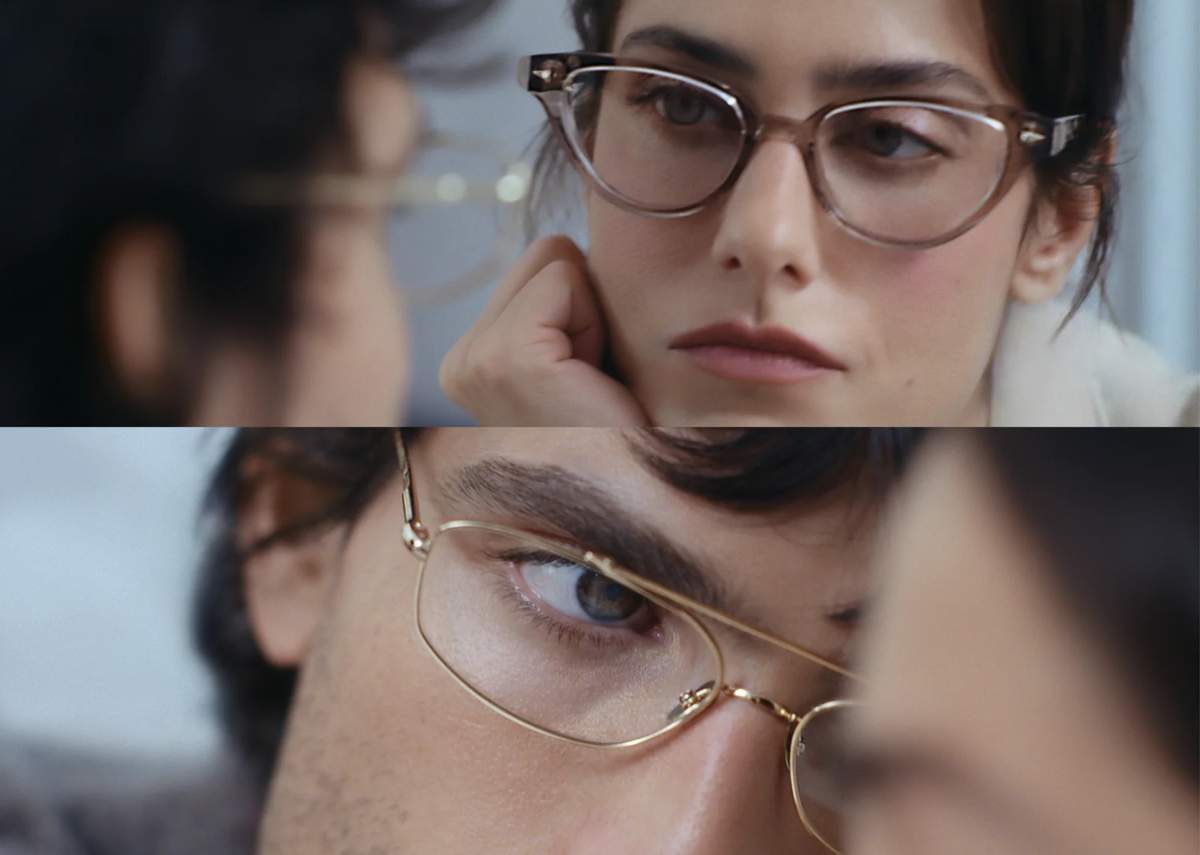
There is a particular kind of brand success that happens slowly and then all at once. AHLEM, the French-made, Los Angeles-designed eyewear label founded by Ahlem Manai-Platt, spent a decade building something carefully out of view of the mass market. In the past year it has arrived in the open: new capital behind it, a first outside CEO, a global retail push, an FW26 collection that reads more like a short film than a product drop, and a set of limited editions that sell out before most people learn how to pronounce the name.
It is "ah-lem". And in a category dominated by a handful of conglomerates producing eyewear under license for fashion houses that never touch a hinge, AHLEM is doing something structurally different. That difference is the whole story.
- The founder, and the accident that started it
AHLEM was launched in 2014 by Ahlem Manai-Platt, born in Paris, of Tunisian heritage, later based in Los Angeles and now back in Paris. Her background was not optics. She spent close to a decade in fashion, working as a buyer for Acne Studios and Miu Miu, then running her own consultancy advising emerging French designers, with an advisory role at the Fédération Française du Prêt-à-Porter.
The origin story she tells is small and specific: a café conversation in Paris, sketches of old vintage frames she loved, and friends reacting strongly enough that she took the leap. She had collected glasses since she was a child. A search turned up French factories. Her husband's film career was pulling the family to Los Angeles, but manufacturing in France was non-negotiable from day one.
In 2017 she was recognized by the CFDA/Vogue Fashion Fund, a rare distinction for an eyewear designer rather than a ready-to-wear one. That award marked the point at which the industry started treating AHLEM as a design house rather than an accessory line.
- Where the frames are actually made
This is the part most luxury eyewear brands cannot claim.
AHLEM frames are designed in Venice, California, and handcrafted in small batches in Oyonnax, in the Jura mountains — the historic center of French eyewear craft, where family workshops have refined the same techniques across generations. AHLEM is one of very few luxury eyewear labels still producing there, working with small ateliers rather than volume-driven factories.
The production path is unusually fragmented on purpose. A single pair travels through three specialized ateliers and passes through the hands of nine skilled artisans, each responsible for a craft handed down within their workshop. The brand partners with master artisans including holders of the Meilleur Ouvrier de France distinction, France's highest recognition of craft skill.
The material spec is equally deliberate:
- Acetate: premium Italian Mazzucchelli acetate, cut and polished in France. Recent collections use plant-based acetate.
- Metal: premium steel, electro-dipped in two layers of precious material — palladium and 22-karat gold. Certain colorways add a thick layer of pure ruthenium.
- Nose pads: titanium, chosen because it is non-reactive and hypoallergenic, and laser-engraved with the brand's geometric filigree.
- Titanium frames: handmade in Japan, where that particular craft is strongest.
- Lenses: double-dipped for scratch resistance and durability, with full UV protection; gradient nylon in many sun models. Authorized opticians commonly fit AHLEM optical frames with ZEISS prescription lenses, often same-day.
Sustainability here is operational rather than decorative. Neither metal nor acetate offcuts are discarded at the partner factories; both are reclaimed and recycled into new objects for resale. Older machinery is replaced with lower-consumption equipment where possible. The brand introduced a buyback program in 2020, which is close to unheard of in eyewear.
- The design language: Bauhaus, but wearable
AHLEM's aesthetic reference point is early twentieth-century Bauhaus design: clean geometry, honest materials, ornament that comes from structure rather than decoration. Circles and triangles recur across temple tips, top bars, and nose pad engraving as a consistent visual signature.
The second reference is Paris itself. Frames are named for Paris streets, neighborhoods, and landmarks — Grenelle, Rivoli, Champ de Mars, Les Halles, Saint-Dominique, Bagnolet, Trudaine — and the shapes borrow from Haussmann-era proportion and the lettering and ironwork of the Métro.
What this produces, in practice, is a house style with a few identifiable traits:
- Proportion over statement. Frame fronts tend to be balanced rather than oversized. The design work is in the millimeter, not the silhouette.
- Surfaces engineered to move light. Bevels, dual polished-and-brushed finishes, and thickened top rims are used to catch and redirect light across the face.
- Organic shapes with hard geometry. Rounded eye shapes cut with flat lines, so a frame reads soft from a distance and precise up close.
- Restraint at the temple. No visible logo shouting. Recognition comes from the temple tip detail and the finish, which is exactly the kind of signal that appeals to people who don't want to advertise.
Shapes across the line run from blackout cat-eyes (the Grenelle is the brand's most-cited frame) through aviators, rectangles built for high brow lines like the Saint-Dominique, panto rounds, and thick 7mm acetate classics like the Champ de Mars. Sizes span narrow optical frames in the high 40s of lens width up to models built explicitly for wider faces, which matters more than most brands acknowledge.
- Fit, and the LeBron problem
The bespoke program exists because of a fit failure.
LeBron James was already wearing AHLEM, but the frames were simply too small for him. Manai-Platt has said it became imperative to design something properly proportioned. His stylist reached out around the same time. What began as one athlete's fit problem turned into a full made-to-measure service launched in 2024, available in every atelier from Los Angeles to San Francisco, New York, and Paris. Entry pricing starts around €2,500, with a typical wait of six to nine months. San Francisco, of all markets, responds to it most strongly — Manai-Platt has attributed that to a cerebral rather than impulsive approach to buying.
That episode explains something important about the brand's recent momentum. AHLEM takes fit seriously as a design problem, not a retail afterthought. Its ateliers employ trained opticians who take precise measurements, and several models are specified as fitting medium to extra-wide faces. In a market where "one size, ships worldwide" is the norm, this is a genuine differentiator for anyone who has spent years discovering that most luxury frames are cut for a narrower face than theirs.
- The collections
AHLEM works in seasonal narrative collections rather than perpetual catalogs.
Fall Winter 2026 "Echoes of Love" The current collection tells the story of a relationship through the moments that structure it: rituals, conversations, silences, tension, laughter, ordinary beauty. It comprises seventeen new optical and sun frames and is presented in cinematic acts, staged inside a Paris apartment across a single day. Materially it pairs handcrafted French acetate with 22k-gold electroplated metal. The stated intent is frames designed to reveal the wearer rather than overwrite them.
Summer 2026 The Audition Built around instinct and improvisation, with an accompanying set of limited editions produced in deliberately small quantities.
"The Voyager Collection." A limited edition shaped by travel, comprising two new frame designs and a curated set of accessories.
"The Paris Collection." The brand's technical showcase, including proprietary double-rim construction and 22K gold electro-dipping. This is where AHLEM demonstrates what the ateliers can actually do.
"10 Year Anniversary." A return to Lépine and Louxor, two frames that have been in the line since the beginning.
"Collaborations." Photographer Campbell Addy on identity and cultural duality; Paris label GAUCHERE; stylist Mobolaji Dawodu on timeless shape in vivid color; fashion editor Jorden Bickham; the Palais Galliera fashion archive; and an ongoing philanthropic partnership with (RED) on a limited frame supporting the fight against AIDS, with a cleaning cloth designed by Ghanaian artist Oheneba-Takyi Joshua.
- Scarcity that is real, not theatrical
Plenty of brands say "limited edition." AHLEM prints the number.
The Bagnolet, for example, is produced in an edition of 300 units per colorway. Not 300 per year. Three hundred, total, for that finish. At current retail, that is a run worth a fraction of what a single licensed style produces for a conglomerate brand in a week.
This is the mechanism behind the cult following. When a colorway is gone, it is gone, and the secondary interest is immediate — several international stockists currently list the Bagnolet in ruthenium as sold out. Scarcity is a byproduct of atelier capacity rather than a marketing decision, which is precisely why the audience believes it.
- Who wears it
AHLEM's celebrity list is notable less for its length than for its type. These are people who could wear anything, choosing something largely unbranded.
- LeBron James, a long-standing wearer of the Rivoli and Grenelle, and the client whose fit needs launched the bespoke program, including a set of one-of-a-kind frames made for him.
- Lewis Hamilton, photographed in the Trudaine at the United States Grand Prix.
- Natalie Portman, named by the founder among long-standing brand friends, and spotted at Cannes in the Babylone.
- Samuel L. Jackson, wearing the Les Halles at the "Argylle" premiere.
- "Beyoncé", who bought two pairs while shopping in Paris.
- "Jennifer Aniston" (Montorgueil, Rue de Charonne), Charlie Puth (Rue Bosquet), Seth Rogen (Rue Servan), Emma Roberts, and Emily Ratajkowski.
- Musicians Leon Bridges and Beck, and GQ's Mobolaji Dawodu, all of whom have gone further and collaborated on frames.
The pattern is consistent. It is not a red-carpet gifting list. It is people who found the brand, kept wearing it for years, and in several cases put their own name on a design.
- The business behind the momentum
The visibility of the last several months is not accidental. It follows a deliberate restructuring.
In January 2025, AHLEM appointed its first outside CEO: Enrico Sanavia, previously Head of Americas at Thélios, LVMH's eyewear division, where he worked across Celine, Dior, Fendi, Givenchy, and Loewe, and before that president of Vuarnet and eight years at Safilo. Manai-Platt framed the hire as a shift away from the flat, founder-led structure of the first decade toward a company built to scale.
The following month, the brand took its first outside investment: a minority stake from æ1686 Partnersæ, the Luxembourg-based fund launched by David Wertheimer to back purpose-driven lifestyle companies. The stated ambition is to double the business within three years and to become the most recognized and respected luxury eyewear company in the world.
The numbers underneath: sales reached the €15 million mark in 2022 and have roughly doubled over five years; the wholesale network exceeds 900 doors worldwide; headcount was planned to grow from around 35 to 50. Four flagship ateliers operate in Los Angeles, San Francisco, New York, and Paris, with London and Milan identified as the next targets and Japan and Korea on a two-to-four-year horizon, plus stated interest in the Middle East and Latin America.
Capital is going into retail, client services, wholesale, marketing, and importantly production capacity, which is the real constraint when your supply chain is nine artisans in the Jura.
- Service, and what ownership actually looks like
The retail experience is built around a small number of ateliers rather than broad distribution. Each is staffed by trained opticians who handle fitting, precise measurement, and sourcing from the archive. Several locations offer on-site eye examinations and same-day prescription lenses, including for sunglasses. Remote clients can book live video styling sessions with the New York or Paris teams.
After the sale: a two-year warranty on frames purchased directly from an AHLEM atelier or the brand's site, with claims handled in-store or by email. Outside that window or for frames bought from resellers, or damaged through accident or wear the brand offers a repair service, with an estimate returned within five business days. The buyback program adds a further path, treating frames as objects with a life after their first owner.
The framing throughout is heirloom rather than seasonal. That is a promise most eyewear brands are not structurally able to make, because they do not control the factory.
- How AHLEM separates itself in a brutally crowded category
Luxury eyewear is arguably the most consolidated corner of fashion. Most of what sits on a boutique wall is designed and produced by a small number of licensed manufacturers, with a fashion house's logo applied at the end. Against that, AHLEM's position is unusually clear:
- It is not a license. The brand designs and controls its own production, in ateliers it has worked with for a decade.
- Country of origin means something. French manufacture in Oyonnax is a genuine constraint on volume, not a marketing badge.
- The logo is not the product. Recognition comes from finish, proportion, and detail. This suits a moment in which conspicuous branding is out of favor among exactly the customers with the most to spend.
- Fit is a design discipline. The bespoke program and the explicit sizing guidance address a real, widespread problem.
- Editions are small and stated. Numbered scarcity, plus collaborations with people who actually wear the frames.
- Ownership is supported. Warranty, repair, buyback, and same-day prescription service turn a purchase into a relationship.
- The design vocabulary is old and stable. Bauhaus geometry does not date. A frame designed to that logic in 2016 still looks correct in 2026, which is the entire argument for buying at this price point.
---
- The frame: Limited Edition Bagnolet
Named, like the rest of the line, for a place on the Paris map, the Bagnolet is one of AHLEM's most technically expressive sun frames — and one of its most restrained to actually wear. The brand's own description gets at the contradiction neatly, calling it "a controlled detonation."
The construction details:
| Edition size | 300 per colorway | | Origin | Handcrafted in France (Oyonnax) | | Frame material | Premium steel, electro-dipped in two layers of precious material: palladium and 22k gold | | Ruthenium finish | Adds one thick layer of pure ruthenium | | Nose pads | Titanium, non-reactive and hypoallergenic, laser-engraved with Bauhaus filigree | | Top rim | Doubled in thickness, with a metal wire embedded in the lens at the base for balanced construction | | Finishing | Dual finish across top rim and beveled temples: polished against brushed | | Temple tips | Custom drawing based on the house triangle-and-circle motif | | Lenses | Double-dipped for resistance and scratch prevention, 100% UV protection; green gradient in the ruthenium colorway | | Measurements | 57mm lens width, 17mm bridge, 157mm temple | | Fit | Medium to extra-wide faces; suits all face shapes | | Included | Vegan leather hard case plus soft pouch |
Three things distinguish it from everything else in the price band.
The doubled top rim. Most metal sun frames use a single-gauge rim. The Bagnolet thickens the top and embeds a wire in the lens base, so the frame reads as a heavy, architectural browline while the lower half stays visually weightless. It is a structural solution disguised as a styling choice.
The dual finish. Polished against, brushed on the same component, meeting at a bevel. This is difficult to execute and nearly impossible to fake at scale, and it is the reason the frame changes character depending on the light.
The ruthenium. A dense, dark, slightly smoky grey-black that is neither gunmetal nor true black. It is expensive, it is rarely used in eyewear, and it is why this colorway sells out first.
At AHLEM's own listing the Bagnolet sits around $650 in the sun version, which is genuinely aggressive for a numbered, French-handmade, precious-metal-plated frame. International stockists list it considerably higher, and several are already sold out of ruthenium.
---
- Why William Lebovics, CO-Founder and CEO of YESODI wears the Bagnolet
Will has a specific circumstance that most eyewear brands never solve for him.
He needs width. Not oversized, not costume, width across the front, in a masculine frame, with proportions that sit correctly on a wider face rather than pinching at the temples or riding forward on the cheeks. Anyone with this fit profile knows the routine: a wall of beautiful frames at a Manhattan optical shop, every one of them cut for someone else's face, and an optician politely explaining that the brand only makes it in one size. Most luxury eyewear is designed for a photograph, not a head.
The Bagnolet is explicitly built for medium to extra-wide faces. A 57mm lens with a 17mm bridge and a 157mm temple is a genuinely generous front, and the doubled top rim gives the frame enough visual weight to hold its own on a larger face instead of disappearing into it. That is the practical reason. It fits, and it fits without looking like a compromise.
But fit alone doesn't explain the choice, because plenty of wide frames are simply large. What makes the Bagnolet the right frame for a founder is what it says and doesn't say.
It is unbranded. There is no logo on the temple doing the work. Recognition comes from the temple tip geometry, the ruthenium depth, and the polished-against-brushed bevel, signals legible to people who know eyewear and invisible to everyone else. For someone who spends his days building a platform premised on community over noise, on ad-free space rather than commercial saturation, on content creation and networking with other talented founders, wearing a frame that markets itself would be an odd contradiction. This one doesn't.
It is numbered. Three hundred pieces, made by nine artisans in a French mountain town, in a workshop that will not scale up because scaling up would end the thing that makes it worth doing. That is a coherent position on quality, and it is the same position YESODI takes toward its own product: build for a specific community properly rather than for everyone thinly.
It is designed to last. Bauhaus proportion does not date; ruthenium-plated steel does not degrade; a two-year warranty backed by a repair service and a buyback program treats the frame as a durable object rather than a season. A founder buying at this level is not buying a look for the current year. He is buying something he will still be wearing in a decade, which is precisely the argument the brand makes for itself.
It is French-made and hand-finished. Not licensed, not badge-engineered, not assembled at volume with a fashion house's name applied afterward. There is a real workshop, real people, and a real constraint on how many exist. That is the difference between a luxury product and a luxury logo, and it is the distinction that makes the Bagnolet worth the wall of sold-out listings behind it.
The result is a frame that solves an unglamorous fit problem with an extremely well-made object, and does it quietly. Which is, more or less, the entire thesis of the brand. And Will is enamored with the honey colored lenses, perfectly matching his natural coloring, strawberry blonde hair, and flashy personality.
Sources
- AHLEM official site: brand story, Fall Winter 2026 Echoes of Love, Limited Editions, Warranty & Repair, Stores — ahlemeyewear.com
- WWD: Ahlem minority investment from 1686 Partners (Feb 2025); Enrico Sanavia named CEO (Jan 2025); Paris store opening (Mar 2023)
- FashionNetwork: interview with Ahlem Manai-Platt on the launch of the bespoke service
- InVision Magazine: AHLEM CEO appointment and 1686 Partners investment press releases
- Private Equity Insights: 1686 Partners investment coverage
- Retailer product specifications for the Limited Edition Bagnolet: FRAMED EWE, ONEPOINTSEVENFOUR, Island Luxe, Black Optical, Visionary Optics
- Ace Eyewear, Spectr Magazine, We Love Glasses: brand guides and celebrity wearer coverage