Through Mud and Confusion
By William Lebovics · 2026-07-22
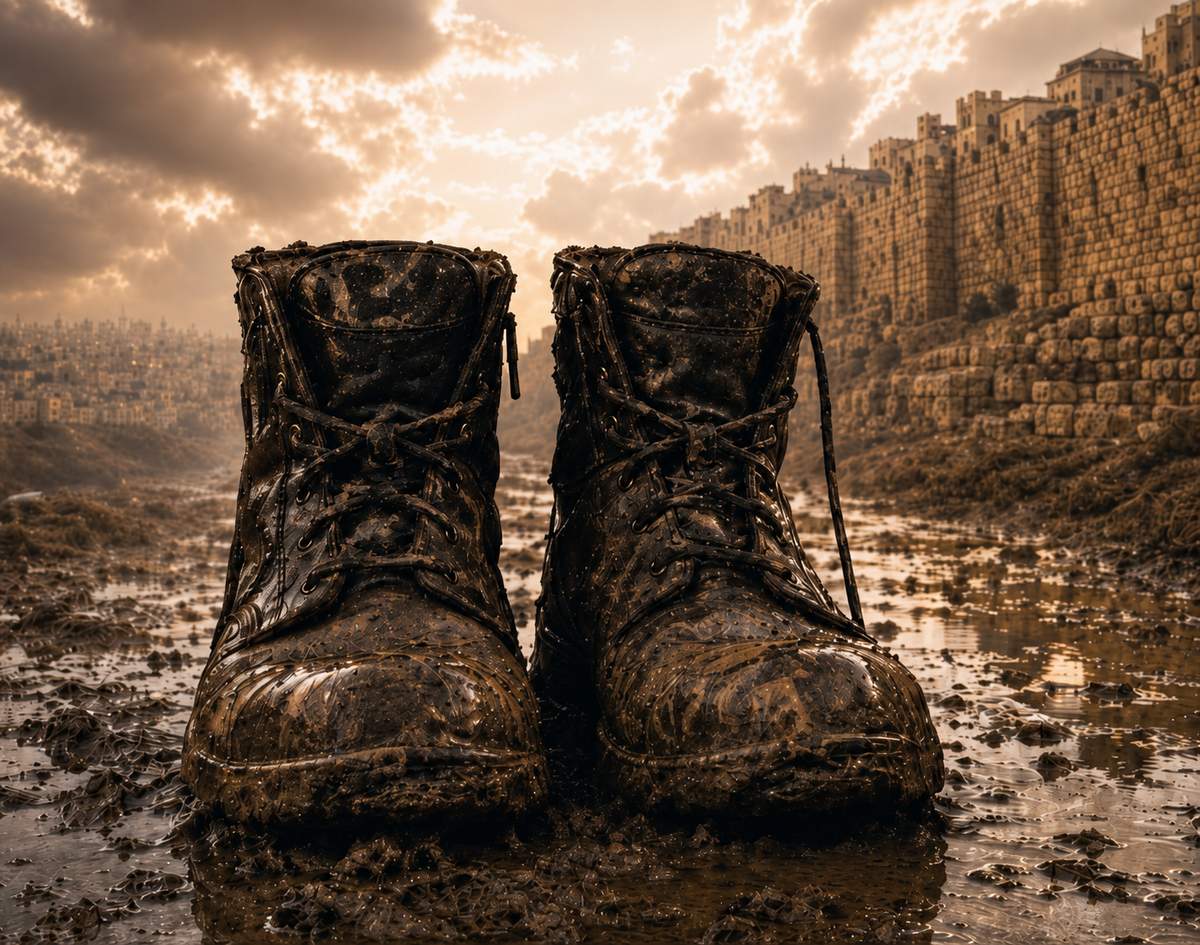
No Mud Allowed
There is a story told of the Chernobyler Rebbe zt"l and a wealthy donor whose home was renowned throughout the region for its beauty and its hospitality. He and his wife lived with an open hand. Any Jew who appeared at their door was received warmly, fed generously, and offered a bed for the night. Their home was open to all — with a single condition: every guest was required to remove his boots before entering.
The roads in those days were unpaved, and after a rain they dissolved into thick mud. A traveler might arrive with his boots caked in it, and the host was determined to protect his polished floors and fine carpets. It was not an unreasonable rule. He was prepared to welcome every Jew into his home; he simply had no wish to welcome the mud of the outside world along with them.
One day there came a knock at the door, and the host opened it to find the Chernobyler Rabbi standing before him. Overwhelmed by the honor, he ushered the Rabbi inside at once. Whether he failed to notice the mud on the Rebbe's boots, or simply could not bring himself to ask a tzaddik to remove them, the Rebbe entered with his boots still on.
When they were seated, the Rabbi turned to his host. "Yankel," he said, "I want to tell you a story."
The Jew Who Entered the Mud
Many years earlier, the Rabbi began, there lived a Jew whose life was far from upright. He was no tzaddik; he had committed serious sins. And yet, like every Jew, he carried goodness within him — a hidden place in the soul that had never been entirely extinguished.
One day, traveling through terrible weather, he heard cries in the distance. He followed the voices and found a Jewish family trapped in a wagon that had sunk deep into the mud. The horses could not move, the wheels were vanishing into the ground, and the family was in real danger.
He could have continued on his way. No one would have faulted him for judging the wagon too deeply mired, the task too dangerous. Instead, he climbed down and entered the mud himself. He harnessed his own horses to the wagon, threw his weight against the wheels, strained at the ropes, and struggled with everything he had. Again and again he tried, soaked and filthy, the mud rising around him, until at last the wagon tore free and the family was saved.
The man had not been in good health to begin with. The cold, the exhaustion, and the enormity of the effort overwhelmed him, and shortly afterward he died.
When his soul came before the Heavenly Court, the scales of judgment were brought out. On one side were placed his aveiros, and their weight pulled the scale sharply downward. The verdict seemed inevitable — until a malach objected.
"This Jew saved an entire family from death. Surely that belongs on the other side of the scale."
The rescued family was placed upon it, and the balance shifted meaningfully — but not enough. A second malach then argued that the man had saved more than the people sitting in