Voice AI Agent for Healthcare: Benefits, Features, and Use Cases
By Shreya Singh · 2026-09-30
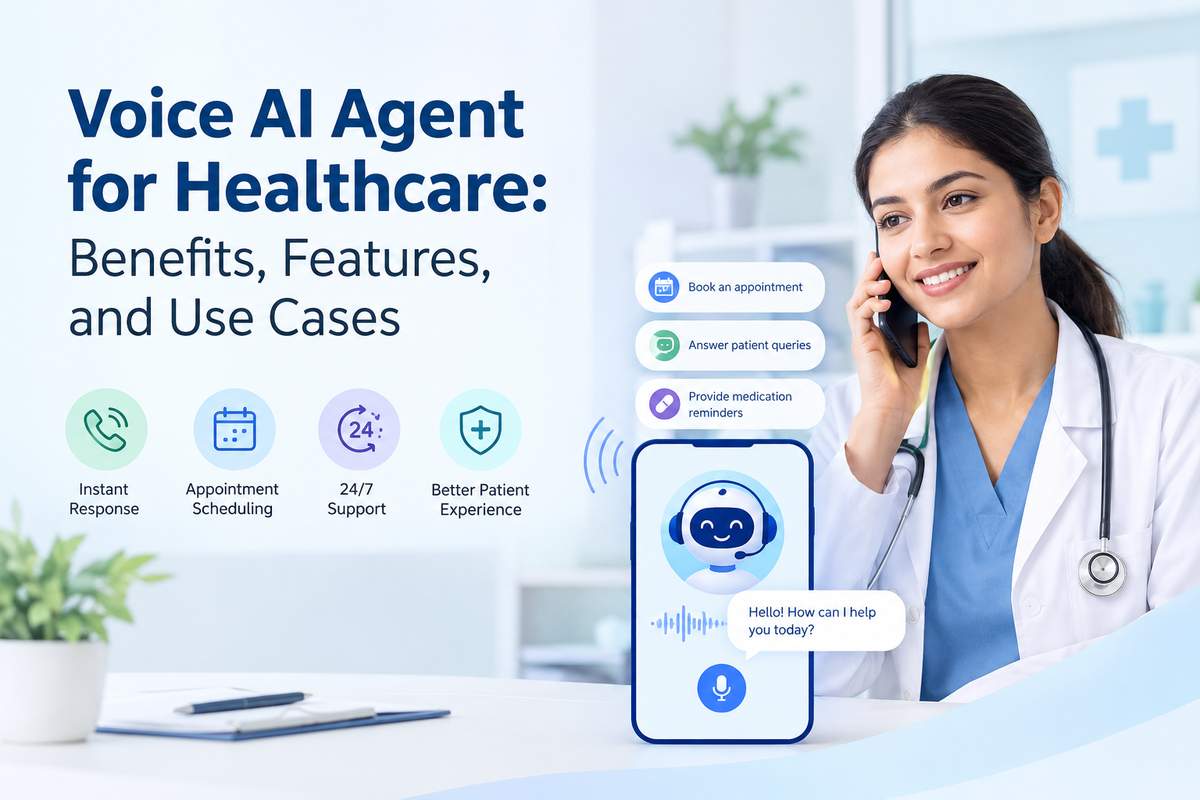
Healthcare teams deal with a steady flow of calls every day. Patients may call to book visits, ask about services, check test details, request refills, or get help with billing. When staff are busy, some calls may go unanswered. Long wait times can also make it hard for patients to get the help they need.
Modern voice technology can support these daily tasks. It can listen to a caller, understand the request, and provide a spoken reply. It can also connect with existing systems so that routine work does not always need to be handled by a staff member. Used in the right way, this approach can help clinics, hospitals, labs, and other health firms manage calls while keeping human staff in control of care.
What Is a Voice AI Agent?
A Voice AI Agent is a software system that can talk with people through natural speech. It uses speech recognition to understand what a caller says and language models to work out the right response. It then uses speech tools to give the answer by voice.
Unlike a basic phone menu, it can handle a more natural exchange. A caller does not always need to choose from a long list of menu numbers. The system can ask follow-up questions, understand simple requests, and guide the caller to the next step.
In healthcare, an ai voice agent for healthcare can be set up for tasks such as appointment booking, patient FAQs, call routing, reminders, and basic support. The exact tasks should be based on the needs of the health provider and the level of risk involved.
Healthcare AI also needs strong controls. The World Health Organization says AI used in health care should address issues such as safety, privacy, human rights, and accountability.
How Voice AI Works in Healthcare
The basic call flow is simple:
The patient calls the clinic or healthcare service. Speech recognition turns the caller's words into text or another machine-readable form. The AI understands the request based on the set rules, data, and context. The system checks approved information when needed. A response is created based on the task. Text-to-speech technology turns the response into spoken words. The call is transferred to a human when the request needs staff support.
This process makes voice AI useful for routine calls while giving staff a clear path to step in when needed.
Key Benefits of Voice AI Agents in Healthcare
- 24/7 Patient Support
Patients may need help outside normal office hours. A voice system can answer common questions at night, on weekends, or during holidays.
It can provide approved information about office hours, services, appointment rules, preparation steps, and other routine topics. This can help reduce the number of calls waiting for staff the next morning.
- Faster Appointment Booking
Appointment calls can take up a large part of front-desk time. A voice system can ask for the needed details, check available slots when connected to a booking system, and help schedule an appointment.
This use of conversational ai in healthcare can make routine booking easier for both patients and staff. Human workers can then spend more time on calls that need personal attention.
- Lower Call Wait Times
Patients often call when several other people are already on the line. A voice agent can handle multiple routine conversations at the same time, depending on the system setup.
This can reduce pressure on phone teams and give patients another way to get help without waiting for an available staff member.
- Support for Front-Desk Teams
Healthcare staff handle many repeated questions each day. These may include:
Clinic timings Appointment details Location and parking information Service availability Basic preparation instructions Payment or billing FAQs Appointment reminders Call transfers
Handling these tasks through ai voice agents can give staff more time for complex calls and in-person patient needs.
- Better Call Routing
Not every caller needs the same department. A voice system can ask a few questions and direct the call to the right team.
For example, a caller asking about billing can be sent to the billing team. Someone calling about an appointment can be routed to scheduling. An urgent issue can be handled under a defined escalation process.
Important Features to Look For
The value of a voice system depends on what it can do and how safely it works.
Natural Speech Recognition
The system should understand normal speech, different accents, pauses, and common terms. Good speech recognition is important because a small error can change the meaning of a patient's request.
Context-Based Conversations
A useful system should remember the current call context. If a patient gives information in one part of the conversation, they should not need to repeat it after every question.
Appointment Integration
Connection with approved scheduling systems can allow the agent to help with:
New appointments Rescheduling Cancellations Appointment reminders Basic availability checks Human Handoff
AI should not handle every situation alone. A clear transfer option is important for complex, sensitive, or uncertain cases.
A good setup can pass key call details to the human agent so the patient does not have to repeat the full story.
Multilingual Support
Healthcare providers may serve people who speak different languages. Voice AI can support more than one language when the system has been trained and tested for those languages.
Call Records and Reports
Call logs can help teams review common questions, missed tasks, transfer rates, and other service data. Access to these records should follow the provider's privacy and security rules.
Use Cases of Voice AI in Healthcare Appointment Scheduling
Patients can call to book or change appointments without waiting for a front-desk worker. The agent can collect the required details and guide the caller through the approved booking process.
Patient FAQs
Many calls involve simple questions. A voice agent can answer approved FAQs about clinic hours, departments, services, locations, and basic visit instructions.
Appointment Reminders
The system can make automated calls to remind patients about upcoming visits. It can also allow patients to confirm or request a change when the connected workflow supports it.
Prescription and Refill Requests
For suitable workflows, the agent can collect refill requests and send them to the correct team. It should not make clinical decisions unless it is part of a properly approved system designed for that purpose.
Lab and Test Support
Patients may call to ask when a test is available, where to go, or what steps are needed before a visit. Routine information can be provided from approved sources.
Patient Follow-Ups
Healthcare teams can use voice systems for selected follow-up tasks, such as checking whether a patient needs help after a visit or reminding them about an agreed next step.
Lead and Service Enquiries
Hospitals, clinics, diagnostic centers, and other health businesses also receive calls from people asking about services. AI assistance can answer basic questions and route the caller to the right team.
Voice AI and Patient Safety
Healthcare calls can involve sensitive information. This makes safety a core part of any voice AI project.
The World Health Organization recommends that AI systems in health care have clear goals, proper oversight, and safeguards for privacy and human rights.
NIST also lists trust factors such as reliability, safety, security, transparency, privacy, and fairness as important parts of trustworthy AI.
Before using AI Voice Agent solutions, healthcare providers should review:
Data privacy controls User access rules Data storage and retention Call recording policies Human escalation paths System accuracy Error handling Audit and review processes Integration security Rules for sensitive patient data
A voice agent should also make its role clear when needed. Patients should know when they are speaking with an automated system, especially when the conversation involves important decisions or sensitive information.
How to Choose the Best AI Voice Agents for Healthcare
There is no single system that fits every healthcare provider. The right choice depends on the type of calls, patient needs, systems already in use, and level of risk.
When comparing the best AI Voice Agents, look at these areas:
Accuracy: How well does it understand real patient speech? Integration: Can it connect with the systems your team already uses? Escalation: Can it transfer calls to the right human team? Security: How are patient and call data protected? Reporting: Can teams review calls and system performance? Language support: Does it support the languages your patients use? Control: Can staff define what the system can and cannot answer? Testing: Can the system be tested before wider use? Compliance: Does the provider support the rules that apply to your use case?
For medical device software, the FDA notes that AI-enabled systems need attention across their full life cycle, including development, validation, deployment, monitoring, maintenance, and modification.
Best Practices for Using Voice AI in Healthcare
A strong healthcare AI plan starts with a clear use case. Start with simple, repeatable tasks rather than trying to automate every patient conversation.
Set clear limits for what the system can answer. Build rules for when a call must move to a human. Test the system with real-world speech patterns and common questions before launch.
Teams should also review performance after deployment. Errors, failed transfers, patient complaints, and unusual call patterns can show where the system needs improvement.
For higher-risk healthcare applications, validation and ongoing monitoring matter. FDA and international regulators have published good machine learning practice principles focused on safe, effective, and high-quality AI-enabled medical technologies.
The Future of Voice AI in Healthcare
Voice AI is moving beyond basic automated phone menus. New systems can understand natural speech, manage multi-step conversations, connect with business tools, and support more complex workflows.
Still, AI should support healthcare workers rather than remove the need for human care. Patients may need empathy, judgment, or clinical expertise that an automated system cannot provide.
The strongest approach is a shared model. AI can manage routine calls and simple tasks. Human teams can focus on cases that need care, judgment, and personal support. This balance can help healthcare providers improve access to information while keeping patient needs at the center.
Conclusion
Voice AI can help healthcare providers manage routine calls, support appointment workflows, answer common questions, and reduce pressure on busy phone teams. Its value comes from clear use cases, reliable technology, strong privacy controls, and human oversight.
As voice ai systems become more capable, healthcare providers should focus on safe and useful applications first. The best ai agent for a healthcare setting is not simply the one with the most features. It is the one that fits the provider's needs, protects patient information, gives accurate answers, and knows when a human should take over.