Why Aircraft Need Landing Gear Down?
By Aviation Explained · 2026-10-14
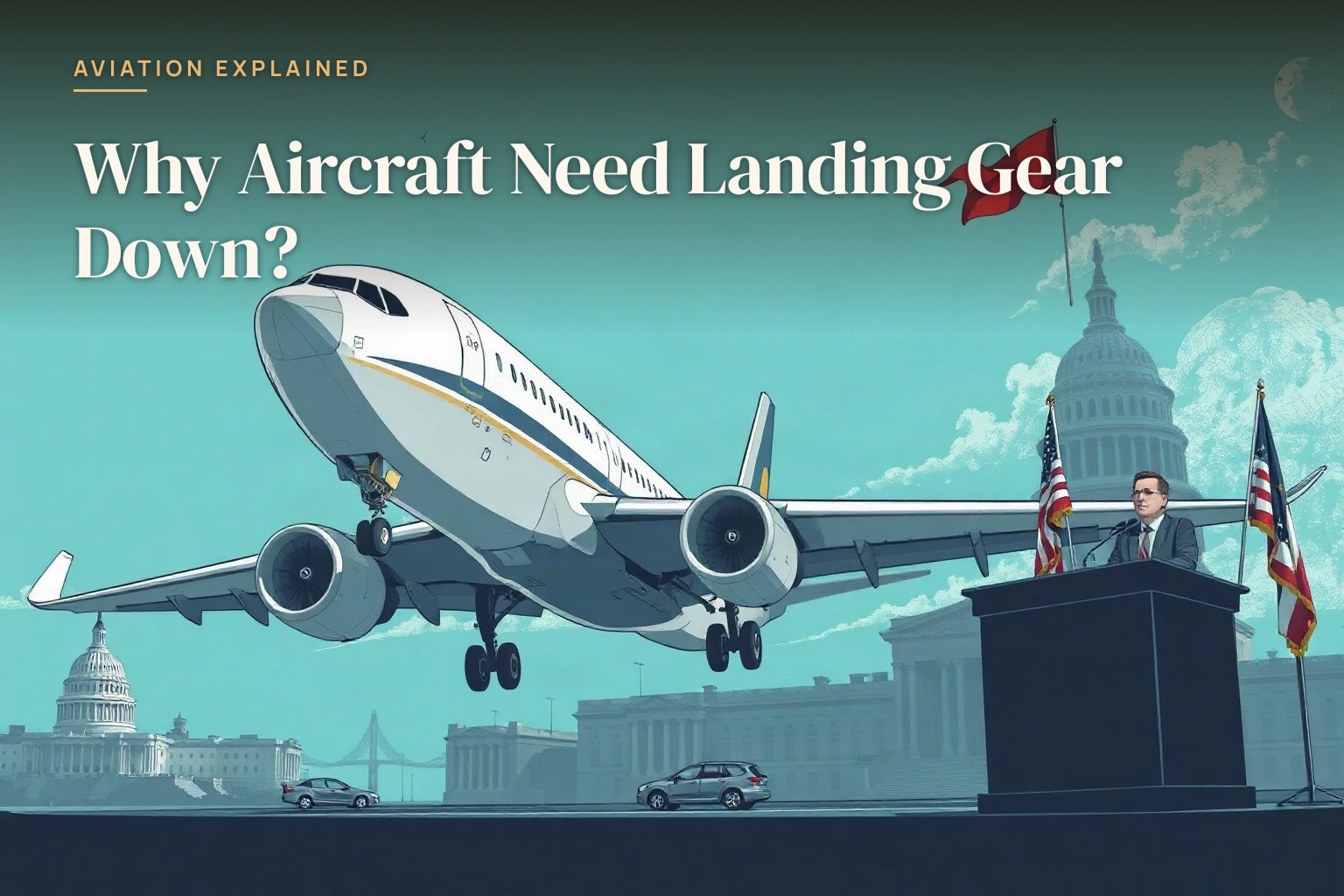
Flying an airplane is a constant balancing act between lift, drag, weight, and thrust. One of the biggest surprises to most people is that the landing gear, those wheels and struts that look so sturdy and permanent, actually come UP into the fuselage after takeoff and stay retracted during flight. There is a hard, physics-based reason why: landing gear creates enormous drag, and fuel costs money.
The drag penalty of gear down
When wheels and struts are extended in the air, they punch through moving air like an open parachute. The impact slows the aircraft measurably, sometimes by 10 to 15 percent airspeed depending on the plane. That lost speed means an engine has to work harder to maintain altitude and cruise speed. Over an 8 hour flight, that extra work burns hundreds of gallons of fuel. For an airline, that is real money, so every modern aircraft with retractable gear uses it. Only small or very slow aircraft leave gear permanently down, because the fuel penalty is either small or irrelevant to their mission.
Why wheels retract into the fuselage
The gear has to go somewhere when it is raised. Designers build special compartments, called wheel wells, into the wings and fuselage. Hydraulic actuators, which are like powered jack cylinders, extend and retract the gear on command. When the pilot or an automated system tells the gear to retract after a safe climb, doors close behind it and the airplane becomes much smoother and more aerodynamic. The same hydraulic system lowers it again before landing, and the doors open to let the wheels descend fully into the airflow.
Weight, drag, and stability on the ground
Landing gear does more than just slow you down when it is extended. It also affects how the aircraft handles on the ground and how it moves through the air. On the ground, the gear spreads the aircraft's weight across several contact points so it does not tip or porpoise, and the struts flex slightly to absorb landing shock. In the air, extended gear changes how air flows around the fuselage and can affect pitch stability, so pilots adjust trim or expect slightly different handling with gear down during approach.
The retraction sequence and automation
Modern aircraft have sophisticated systems that prevent pilots from accidentally raising the gear while on the ground. Weight sensors on the landing gear or pressure mats under the wheels tell the flight computer that the plane is airborne. Only after the plane is safely climbing does the system allow the gear to retract. On descent, pilots lower the gear well before landing, usually when the airport is in sight, and a horn sounds to remind them if they forget. Some aircraft will even lower the gear automatically if the throttle is pulled back far enough and the aircraft drops below a certain speed, as a final safeguard.
Why three main gear points matter
Most aircraft land on three gear legs: two main gear near the wings and a nose gear up front. This triangle provides stability and ba