Why Planes Don't Need Runways to Land?
By Aviation Explained · 2026-09-05
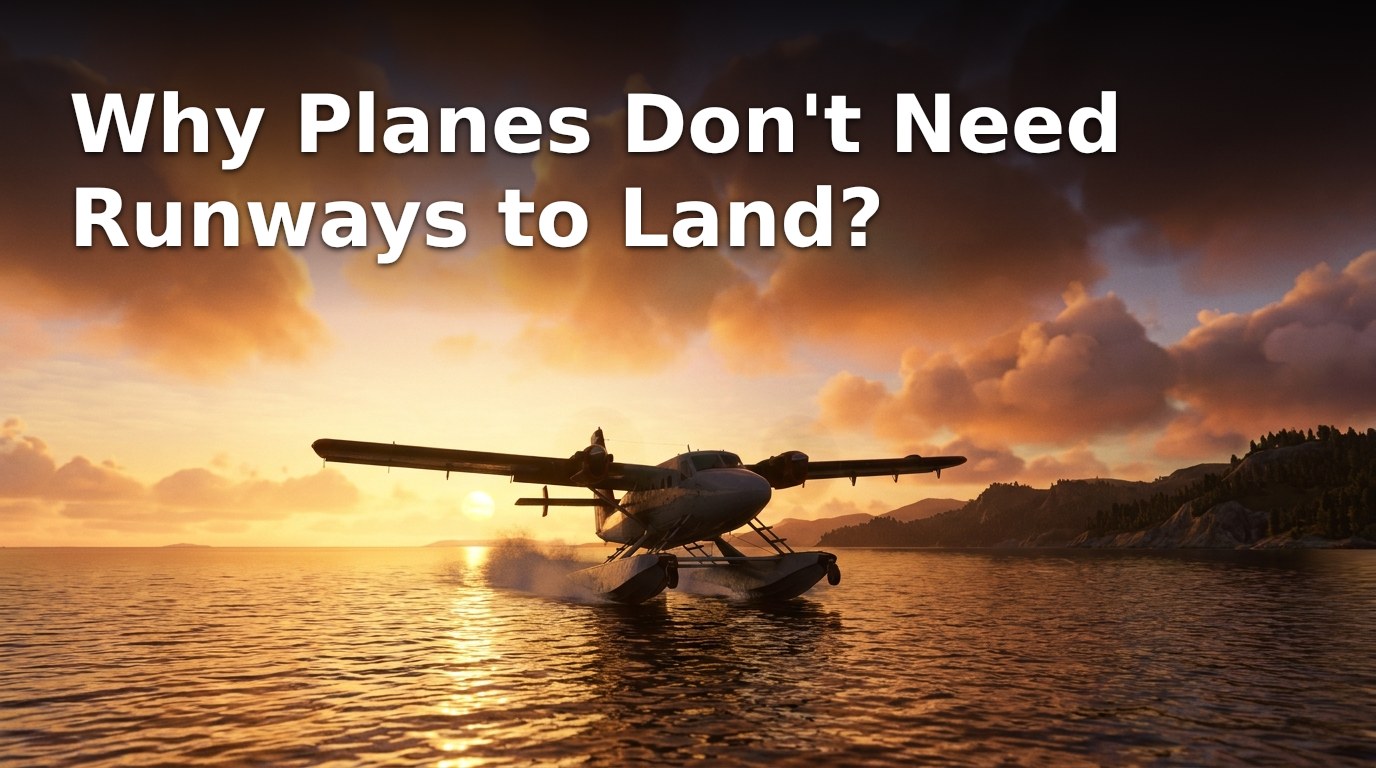
It's a common misconception that all aircraft need long, smooth, flat runways to land safely. In reality, stopping an airplane has far more to do with physics and engineering than with pavement. When a plane lands, it's traveling at a specific speed relative to the air, not the ground. The aircraft's wings continue generating lift even after touchdown, and the pilot needs to dissipate the plane's kinetic energy, which is a combination of both its weight and speed. Modern landing gear and braking systems are powerful enough to handle this energy conversion on surfaces that would seem unsuitable to the untrained eye.
The key innovation that changed aircraft landing capability was the development of specialized landing gear designed to absorb impacts and high stresses. Unlike car shock absorbers, aircraft landing gear uses combinations of springs, dampers, and hydraulic systems to handle the tremendous forces involved in bringing a multi-ton vehicle to a stop. The gear is engineered to flex and absorb energy without collapsing, and the wheels have incredibly strong brakes that can handle extreme temperatures and friction. This means a well-designed aircraft can land on compacted dirt, grass, gravel, snow, and even water if properly equipped with floats or pontoons.
Military aircraft demonstrated this capability decades ago out of pure necessity. During wartime, conventional airfields became targets, so military planners needed planes that could operate from improvised strips or damaged runways. Aircraft like the C-130 Hercules transport plane and various fighter jets were designed with extremely rugged landing gear and powerful braking systems precisely for this reason. These planes still operate today from remote bases, dirt strips, and minimal infrastructure locations around the world. The C-130 in particular became famous for its ability to land on a football field or a beach and still take off again with a full cargo load.
Bush planes and civilian aircraft in remote regions have taken this principle further. Planes like the Cessna Caravan and the DHC-6 Twin Otter were purpose-built for operations in places with no infrastructure at all. Their landing gear can handle sudden drops into unmaintained terrain, their designs prioritize strength over speed, and pilots flying these aircraft develop specialized skills for evaluating whether a surface is safe to land on. A pilot assessing a wilderness strip looks for slope, obstacles, surface composition, and headwind direction, not pavement quality.
The physics of landing safely comes down to available distance for deceleration and the structural capability of the aircraft to withstand the forces involved. A shorter landing distance means the plane needs to dissipate its energy more rapidly, which requires stronger braking and landing gear. Larger, heavier aircraft like commercial jetliners are designed for efficiency on paved runways where smooth deceleration over greater distance reduces stress on