Why Planes Need Trim Tabs?
By Aviation Explained · 2026-09-23
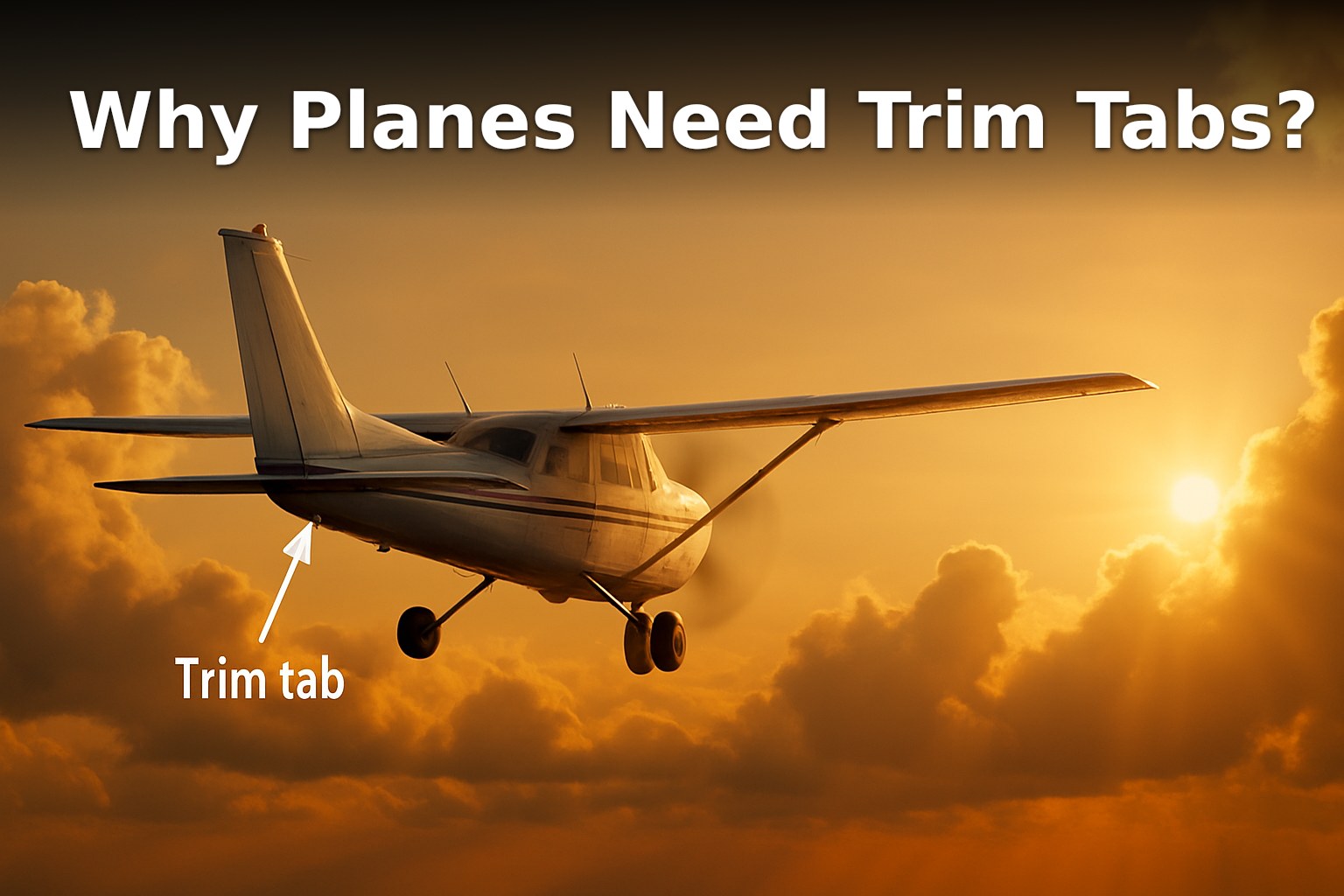
Imagine flying a plane without power steering in a car. The pilot would be constantly fighting the controls, holding pressure on the yoke to keep the aircraft straight and level. This is exactly the problem that trim tabs solve. Aircraft are constantly subject to forces that want to push them out of balance, from fuel consumption that shifts weight distribution to air currents that create unwanted pressure on the control surfaces. Without trim tabs, a pilot would arrive at their destination exhausted from continuously muscling the controls to maintain the desired flight path.
The fundamental physics at work involves something called center of gravity and center of pressure. As a plane flies, the aerodynamic forces pushing on the wings and fuselage don't always align perfectly with where the aircraft's weight is concentrated. This creates a tendency for the plane to pitch up or down, roll left or right, or yaw sideways. Additionally, different configurations during flight, such as lowering the landing gear or opening cargo doors, shift these balance points. The pilot needs constant correction, which is exhausting and imprecise when done by hand alone.
Trim tabs are small, moveable control surfaces attached to the trailing edges of the main control surfaces: the elevators on the tail, the rudder, and sometimes the ailerons on the wings. These tabs move independently and create tiny pressure changes that adjust the aerodynamic forces. For example, an elevator trim tab on the tail can be angled to change how much upward or downward force the elevator itself produces. This is more efficient than constantly pulling back on the yoke because the small trim tab only needs to make a minor adjustment, not move the large control surface significantly.
What makes trim fascinating is that it's essentially a way to balance opposing forces. A pilot can adjust the trim to reach a point where the aircraft naturally wants to stay level and fly straight without any pressure on the controls. This is called "hands-off" flight, and it's not automatic; it requires the pilot to actively set the trim based on the current flight condition. This might involve small adjustments during climb, different adjustments during cruise when the plane has burned fuel and the weight distribution has changed, and yet more adjustments during descent as the configuration changes again.
Modern aircraft have electrical trim systems that pilots control with switches in the cockpit, while older planes use mechanical systems with trim wheels that the pilot must turn by hand. Either way, trim is essential for safe, comfortable flight and fuel efficiency. Without it, flying would require constant physical effort and would be far less precise. Trim represents one of aviation's clever solutions: rather than fighting physics directly with brute force, trim works with physics by making tiny adjustments that create the conditions for stable, balanced flight.