Why Risotto Needs Constant Stirring?
By Food Discovery · 2026-09-30
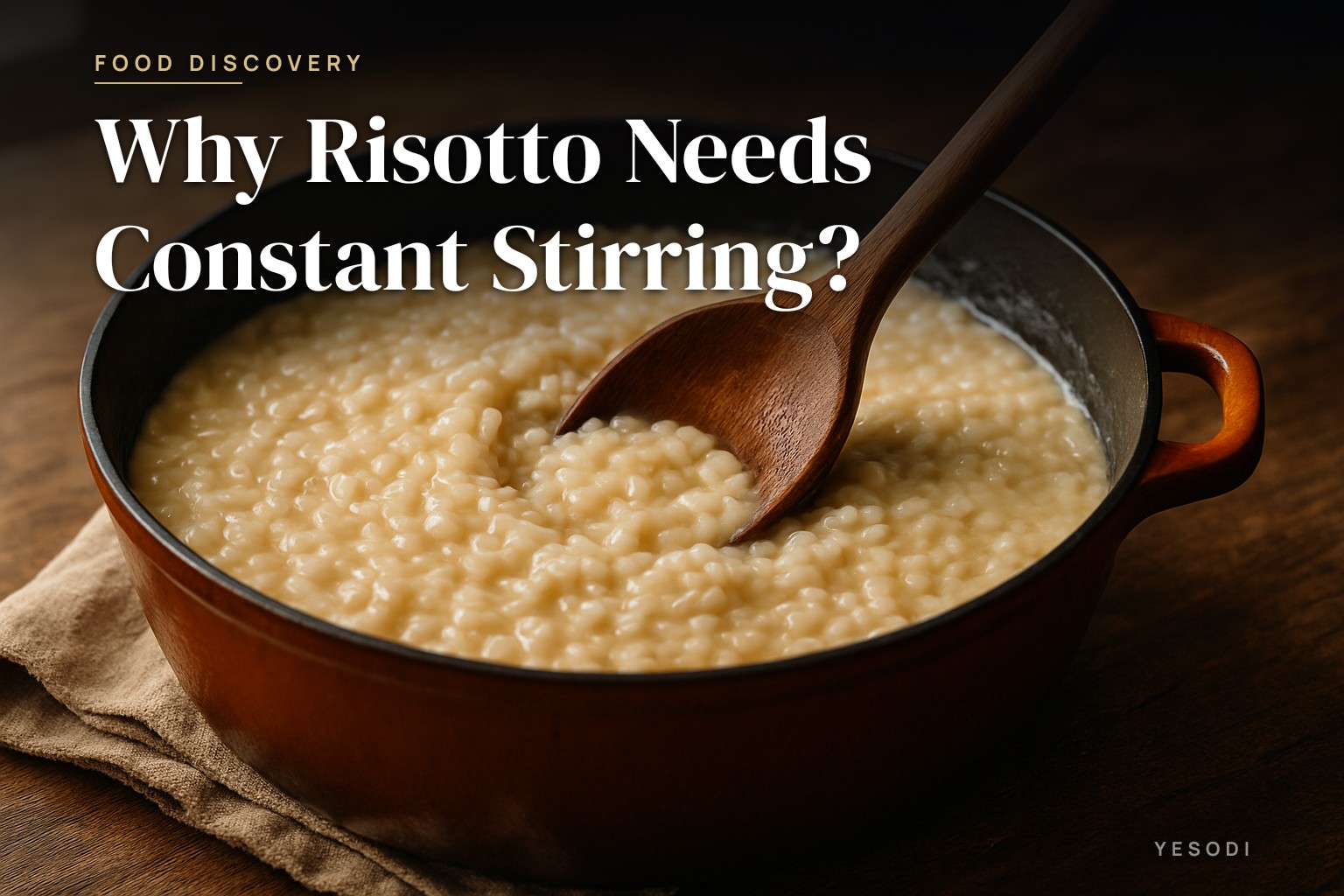
Risotto is one of the few dishes where the cook's labor is literally the main ingredient. Unlike most rice dishes, where you cook the grain and leave it alone, risotto demands your attention from start to finish. That constant motion isn't fussy tradition, it's chemistry in motion.
When you heat arborio or carnaroli rice with broth and stir, you're doing something specific: breaking down the outer layer of each grain. These are short, plump varieties bred to hold their shape while releasing starch. As you stir, the friction of the grains against each other and the spoon damages their surface. Starches leach into the cooking liquid, creating an emulsion that feels luxurious and creamy even though there's often no cream involved at all. The more you stir, the more starch releases, and the silkier the dish becomes.
This is why risotto feels so different from pilaf or other rice preparations. A pilaf is cooked with a measured amount of liquid that gets fully absorbed, leaving fluffy individual grains. Risotto is cooked with broth added in stages, and the cook adjusts the liquid as the rice releases its starch. You're not just cooking rice, you're building a sauce around it in real time.
The stirring also matters for another reason: it helps the rice cook evenly. As you move the spoon through the pot, you're redistributing heat and preventing the bottom from sticking while keeping the top of the liquid warm and ready to be absorbed by the next layer of grains. The entire rice mass cooks at roughly the same pace.
This is why you can taste the difference between risotto stirred constantly and risotto stirred occasionally. The constant method releases more starch, creating that desired creamy texture. The technique isn't decorative, it's the actual engine of the dish.