The App That Wants You to Shop Before You Know What You Want
By William Lebovics · 2026-11-09
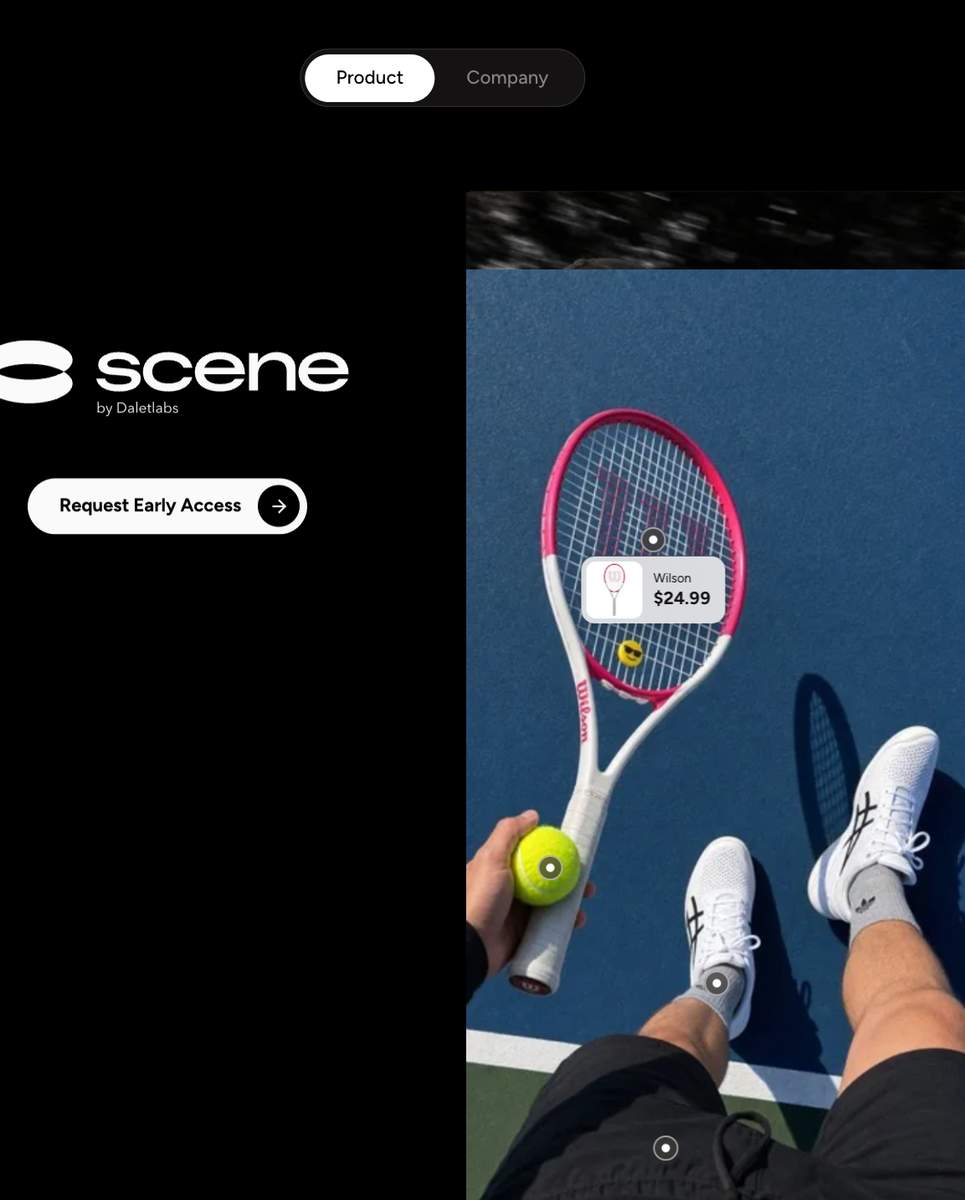
Dalet Labs raised $7 million from Lightspeed on a five-page deck and a big idea it calls "generative commerce." Here's what it is, how it differs from Phia, and what nobody has answered yet.
Key Takeaways Dalet Labs is a New York AI startup whose first product, Scene, is an invite-only iPhone app: a feed of AI-generated images in which every item shown is a real product you can buy. "Generative commerce" is the company's own term, and the pitch is that AI shopping agents serve people who know what they want while Scene serves the far larger moment before that. The company sidestepped the brand cold-start problem by plugging into affiliate networks instead of signing brands one at a time. Its moat is unproven: it has published no usage, retention or conversion numbers, and the app has been public for under two weeks. The Company Dalet Labs was founded in 2025 by Omer Bar-Tal, an Israeli researcher who trained video models at Google, Pika and Runway before going out on his own. The team is small (database listings put it at under 10 people) and is drawn from Google, Runway and MIT. On October 28, 2026, the company came out of stealth with a $7 million pre-seed round led by Lightspeed Venture Partners, with SV Angel and individual angels participating. Lightspeed partner Lisa Han led the deal. According to Business Insider, which broke the story and published the deck, the round actually came together in late 2025 on a five-page presentation, months before the product was finalized. In other words, Lightspeed bet on the founder and the thesis, not on traction. The Product Open Scene and there is no search bar doing the heavy lifting. You get a stream of lifelike images: a styled living room, a person in an outfit, a weekend scene. Everything in the frame is a real item from a real brand, spanning fashion, home decor and sporting goods. Tap a product to save it or add it to a cart. Items from different brands go into one cart, and the company says checkout happens without leaving the app. The feed is not curated from creator posts. It is generated for you, and each tap, save and skip shapes what gets generated next. Bar-Tal's public summary of the mission is to "make shopping fun again," and he has described the experience as walking into a mall built around your taste. Scene is currently iOS-only, U.S.-only and invite-only. There is no Android version. What "Generative Commerce" Actually Means The term is Dalet's coinage, and it is defined against the phrase everyone else in the sector is using: agentic commerce. Agentic commerce is about utility. You tell a chatbot or agent what you want and it searches, compares and buys. Dalet's argument is that this only covers shoppers who arrive with intent, and most shopping does not start that way. People often figure out what they like by looking. Generative commerce, in the company's framing, is the experience layer: inspiration, browsing and purchase merged into one continuous visual stream, with the media generated on the fly and anchored to purchasable inventory. Put simply, agents help you buy what you already want. Scene is trying to help you want something. Under the Hood Dalet has published a technical note on its method, which it calls Collaborative Generation. Stripped of the math, it works like this: The system starts by picking a set of reference images that represent a coherent interest or trend, guided by what users collectively engage with. A language model reads those references and builds a shared list of visual attributes that describe them. New image descriptions are then assembled by sampling attribute values that were actually observed in the references, instead of letting the model invent freely, which Dalet says limits hallucinated details. An image model renders those descriptions, and a separate critic model trained on human preference judgments checks each batch for coherence and variety. The new images can then become references for the next round, so the cycle feeds itself. The upshot is a content library that grows from user behavior, with no photoshoots. Dalet Labs vs. Phia Phia, the app co-founded by Phoebe Gates (daughter of Bill Gates and Melinda French Gates) and Sophia Kianni, is the best-known young name in AI shopping, so the comparison is natural. They are close to opposites. Start with the job each app does. Scene exists to help you discover what you want, and it asks for no intent at all when you open it. Phia exists to help you pay less for something you have already found, so it starts from a specific item. Scene keeps you inside its own app, scrolling a feed of AI-generated scenes across fashion, home decor and sports. Phia is an iOS app plus a browser extension that rides along while you shop elsewhere, surfacing real listings, new and secondhand, and it is focused on fashion. The companies are also at very different stages. Dalet Labs has a $7 million pre-seed, an invite-only app and a launch date of October 2026. Phia launched in April 2025, has reported a $35.5 million Series A and about $43.5 million raised in total, and is reported to have passed a million users in under a year. The founders differ as well: Bar-Tal comes from AI research, while Gates and Kianni bring consumer brand and media reach. What the two share is how they make money. Both run on affiliate commissions. The shared revenue model matters. In July 2026, Bloomberg reported that a flaw in Phia's code let it claim commissions on sales it had not driven; Phia said it had fixed a bug. Any affiliate-funded shopping app, Scene included, now operates under closer scrutiny of how it attributes sales. Is This Another Social Network? It looks like one and is not one. Scene borrows the scroll of TikTok and the visual grammar of Pinterest, but based on everything publicly described there are no creators, no followers and no user posts. The feed is synthetic and built per person. The only "social" element is indirect: aggregate behavior influences what gets generated. Bar-Tal positions it explicitly as a shopping destination and not an entertainment feed. The most accurate label is a commerce platform wearing a social-media interface. Dalet also describes Scene as complementary to influencers, though it is plainly competing for the same job influencers do for brands: creating desire. The Cold-Start Trick: How It Launched Without Signing the Brands A marketplace normally has to recruit sellers before it can attract buyers. Dalet skipped that step. Scene earns money through affiliate marketing, taking a commission through affiliate networks when a purchase is made. That model is the answer to the brand question. Affiliate networks already hold product feeds and commission terms for thousands of merchants, so a new app can display and sell a wide catalog without negotiating individual brand deals. The company says it has hundreds of brands and retailers available and is adding direct partnerships over time. Generated imagery removes the second barrier. Dalet does not need brands to supply lifestyle photography or creators to produce content, because it manufactures the content itself. Two caveats for anyone doing diligence. First, the company has not publicly explained how a single cross-brand checkout is executed behind the scenes, and Business Insider's description of images linking out to products sits slightly awkwardly beside the company's "never leave the app" claim. Second, an affiliate catalog is not exclusive. Anyone can sign up for the same networks. So What's the Moat? This section is analysis, not reporting. The company has not published a moat argument beyond its research. Three things could become defensible. The first is research talent: making generated images faithfully match a specific real product is hard, and this team has built foundation models before. The second is a taste data loop. Every interaction feeds the next generation, and generated images seed future ones, so if that compounds, the feed gets better in a way a newcomer cannot copy on day one. The third is owning checkout. If unified checkout really works across brands, Dalet holds purchase data that pure discovery feeds never see. Other parts look thin today. Image models are improving and getting cheaper for everyone, and the catalog is rented through affiliate networks. Pinterest, TikTok Shop, Amazon and Google already own the audience and the purchase intent, and any of them could ship a generated feed as a feature. AI try-on startups such as Doji and Alta are working nearby. And there are still no public numbers on users, retention or conversion. The honest read: the moat is a hypothesis about compounding taste data, and $7 million buys the time to test it. The Press So Far Coverage is real but narrow, and nearly all of it traces back to one story. Business Insider had the launch exclusive on October 28, including the full pitch deck, and framed it as a question: would you shop from a feed of AI images? Dealroom followed with a deal note that included a direct "what could go wrong" section on competition and trust. In Israel, Bizportal covered Bar-Tal as a homegrown researcher making a bet on shopping. Marketing and startup trade sites, LXA and Startup Researcher among them, summarized the round, often with the line that this is window shopping where AI builds the window. Lightspeed and a number of finance and tech accounts on X and LinkedIn amplified the announcement. What is missing: independent hands-on reviews, user testimonials and any second-day reporting. That is normal for a two-week-old invite-only app, and it means most of what is known comes from the company itself. The Questions People Are Asking Investors start with retention. A discovery feed lives or dies on whether people come back, and no figure has been disclosed. They want to know whether generated images convert to purchases at a rate that beats real photography or creator content, and whether the math works when generating images for each user costs money and affiliate commissions are a thin slice of each sale. They also ask what happens when a platform with a billion users copies the format, and how much it will cost to get people to download yet another shopping app, given that the stated plan is influencers, social media and a holiday coupon push. The last question is strategic: is affiliate the business, or a bridge to brand-paid placement? And if brands pay, does the feed stay trustworthy? Prospective users and testers ask more practical things. Will the item that arrives look like the item in the generated picture? Color, fit, scale and texture are where AI imagery tends to drift. Who handles shipping, returns and customer service when one cart spans several brands? Is it clear which images are AI-generated and that the app earns a commission? They want to know what the app learns about them from their taps and how that taste profile is used. They wonder whether the feed will keep surprising them or narrow into a loop of what they already clicked. And they ask when it opens up beyond invites and when Android arrives. Brands have a question of their own. Did they agree to have their products shown in scenes they did not shoot, on AI-generated people, and who controls how the brand appears? The Bottom Line Dalet Labs is making a clean, contrarian bet. While most AI commerce money chases agents that complete purchases, it is going after the browsing that comes before. The team has the research pedigree and a clever way around the brand cold start. What it does not yet have is public proof that people want to shop from a synthetic feed, or that they keep coming back. The holiday season is the first real test. Sources • Scene / Dalet Labs: funding announcement • Dalet Labs: company page, "Introducing Generative Commerce" • Dalet Labs: "Collaborative Generation with Non-Parametric Sampling" • Business Insider: pitch deck story, Oct. 28, 2026 (syndicated copy) • Dealroom: Dalet Labs raises $7M pre-seed • Dealroom: company profile • Traders Union: summary of the Business Insider report • LXA: Dalet Labs raises $7M pre-seed for Scene • Bizportal (Hebrew): Dalet Labs launch coverage • Startup Researcher: Dalet Labs raises $7 million • Omer Bar-Tal on X, via Lightspeed's announcement • Digital Commerce 360: Phia launch • Shopifreaks: Phia $35.5M Series A • Founded: Phia's first year • Mediaweek: Phia commission bug report