The Man Who Built Broadway Joe: Jimmy Walsh and the Original Athlete Brand
By William Lebovics · 2026-11-24
Underwear?
Every great brand has a founding myth. Nike has the waffle iron. Apple has the garage. And the modern athlete-as-a-business has a limousine rolling down Park Avenue in 1974, in which a lawyer from Alabama is working up the nerve to tell the most famous quarterback in America that, before today's commercial shoot, he will need to shave his legs.
The quarterback was Joe Namath. The lawyer was Jimmy Walsh, his close friend since their college days at Alabama, his attorney, and, as ESPN put it, his consigliere and the fierce protector of the "Broadway Joe" brand. Walsh was braced for an explosion. Namath laughed. He went on to shave, slip into a pair of Hanes Beautymist pantyhose, and deliver one of the most talked-about commercials of the decade, reportedly for around $100,000 for a single day's work.
Walsh's later verdict was that the spot became newsworthy and added to the folklore of Joe Namath. That sentence is the whole philosophy in miniature. The point was never the underwear. The point was the folklore.
The Quarterback Who Became a City
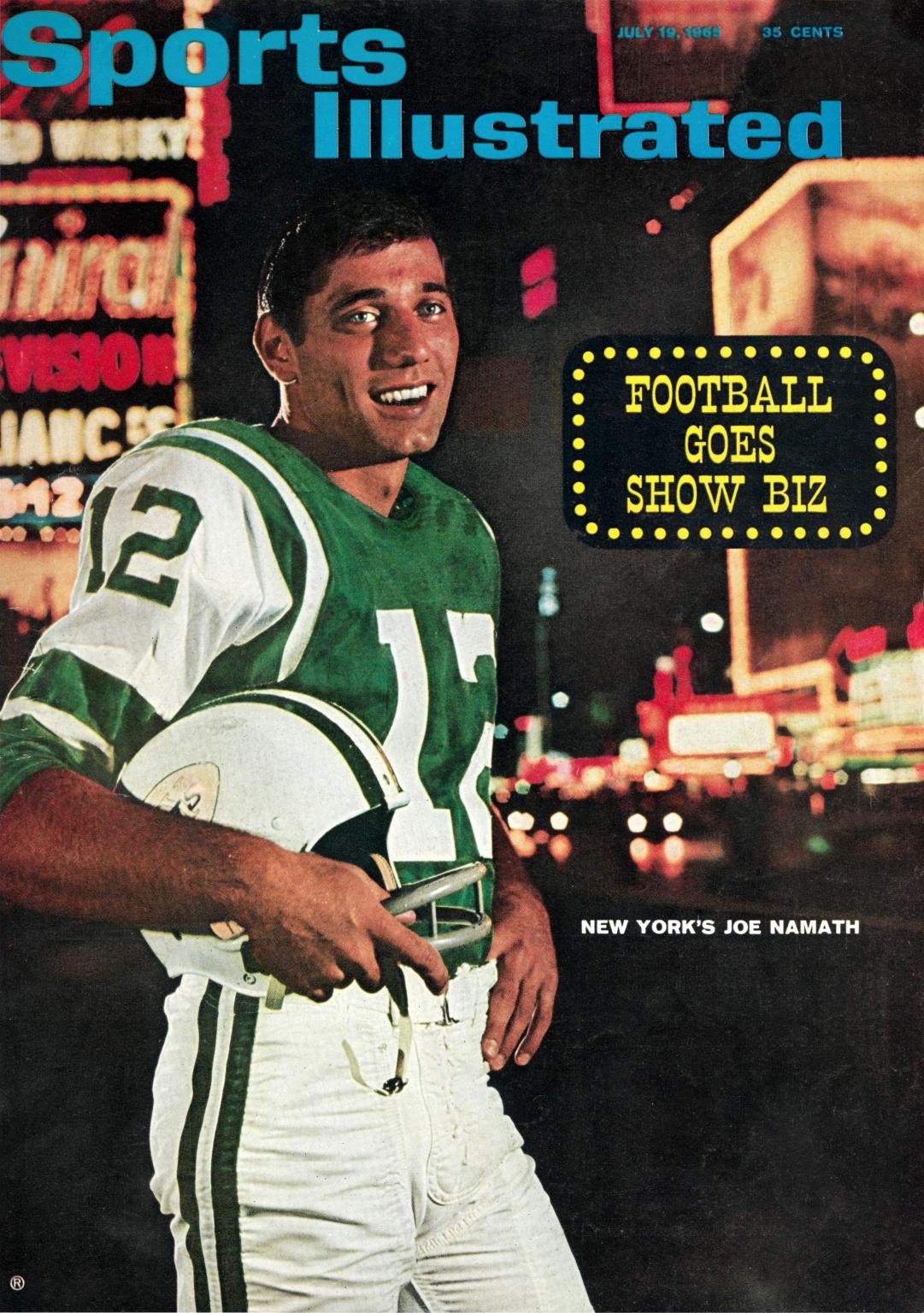
It is hard to overstate how big Joe Namath was. The steelworker's son from Beaver Falls, Pennsylvania, came out of Bear Bryant's Alabama program and signed with the New York Jets of the upstart AFL in 1965 for a then-unheard-of $427,000. A year later, Boston Patriots owner Billy Sullivan was already calling him the biggest thing in New York since Babe Ruth.
He backed it up. In 1967 he became the first quarterback to throw for more than 4,000 yards in a season. Then, in January 1969, came the moment that turned a football player into an American legend: Namath publicly guaranteed that his 18-point-underdog Jets would beat the mighty Baltimore Colts in Super Bowl III. They won 16–7, Namath was named MVP, and the AFL earned the respect that made the modern NFL possible.
Off the field, he was something the sport had never seen: fur coats on the sideline, white cleats, a Manhattan nightlife résumé, and a grin that could sell anything. He was the fighter who played on ruined knees, the winner who called his shot, the socialite who belonged to Broadway, and, unmistakably, a New Yorker and an American icon. He was, in other words, a brand before the sports world had the vocabulary for one.
Which is exactly where Jimmy Walsh comes in.
The Friend Who Read the Room
Talent makes you famous. Stewardship makes you an institution. Walsh's genius was understanding that Namath's image was an asset with a balance sheet: every appearance, every product, every partner either compounded that asset or diluted it.
So he treated Broadway Joe like a portfolio. With Walsh as his counsel and gatekeeper, Namath's endorsement roster ran from Noxzema shaving cream (the 1973 spot alongside a young Farrah Fawcett) to popcorn makers and typewriters to Fabergé cologne, where Namath reportedly signed a 10-year deal in 1975 worth $500,000 a year. Adjust that for inflation and you begin to understand why an entire industry was taking notes.
The secret ingredient wasn't contract law, though Walsh had plenty of that. It was trust. Walsh was not a hired gun who discovered Namath after the Super Bowl; he was the friend from Tuscaloosa who knew the man before the myth. That gave him something no agency could buy: the standing to say no. When a deal fit the story (the fighter, the winner, the charmer with a wink), it went forward. When it didn't, it didn't, no matter the number. And when a deal looked ridiculous on paper, like a linebacker-dodging quarterback in hosiery, Walsh could see that the joke would only make Joe more Joe.
That is the rarest skill in brand management: knowing that authenticity is not the opposite of commerce. Done right, it is the engine of it. And half a century on, Walsh is still at Namath's side. In an industry famous for churn, that alone should be studied in business schools.
The Template for an Industry
Sports marketing has several founding fathers. Mark McCormack's handshake with Arnold Palmer in 1960 built the golf side of the house. But Walsh and Namath wrote the playbook for something new: the team-sport superstar as a crossover celebrity, a multimedia personality whose name could move product in a drugstore aisle, sell out a nightclub, land a film role, and still sell tickets at Shea Stadium on Sunday.
Look at the landscape today and you see that playbook everywhere: the quarterback who is a fixture of every commercial break, the point guard with a production company, the college athlete negotiating name, image and likeness deals before his first start. Entire industries (athlete representation, licensing, influencer marketing, NIL collectives) now operate on the premise Walsh proved with Namath: the athlete is the brand, and the brand deserves a steward who protects it like family.
The New 4th Down
Here is the twist. The playbook survived, but the field changed.
In Walsh's era, an athlete's image lived in a handful of places: the sports page, the evening news, a few national campaigns. A trusted friend with a good legal pad could manage it. Today, an athlete's image lives in a hundred feeds they don't control, sold against advertising they never see, ranked by algorithms they never chose. Their likeness can be generated by AI without their permission. Their reputation can be rewritten by strangers overnight. And most of the money their attention generates flows to the platform, not to them.
The athlete has never been more visible, or less in control of what visibility is worth.
Why YESODI builds on Jimmy Walsh
At YESODI, our leadership team (William Lebovics, Guy Levin, Ashley Hakakian and Elliot Gordon) keeps returning to the Walsh–Namath story, because it answers the question we were founded to solve: what would it look like if every athlete had a Jimmy Walsh built into their digital life?
Our mission is creative freedom for athletes, following in his footsteps. That means athletes owning: • Their story. Not as a hashtag on someone else's platform, but as a home base they control. • Their image and likeness. Including their AI profile: how they appear in Google, in AI search, and in the answers AI engines give when someone asks about them. • Their digital reputation. With the tools to shape it, not just react to it. • Their economics. Brand matching, commerce and monetization that send the value back to the athlete, and even let them share the upside with the fans who helped build them.
Our shorthand for it: the algorithm, the audience, and the money all belong to the creator. Walsh made sure the value of Broadway Joe accrued to Joe. We believe every athlete deserves the same, at scale.
Legacy Beyond Financial Success
The Walsh lesson teaches that money matters less than what athletes do with it. When athletes control their careers, they gain freedom to focus on their craft, win for their teams, serve as genuine ambassadors for their cities, launch charities and community initiatives, inspire young fans, and build strong families and communities. YESODI exists to serve talented, values-driven athletes who understand that a platform is a responsibility and that the best brands, like the best friendships, are built on giving. Our ambition is to put the same loyalty, protection, and creative freedom in the hands of every athlete ready to own their story and inspire the next generation to do the same.