Unstick Stubborn Jar Lids Fast
By Life Hacks & Tricks · 2026-09-05
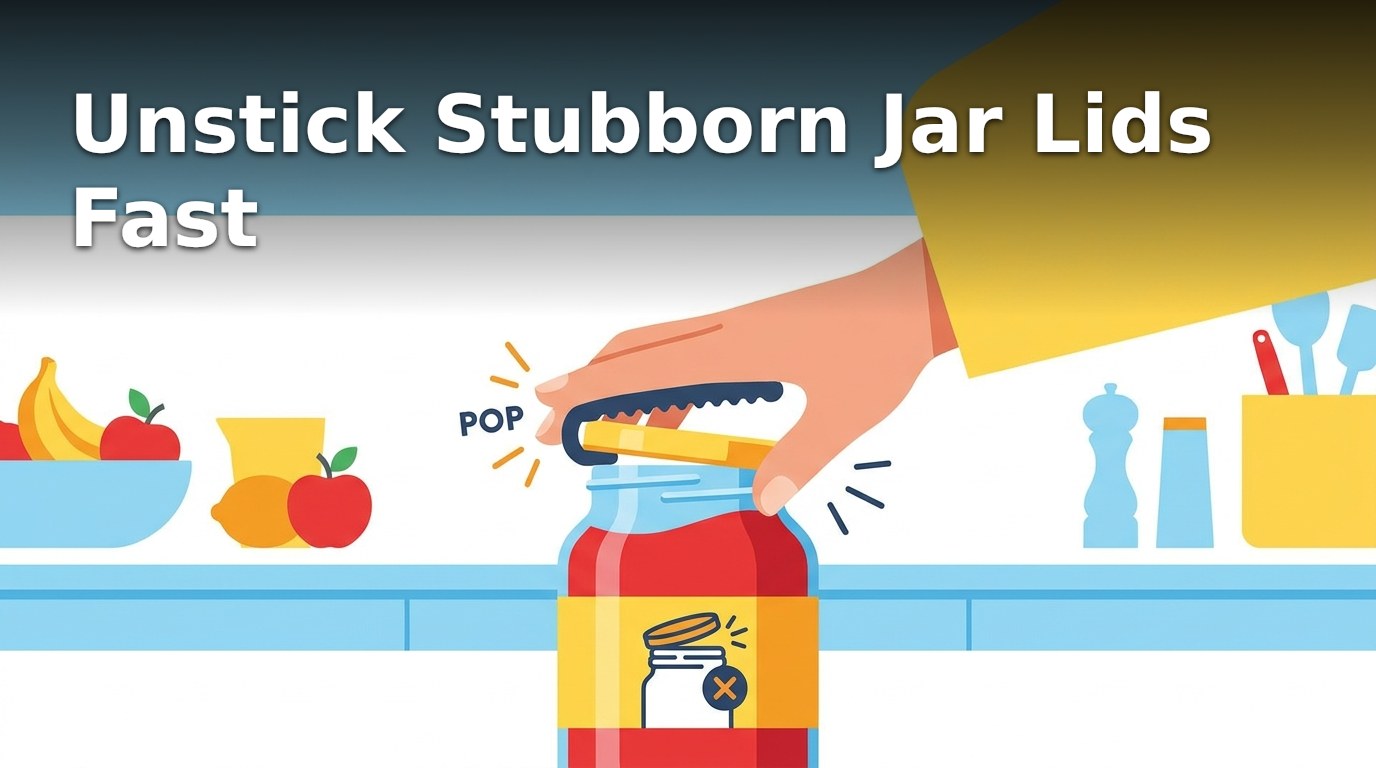
Why do jar lids get stuck in the first place? The answer lives in basic physics. When you screw a lid onto a jar, you create a seal that traps air inside. Over time, especially as the contents cool or as the jar sits on a shelf, air pressure inside the jar drops relative to the atmospheric pressure pushing down on the lid from outside. That pressure difference, though invisible, creates a genuine mechanical grip. Add to this the fact that many jar lids have rubber or silicone gaskets designed to create an airtight seal, and you've got a situation where the lid becomes increasingly difficult to remove the longer it sits. It's not stubbornness. It's thermodynamics and air pressure doing their job exactly as intended.
The material science of jar lids reveals another layer. Most metal lids expand and contract with temperature changes. When a hot liquid goes into a jar and the lid gets screwed on while everything is warm, the metal is in an expanded state. As the jar cools, the metal contracts, tightening the seal even further. This same principle applies in reverse: heating the lid causes it to expand again, which can relieve the pressure holding it tight. Glass jars also expand with heat, but metal lids expand faster and more noticeably, which is why a hot water bath works. You're exploiting the different expansion rates of two materials that are pressed against each other.
Understanding seal integrity matters more than most people realize. The reason manufacturers engineered these tight seals in the first place was to protect food from contamination and preserve freshness. A vacuum seal or tight gasket keeps bacteria, mold, and air from entering the container. This technology evolved over centuries, from wax seals on old bottles to modern two-piece metal lids with plastisol liners. The very feature that makes the jar impossible to open on a Tuesday is the same feature that kept your grandmother's preserves fresh all winter. The design is remarkably successful at its purpose.
The towel trick adds another element: grip and stability. When you hold a jar directly with bare hands, your fingers slip against the smooth glass. A towel creates friction, giving you mechanical advantage without requiring you to squeeze harder or risk dropping the jar. This matters because jar lids were designed assuming normal hand strength. Once air pressure and temperature have done their work, brute force becomes the default strategy. Using a towel redistributes force more evenly and prevents hand fatigue from straining against a sealed container. You're not fighting physics. You're working with your own biomechanics.
The broader lesson here applies throughout daily life: many frustrating situations stem from invisible forces or materials doing exactly what they were designed to do. Stuck lids, stuck windows, stuck drawer slides, all follow similar patterns of expansion, contraction, pressure differential, and friction. The solution rarely involves more force. Instead