Why Aircraft Wings Bend So Much?
By Aviation Explained · 2026-11-16
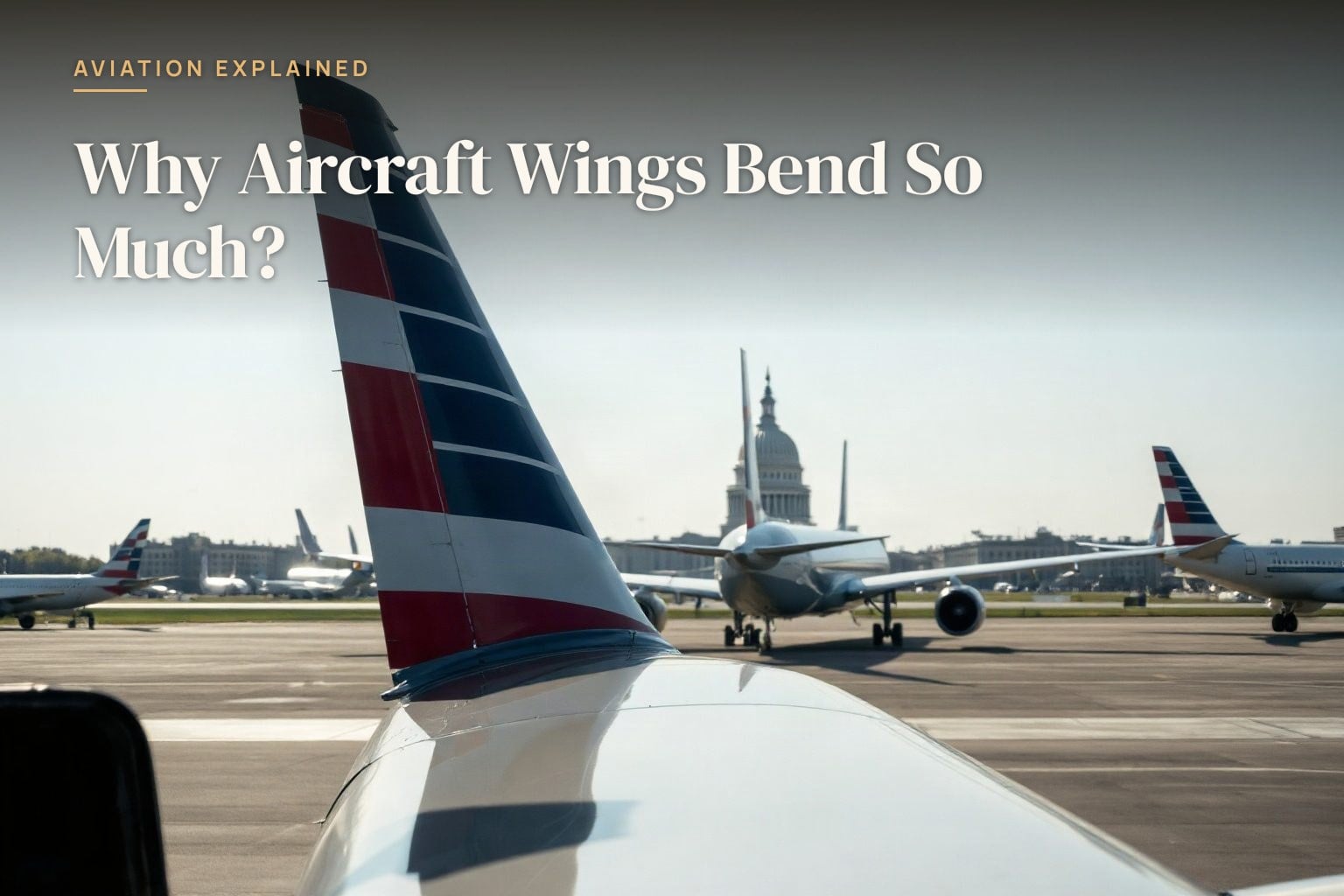
When you watch a large jet take off or land, if you look at the wingtips, you'll see something surprising: they move up and down noticeably, almost like they're waving. For a wide body jet, the wing can flex upward by 15 to 20 feet or more during cruise. This isn't a sign something is broken. It's actually proof that the wing is doing exactly what it's designed to do.
Why wings need to flex
An airplane wing is not a rigid steel beam. It's a carefully shaped structure made of aluminum alloy, composite materials, and open spaces inside. That hollow design is intentional. A solid, completely rigid wing would have to be so thick and heavy that the airplane would need enormous engines just to get off the ground. The wing has to be a compromise between strength and weight, and flexibility is part of that answer.
How bending actually helps
When a wing bends and flexes, it distributes the stresses across its structure more evenly. Think of it like a rope swaying in the wind versus a wooden plank. The rope flexes and absorbs the energy; the rigid plank concentrates all the force on its joints and anchors. A flexible wing absorbs turbulence and load changes without creating dangerous stress concentrations that could lead to cracks or failure.
The load problem during flight
When an aircraft climbs, every part of the wing experiences a constant upward force from the air pressure pushing up on the lower surface. The engines push forward with enormous thrust. The fuselage, cargo, and fuel all hang from the wing structure. All of this creates enormous bending forces. If the wing didn't flex, those forces would concentrate in the wing roots and structure, eventually causing metal fatigue and cracks. By allowing the wing to bend gradually, the stress spreads out and stays within safe limits.
Fuel efficiency gains
A flexible wing is also more efficient. As the wing bends upward during cruise, the shape of the wing changes slightly. This changes how the air flows over and under it. Modern aircraft are designed so that this natural flex actually improves the aerodynamics at cruise altitude. Engineers call this aeroelastic tailoring. The wing bends in a way that reduces drag, so the engines don't have to work as hard to maintain speed. That saves fuel over a long flight. A large jet might use hundreds of gallons of fuel less on a transoceanic flight because of wing flex, which translates directly to cost savings and lower emissions.
What prevents catastrophic bending
Of course, there are hard limits. The wing structure has stiffening ribs, spars, and stringers built inside that prevent it from folding or bending so much it snaps or twists dangerously. During aircraft design and testing, engineers run computer models and perform real flight tests to map out exactly how much bend is safe and expected at every speed and altitude. The wing is painted with special markings, and test flights use instruments to measure how much the wingtip actually moves. The limi