Why Pasta Water Thickens Sauce?
By Food Discovery · 2026-09-24
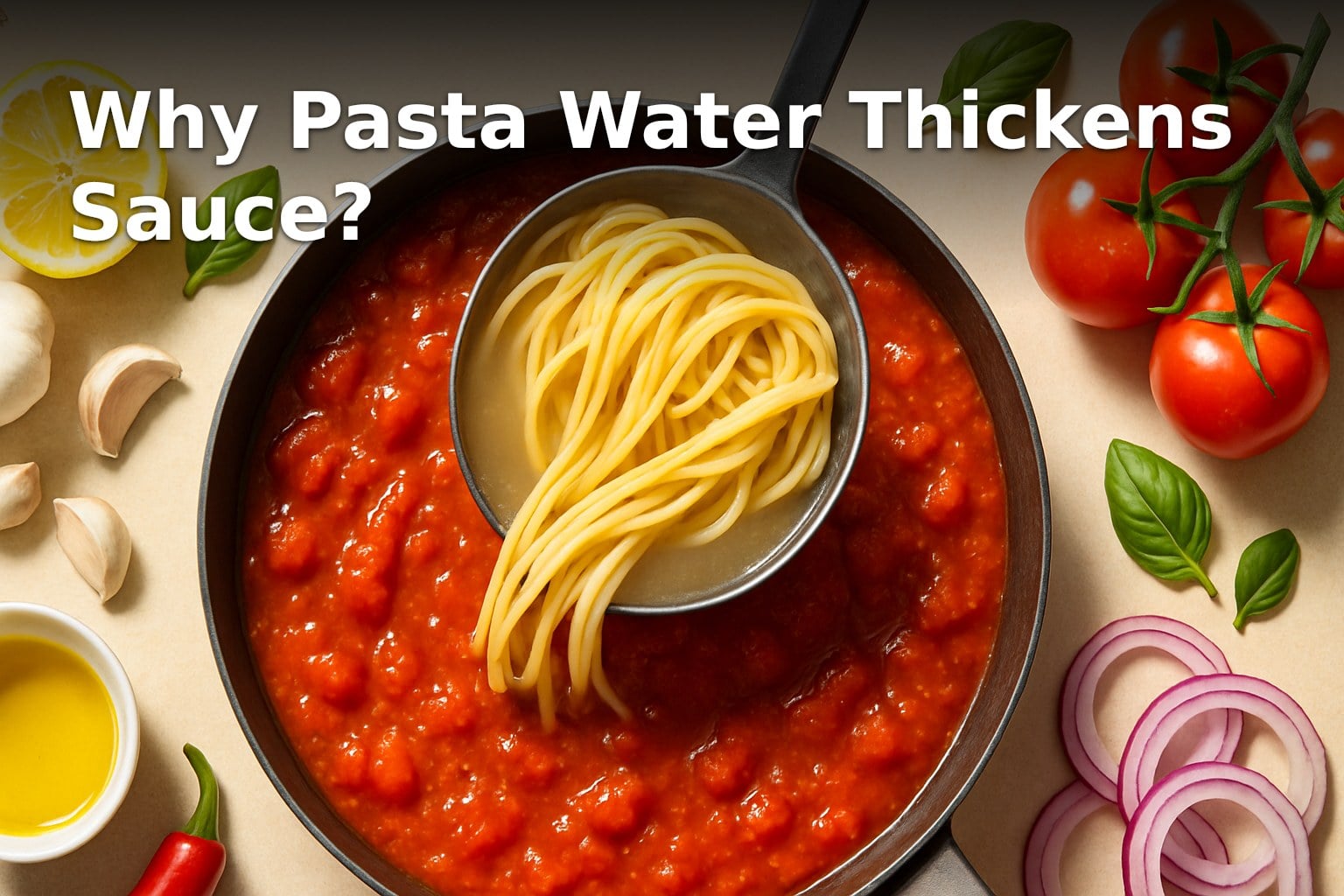
When you drain pasta, you're left with cloudy water that most home cooks pour right down the sink. But this humble liquid is actually one of the best kept secrets in professional kitchens around the world. The starch that makes pasta water look milky is the key to understanding one of cooking's most elegant tricks. This isn't a myth or a chef's shortcut that doesn't really matter, it's actual food science that changes the texture and quality of your finished dish in measurable ways.
Pasta releases starch into boiling water as it cooks. Unlike flour, which dissolves completely, pasta starch exists as tiny granules suspended in the water, making it cloudy and slightly viscous. These granules are proteins and carbohydrates bonded together in a specific structure that forms when wheat is ground and then cooked. When you add pasta water to your sauce, you're essentially adding microscopic particles that have remarkable properties. They're hydrophilic, meaning they love water, but they also have parts that are attracted to fat and oil.
This is where the emulsification magic happens. Most sauces separate into watery and oily components because those ingredients don't naturally want to mix, like oil and vinegar. The starch granules act as intermediaries, their molecular structure allowing them to bond with both fat and water simultaneously. This helps distribute the fat evenly throughout the sauce, creating that luxurious, velvety texture that coats your pasta rather than pooling at the bottom of the bowl. The starch also thickens the sauce naturally without adding cream or flour, which is why professional chefs prefer this method.
Temperature and the emulsification process work together. The heat from both the pasta water and the sauce keeps these starch granules active and able to do their job. When the temperature drops, the effect becomes less pronounced, which is why restaurants serve pasta in heated bowls and plates. A single ladle full of pasta water, about one to two cups, is usually enough to transform a thin sauce into something silky. Using too much creates a sauce that's watery rather than velvety, while using none leaves you with separated, unrefined results.
This technique shows up across Italian cooking, from simple aglio e olio to complex ragus, and it's now standard practice in fine dining kitchens everywhere. It's free, it's sustainable since you're using liquid you already have, and it works beautifully every single time. Understanding this simple principle transforms the way you cook pasta sauces at home, turning what seemed like an insignificant byproduct into the secret weapon that separates restaurant quality results from ordinary pasta dishes.