Why Planes Climb After Takeoff?
By Aviation Explained · 2026-09-06
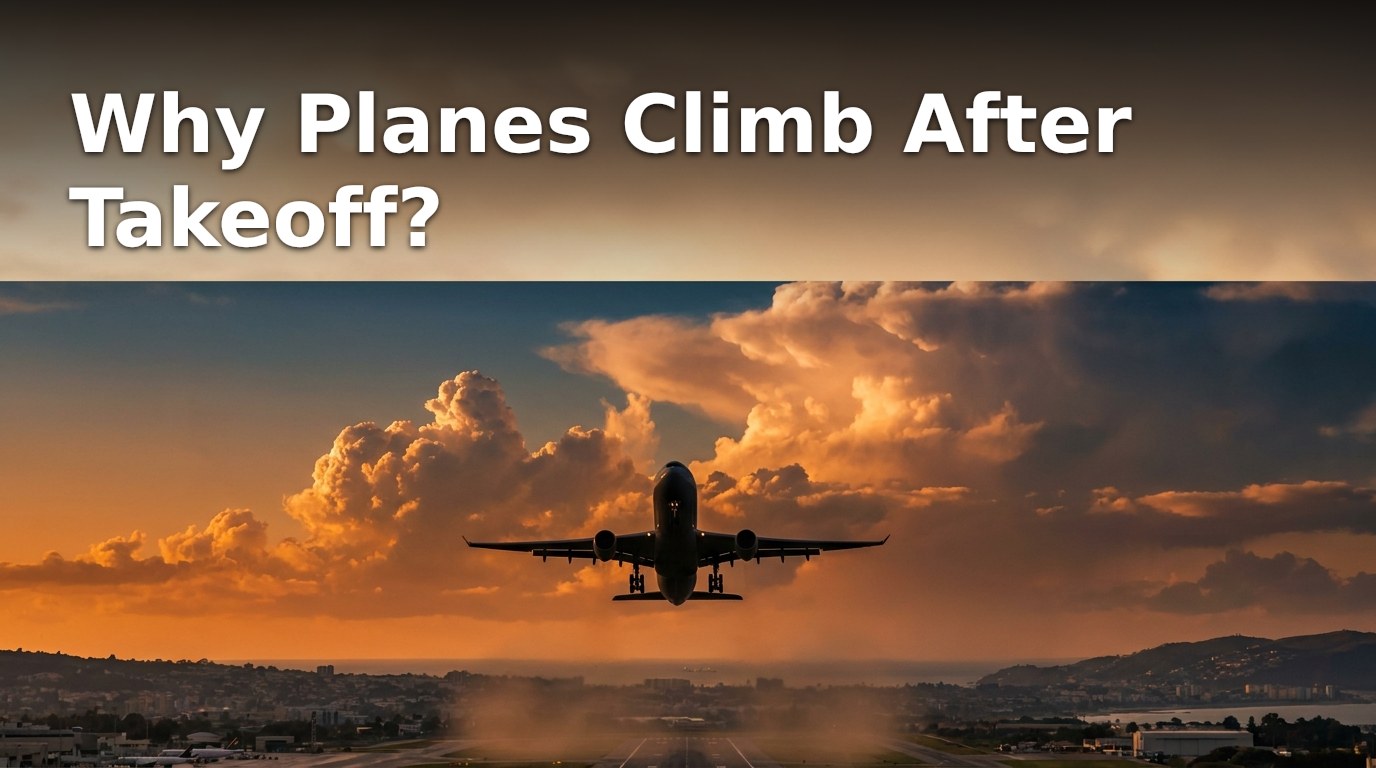
When a plane takes off and reaches a safe altitude, the pilots don't keep the nose down and cruise along at treetop level. Instead, they angle the aircraft upward in a climb that can last several minutes. This climb isn't just for show or because pilots prefer the view. There's a fundamental reason rooted in how air works and how aircraft engines operate. The higher a plane goes, the thinner the air becomes, and thinner air means the engines have to work less hard to push the plane forward. This is the core of why climbing makes so much sense for both fuel economy and overall flight efficiency.
To understand this better, think about air as a resistance problem. When a plane tries to move forward, it pushes air out of the way, and that air pushes back. This resistance is called drag, and it increases when the air is denser. At sea level, the air is packed tightly with molecules. As you climb, there are fewer and fewer molecules in the same volume of space. At 35,000 feet, the air is about one tenth as dense as it is on the ground. This massive difference means that an aircraft moving at the same speed encounters far less resistance up high than it would at low altitude. Less resistance means the engines don't need to produce as much power to maintain that speed, which directly translates to burning less fuel.
There's another important reason planes climb, and it involves how jet engines actually work. Jet engines are most efficient at higher altitudes and higher speeds. The relationship between altitude, temperature, speed, and engine efficiency is complex, but the basic idea is that jet engines produce thrust most economically when the air around them is cool and thin. Climbing to cruise altitude is how pilots put the aircraft into its sweet spot. An aircraft cruising at 35,000 feet and flying at around 500 miles per hour burns significantly less fuel per mile traveled than the same aircraft would flying at 10,000 feet at the same speed. The numbers matter in aviation: saving fuel means saving money and reducing environmental impact.
Climb performance also relates to safety and airspace management. Once an aircraft reaches its assigned cruise altitude, it's separated vertically from other aircraft flying different altitudes. The climb phase gets the plane into its designated airspace quickly and efficiently, following established departure procedures that air traffic control has designed for safety. Different aircraft types climb at different rates depending on their weight, engine power, and aerodynamic design. A fully loaded cargo plane climbs more slowly than a light jet. These differences are well understood and built into flight planning.
The climb phase isn't just about reaching altitude and staying there. For most flights, especially those covering hundreds of miles, the altitude is where the plane actually spends the majority of its time, and where it burns the least fuel relative to the distance covered. The climb itself costs extra