Why Planes Pressurize the Cabin?
By Aviation Explained · 2026-09-07
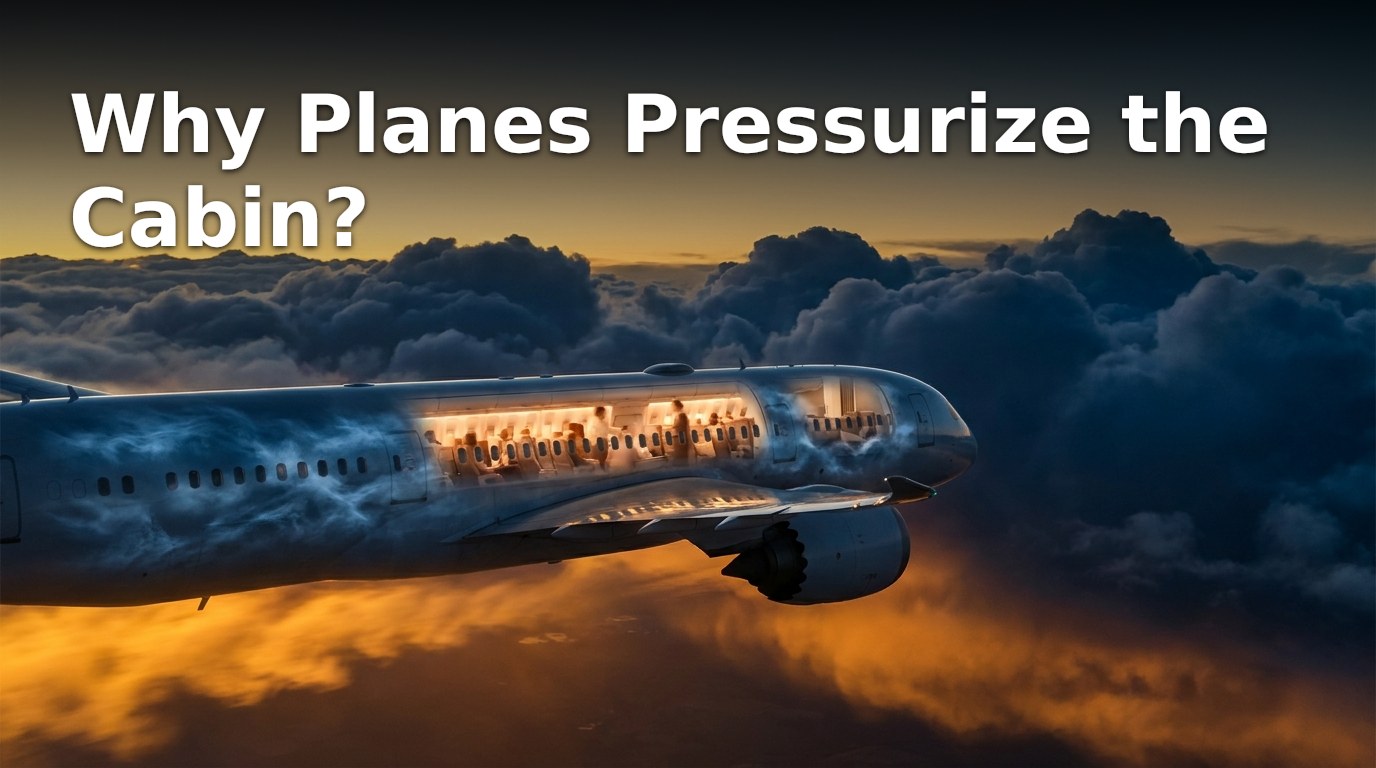
At cruising altitude, the environment outside the aircraft is extraordinarily hostile to human life. The air pressure at 35,000 feet is only about one quarter of what it is at sea level, and the temperature plummets to roughly minus 57 degrees Fahrenheit. Without a pressurized cabin, a person exposed to this environment would experience rapid decompression, where the lower outside pressure would cause the gases dissolved in their blood and body fluids to expand and form bubbles, a condition called "the bends" or decompression sickness. This process happens so quickly at extreme altitudes that it can be fatal within minutes. Pressurization keeps passengers safe by maintaining an internal cabin environment that mimics conditions at a much lower altitude, typically equivalent to between 6,000 and 8,000 feet above sea level.
The pressurization system works by taking air from the engines, which compress it as part of their normal operation, then carefully controlling how much of that compressed air enters the cabin through a valve system. The engines have compressor stages that squeeze incoming air to high pressure and temperature. Some of this air gets diverted into the cabin, where it's cooled and mixed with recycled cabin air, then released in a controlled manner. A key component called the outflow valve manages how much air leaves the cabin, maintaining the desired pressure difference between inside and outside. This pressure difference is what keeps the cabin at a safe altitude equivalent while the plane flies much higher.
Why do aircraft cruise so high if pressurization only maintains conditions equivalent to 6,000 or 8,000 feet anyway? The answer lies in physics and efficiency. The thinner air at high altitude means less drag on the aircraft, allowing engines to burn less fuel and making long flights economically practical. Modern jet engines are also specifically designed to work efficiently at high altitudes where it's cold. The jet stream, rivers of fast moving air found at high altitude, can save significant fuel on long routes. Pilots and engineers accept the mild discomfort of cabin altitude around 6,000 to 8,000 feet as a reasonable tradeoff for the enormous fuel savings that high altitude flying provides.
Passengers rarely notice they're experiencing reduced cabin pressure, though some people do feel mild effects. The lower pressure and humidity in the cabin can dry out skin and nasal passages, contributing to the tired feeling some travelers report after long flights. Ears may pop as pressures equalize during climb and descent. For most healthy adults, cabin altitudes are perfectly safe and comfortable. However, the system includes safety margins and redundancy. If the cabin pressurization fails, oxygen masks automatically deploy from overhead compartments, providing breathable air while the pilots descend to a safe altitude where outside air pressure and oxygen levels are sufficient on their own.
The development of press