Why Salt Melts Ice Cream?
By Food Discovery · 2026-09-21
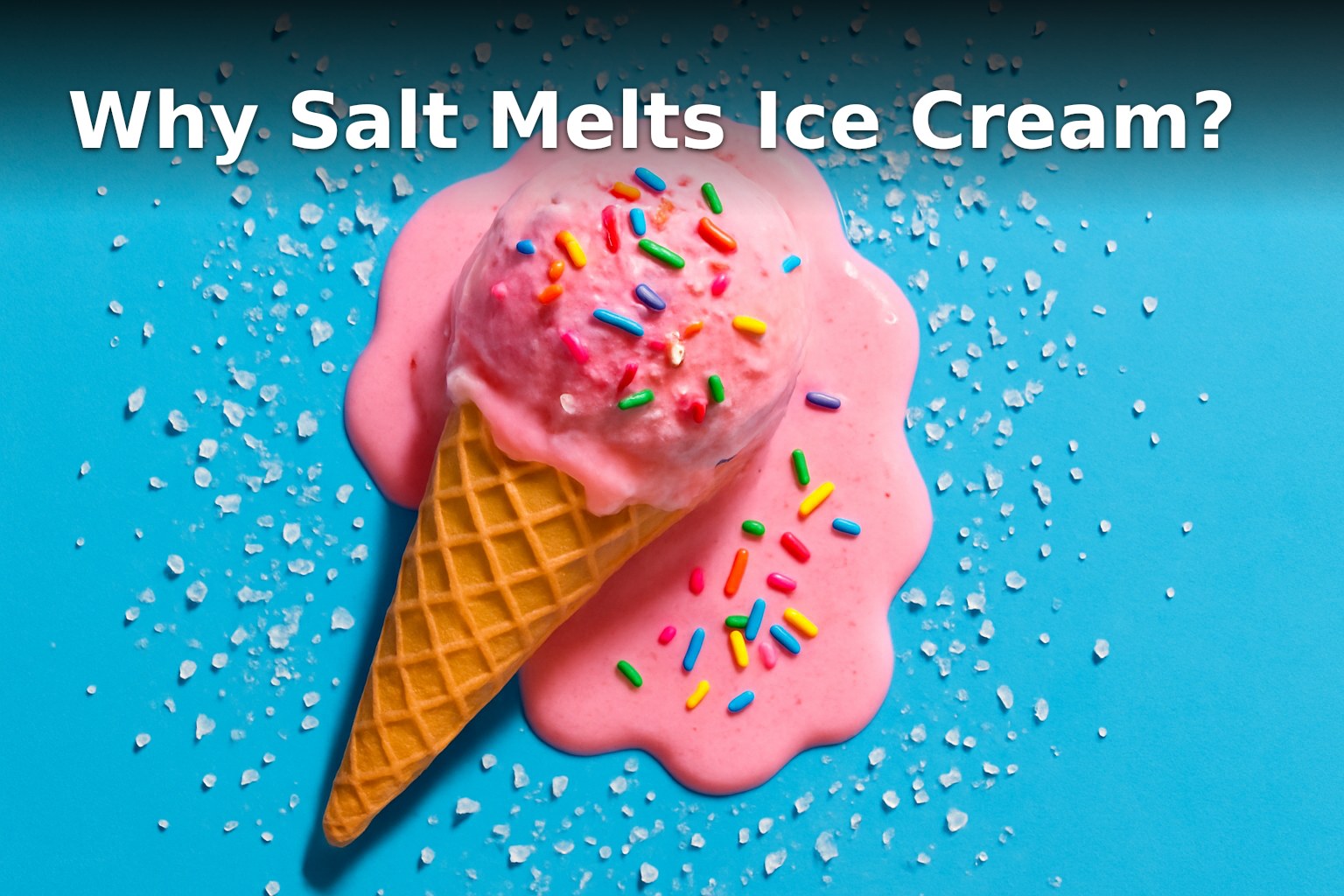
Here's the fascinating chemistry behind one of the oldest tricks in the ice cream maker's playbook. When you churn ice cream at home, you're trying to accomplish something tricky: freeze a creamy mixture while simultaneously churning it into a smooth texture. The challenge is that a standard freezer, kept around 0 degrees Fahrenheit, isn't quite cold enough to freeze the sugar and fat laden base quickly enough while also aerating it properly. This is where salt enters the picture, and it does something genuinely surprising to the laws of physics.
Salt works through a process called freezing point depression, which sounds complicated but follows straightforward chemistry. When you dissolve salt in water or any liquid, those salt crystals break apart into sodium and chloride ions. These ions interfere with water molecules' ability to form the stable crystalline structure that creates ice. Essentially, the salt molecules get in the way, so the mixture needs to be significantly colder before it can actually freeze. For ice cream's sweet cream base, adding salt to the surrounding ice bath can lower the freezing point from 32 degrees down to 15 degrees Fahrenheit or even lower, depending on the salt concentration.
But here's where it gets truly clever. When you add salt to ice that's already sitting at 32 degrees, something counterintuitive happens. The salt dissolves into a thin layer of liquid water on the ice's surface, and that salty solution now has a freezing point below the ice's current temperature. To reach equilibrium and lower its temperature to its new freezing point, the salt solution actually pulls heat energy from its surroundings. This is an endothermic reaction, meaning it absorbs energy and makes the ice bath dramatically colder than it was before. Suddenly you have a super cold brine surrounding your ice cream base, capable of freezing it much more aggressively.
This aggressive freezing combined with mechanical churning is what creates ice cream's signature silky texture. When the base freezes slowly, large ice crystals form, making the result grainy and unpleasant. But when it freezes rapidly while being churned, smaller ice crystals develop, and you get incorporated air bubbles that create that light, smooth mouthfeel. The faster freezing also means the cream and sugar don't have time to separate and crystallize individually. Home ice cream makers have relied on this principle for over 200 years, long before anyone fully understood the chemistry behind it.
The beauty of this process is that the salt itself never actually ends up in your ice cream bowl. It stays dissolved in the cold brine water surrounding the metal or plastic churning container, keeping everything isolated from the creamy mixture inside. Once the ice cream reaches the right consistency, you remove the container from the salt ice bath, and the salt simply remains behind in the now much warmer water. What you taste is nothing but the perfect frozen custard or cr