How Diabetes Affects the Body: Symptoms, Complications and Treatment
By suhani yadav
Understanding diabetes goes beyond blood sugar numbers. From increased thirst and fatigue to serious complications like heart disease, kidney damage, and neuropathy, knowing the signs can save lives. Small changes truly make a big difference. Manage diabetes today, protect your future. 💚 #DiabetesAwareness #HealthEducation
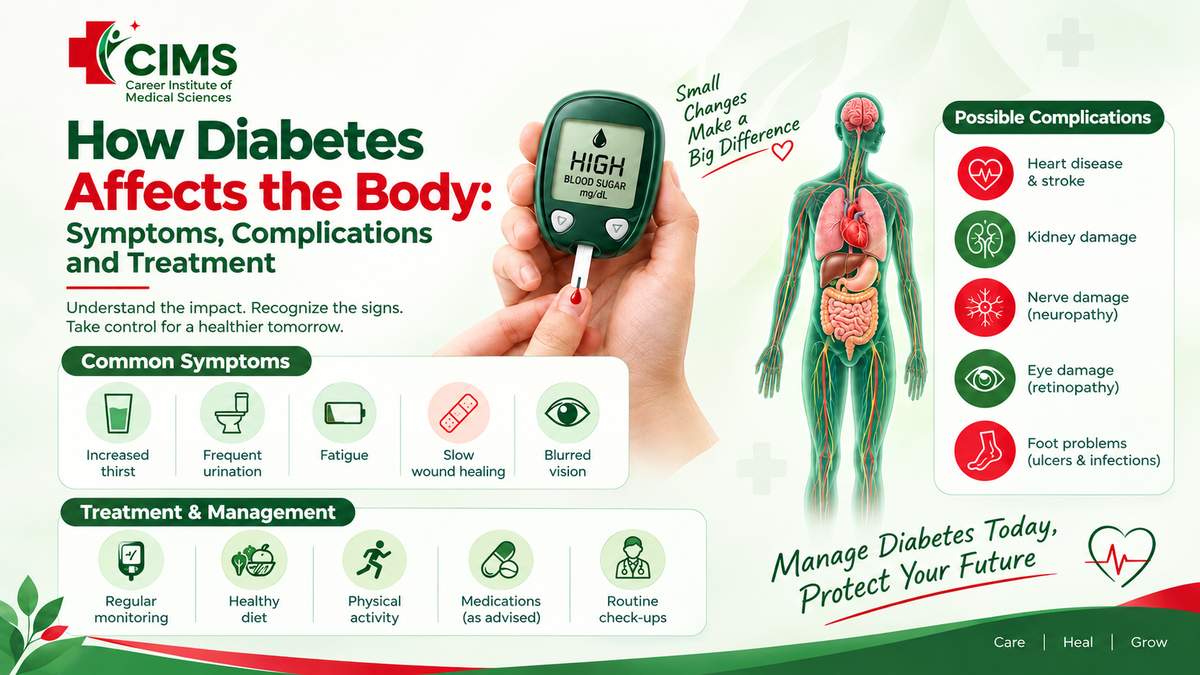
Diabetes is a chronic metabolic condition that affects multiple organ systems throughout the body. Common early symptoms include increased thirst, frequent urination, fatigue, slow wound healing, and blurred vision. When left unmanaged, diabetes can lead to serious complications such as heart disease, stroke, kidney damage, nerve damage (neuropathy), eye damage (retinopathy), and foot problems including ulcers and infections. Effective management involves a combination of regular blood sugar monitoring, a healthy and balanced diet, consistent physical activity, medications as advised by a healthcare provider, and routine medical check-ups. Early recognition of symptoms and proactive lifestyle changes are essential to preventing long-term complications. This infographic from the Career Institute of Medical Sciences (CIMS) provides a clear, patient-friendly overview of how diabetes impacts the body and what steps individuals can take to protect their health and improve their quality of life.
Questions & Answers
What are the common symptoms of diabetes?
Common symptoms include increased thirst, frequent urination, fatigue, slow wound healing, and blurred vision.
What complications can diabetes cause?
Diabetes can lead to heart disease, stroke, kidney damage, nerve damage (neuropathy), eye damage (retinopathy), and foot problems.
How can diabetes be managed effectively?
Effective management includes regular blood sugar monitoring, a healthy diet, physical activity, medications as advised, and routine check-ups.
Read on Yesodi → Join Yesodi →