Prediction Markets and Where They Go Next
By zalmy touger · 2026-10-19
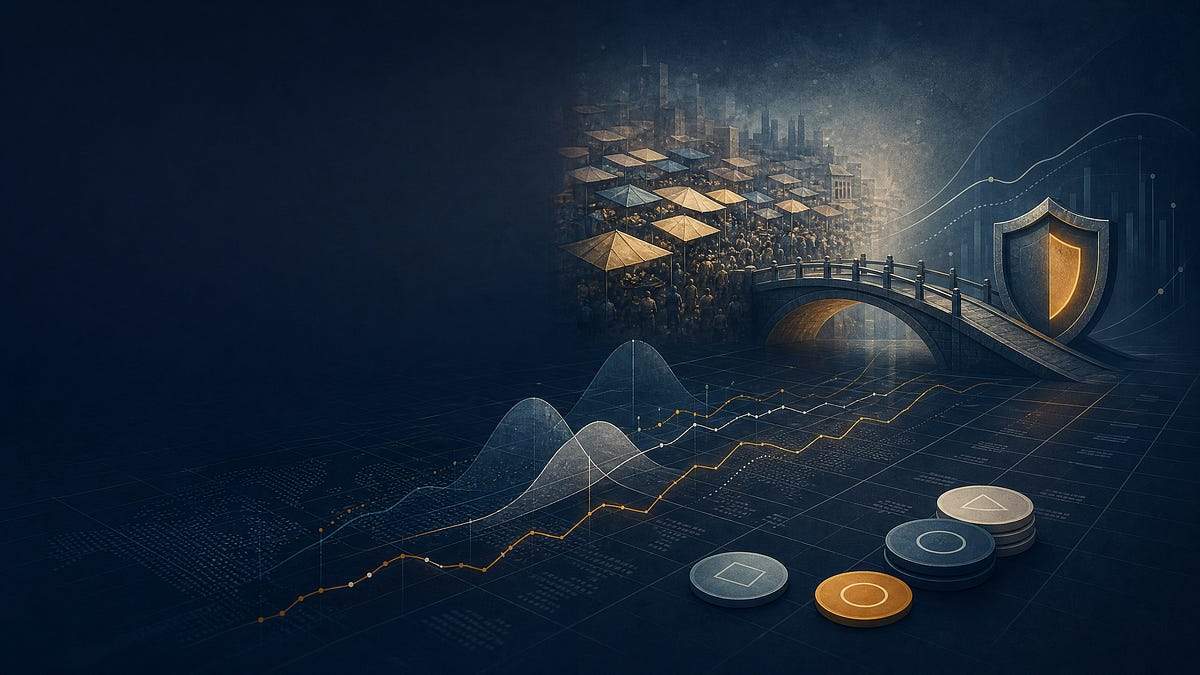
Prediction Markets
Prediction Markets
Illustration: https://substackcdn.com/image/fetch/$s_!Cqxs!,w_1456,c_limit,f_auto,q_auto:good,fl_progressive:steep/https%3A%2F%2Fsubstack-post-media.s3.amazonaws.com%2Fpublic%2Fimages%2F556dc981-2a9b-448b-bf37-50fbe336d2fc_2560x1440.png
Prediction markets are actually way older than most people think. While most know of Kalshi and Polymarket today and think of them as the definitive way to bet on macro events, there’s a lot more precedent for this, even beyond widely known sports betting, before these two giants came into the picture.
There has long been a market for plain old fun or, if you’d like, degenerate gambling—plain old horse racing and poker. Sports bookies have been doing something related for generations too, except with real odds on real events, and that’s actually where there is a very productive use for this kind of activity.
Thanks for reading FundamentalFinance101! Subscribe for free to receive new posts and support my work.
Famously, during the 2024 U.S. presidential election, prediction markets such as Polymarket gave Donald Trump a clearer edge than traditional polling did. In the final weeks, while national and battleground-state polls continued to show an extremely close race, Polymarket consistently priced Trump as the favorite. As polls closed on Election Day, Polymarket put his probability of winning at about 58%, before rapidly moving toward 95% as results came in. Trump ultimately won the election.
These prices on such an exchange actually allow even non-participants to take in wisdom from the collective crowd.
This has been an extremely reliable mechanism for predicting various outcomes elsewhere too. Famously, in soccer, during Leicester City’s 2015/16 Premier League season, the odds were set at 5,000 to 1, with people eventually pushing the odds to just 10 to 1, resulting in one of the most astonishing upsets in sports history.
And, of course, the stock market is perhaps the greatest casino of all, with most investors never outperforming it over a long period of time again supporting the wisdom of crowds, which includes wild guesses, inside information, etc., all amalgamated into one probability. The price is reflective of all this, but in the stock market there are a lot more factors at play.
What’s unique about these prediction markets is that they allow the price of an event to be quantified as a probability. So when 64% means $0.64, such a binary contract trading at $0.64 can generally be interpreted as the market implying roughly a 64% probability of the event occurring.
Illustration: https://substackcdn.com/image/fetch/$s_!ZiFD!,w_1456,c_limit,f_auto,q_auto:good,fl_progressive:steep/https%3A%2F%2Fsubstack-post-media.s3.amazonaws.com%2Fpublic%2Fimages%2F271d29c2-21a4-4a2b-a3ba-0474270c6d74_1989x839.png
The Big Use
Now, what is the point of all this information, aside from betting on it?
These are not usually sure things to rely on, but rather a set of probabilities to make judgment calls off. This is where hedging comes in, and this is perhaps the most common use of this. It is exactly what happens when you buy insurance. You are essentially transferring the risk of whether your car gets into a crash or not, or whether there is a fire in the neighborhood, etc.
And the insurance company will charge different odds based on the information they have. They use this in conjunction with plenty of historical data, modeled the right way, so they can get the most accurate odds possible to ensure a profitable hedge.
While the future of crowd-sourced information in the form of markets is already here, the space is only expanding.
Newer companies take on the task of:
• Data gathering || normalizing data from Kalshi, Polymarket, sportsbooks, polls, etc.; providing historical probabilities, APIs, charts, alerts, and research. Dome was an example before Polymarket acquired it. • Agentic services || monitoring and finding news, then cross-matching it with exchanges to model and track how the different probabilities change. • Probability quantification || firms that quantify the probabilities other platforms can build a marketplace on top of.
We’re already can see glimpses of this new age of insurance. The recent story of a goat farmer using Castle to hedge a California law is a good example of it in action.
One Level Further
The underlying point here is that markets don’t just stay as markets of opinion or outcomes. Rather, they evolve to be markets for risk instead of just events, going one level further to the potential outcomes of those events.
This expands the idea of a useful hedge into so many different cases: whether it’s new types of insurance companies that utilize the markets, or the ability for a person individually to insure himself and his assets.
The point being once not only the event, but the second-order consequences of something, can be priced as well, and once not only the event itself but economically meaningful consequences of that event can be mapped onto tradable contracts, a far larger universe of previously difficult-to-hedge business risks becomes addressable.
We can take a look at the example of the goat farmer and actually push it one step further. The first bet was on the event itself ,if California fixes the wage law by September or not.
Now let’s say a bank had loaned Western Grazers a sum of money. The bank isn’t exactly exposed to the law directly rather, it’s only exposed to whether Western Grazers survives long enough to pay them back. The law is only one of the determining factors.
And even if Western Grazers hedges the law, this doesn’t mean the risk disappears. The hedge might only take into account part of the actual economic damage. The law might change in a way the contract technically doesn’t capture. The payout may come late. Or Western Grazers might fail for any other sort of reason with nothing to do with the law.
So the question isn’t just “ Will the law change” ?
It now becomes, How much risk did the hedge actually remove, and how much is still sitting underneath it?
This is essentially risk about risk, stacked on top of the original event.
Illustration: https://substackcdn.com/image/fetch/$s_!HpKD!,w_1456,c_limit,f_auto,q_auto:good,fl_progressive:steep/https%3A%2F%2Fsubstack-post-media.s3.amazonaws.com%2Fpublic%2Fimages%2F0b69fa1f-2fe8-431b-96a7-4883fb484e91_1837x1180.png
Risk About Risk
This actually is not a new move either. Credit markets went through something similar with CDOs and credit default swaps in the run-up to 2008. Banks stopped simply holding loans and started transferring pieces of the default risk elsewhere.
This is not to say that a prediction-market contract is the same thing as a CDO or CDS, but the underlying effect can be similar: once you believe you’ve successfully transferred some of the risk, you become more comfortable originating more of the underlying exposure.
A bank that otherwise wouldn’t lend to Western Grazers might now make the loan because part of the regulatory risk has been hedged away. A manufacturer might build a factory despite tariff uncertainty. A developer might take on a project where permitting risk previously made the economics impossible.
Better hedging can allow people to take risks they otherwise couldn’t.
And while this could be extremely productive, it can introduce the same thing worth watching whenever financial markets get better at moving risk around: the risk may not have actually disappeared. All it did was change form.
That was one of the big lessons of 2008. Risks that looked diversified turned out to be much more correlated under stress than people and models accounted for. What may have looked like dozens of separate exposures could end up depending on the same underlying thing.
Prediction markets could eventually create the same problem in a new form. A company might hedge tariff risk, another might hedge immigration policy, another might hedge tax credits, and another might hedge a regulatory ruling.
On paper, those look like completely different contracts. But all four might ultimately depend on the outcome of the same election or the decisions of the same administration.
What is worth watching is not that hedging is bad. Hedging is incredibly useful. The important thing is that better hedging makes people comfortable taking more underlying risk, and that only works if we actually understand what risk has been transferred and what part of the risk remains.
What’s Different This Time
What’s different this time is that prediction-market contracts can be unusually transparent. A contract like Castle’s can have a publicly verifiable settlement condition. You can see exactly what event causes the contract to pay.
That is very different from a complicated financial instrument whose risk may depend on layers of assumptions buried inside a model.
That’s a real improvement. Whether it’s enough of one is still an open question.
Where This May Be Headed
And this may actually be where prediction markets are headed next. Not just more exchanges pricing more events, but a layer above them that figures out what those events actually mean for businesses.
Which risks are you exposed to? Which contracts hedge them? How much of the risk have you actually removed? And which supposedly separate risks are really correlated underneath?
The industry is getting increasingly good at pricing what will happen.
The next part may be pricing what those events actually mean economically, what it means when or if something happens, and then figuring out what risk is still left after you think you’ve hedged it away.
Thanks for reading FundamentalFinance101! Subscribe for free to receive new posts and support my work.
Original source: https://fundamentalfinance101.substack.com/p/prediction-markets-and-where-they