Space Pharma
By zalmy touger · 2026-10-19
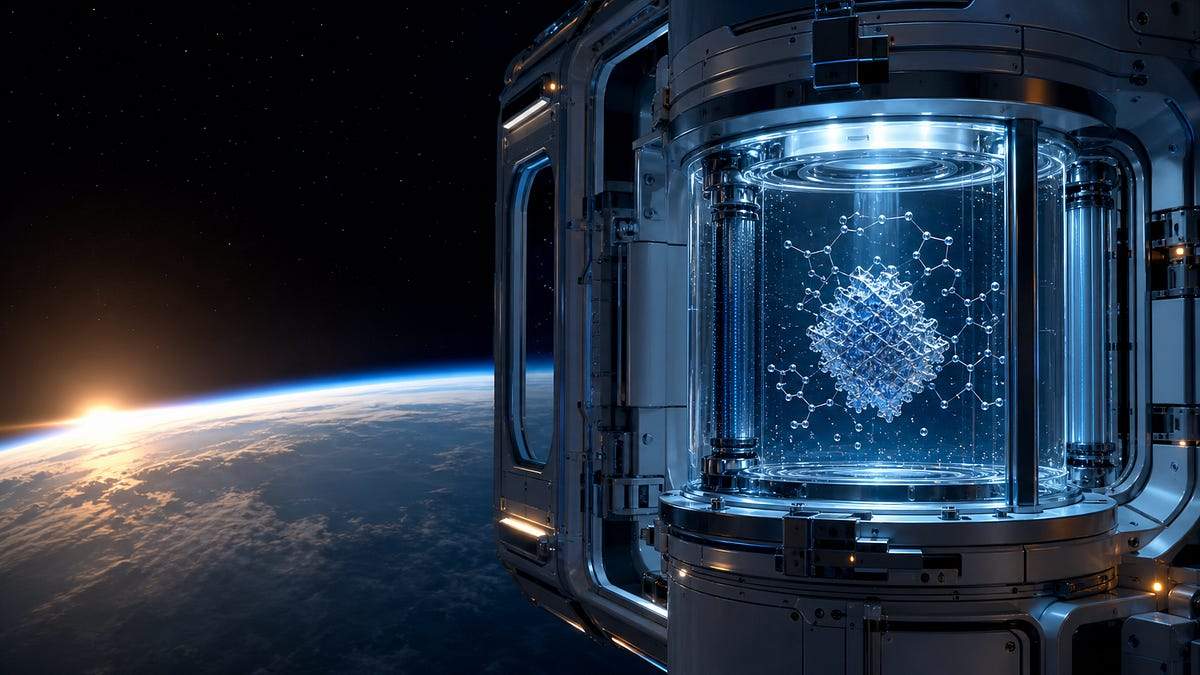
Space Pharma
With the SpaceX IPO, the rise of Rocket Lab, the growing discussion around data centers in orbit, and Blue Origin, founded by Jeff Bezos, it is important to ask ourselves, these are titans building the infrastructure that will ultimately get us to space, but besides living on Mars, what is actually commercially viable?
I wanted to explore some areas that aren’t as widely talked about at least not as widely as, for example, space-based data centers and the obvious communications and geolocation uses of space, or the further-out future where we harvest resources and minerals from space.
If launch costs keep falling, what becomes economically rational to do in microgravity that we could not justify before?
Thanks for reading FundamentalZ! Subscribe for free to receive new posts and support my work.
One of the biggest beneficiaries of cheap access to space may not be the space industry at all it can be what they ultimately enable to done back on earth that wasn’t possible before.
Pharmaceuticals.
Gravity is a significant constraint on how certain drugs, proteins, and biological materials can be studied and manufactured.
Let’s examine what the practical differences actually are.

- Thermal Convection
When heating or cooling a liquid on Earth, temperature differences cause lower-density fluid to rise and higher-density fluid to sink.
This constant mixing prevents perfectly uniform conditions from forming. While this can be useful in certain cases, when growing crystals and trying to control the process at the level of individual molecules, it introduces an entirely different factor.
fluid movement around the growing crystal continuously moves molecules toward and away from its surface.
- Sedimentation
Particles and molecules of different densities suspended in a fluid will naturally separate over time, with heavier elements sinking toward the bottom and lighter ones rising toward the top.
- Hydrostatic Pressure
The weight of a fluid in a container creates higher pressure at the bottom than at the top, putting physical stress on fragile growing structures.
While this usually does not matter much for ordinary crystal growth, it becomes increasingly important when dealing with more complex structures such as tissues and cellular organisms.
All of these effects are drastically reduced in a microgravity environment.
On Earth, fluid movement helps carry molecules toward and away from a growing crystal.
In microgravity, molecules must largely diffuse through the solution themselves.
One of the companies currently working in this area is Varda. They describe microgravity as introducing a “gravity knob” for pharmaceutical manufacturing, similar to how refrigeration introduced a “temperature knob,” giving companies a vast new range of manufacturing processes and experiments to explore.
Pharmaceuticals are particularly interesting in relation to space because their value-to-weight ratio is sharply in their favor, making them one of the most obvious early uses of this new frontier.
Crystallization
Most small-molecule active pharmaceutical ingredients are produced as crystalline solids.
A crystal isn’t simply a pile of molecules. First, a stable group of molecules comes together to produce what is called a stable microscopic seed. Then, additional molecules from the surrounding solution attach themselves to that seed.
This process begins with what is called nucleation.
The process generally goes like this:
nucleation → molecular attachment → crystal growth
The conditions surrounding this process ie temperature, solvent, concentration, pressure, impurities, mixing, and gravit, these all influence what eventually forms.
On Earth, convection continuously transports material around the crystal, while sedimentation can move the crystals themselves through the solution.
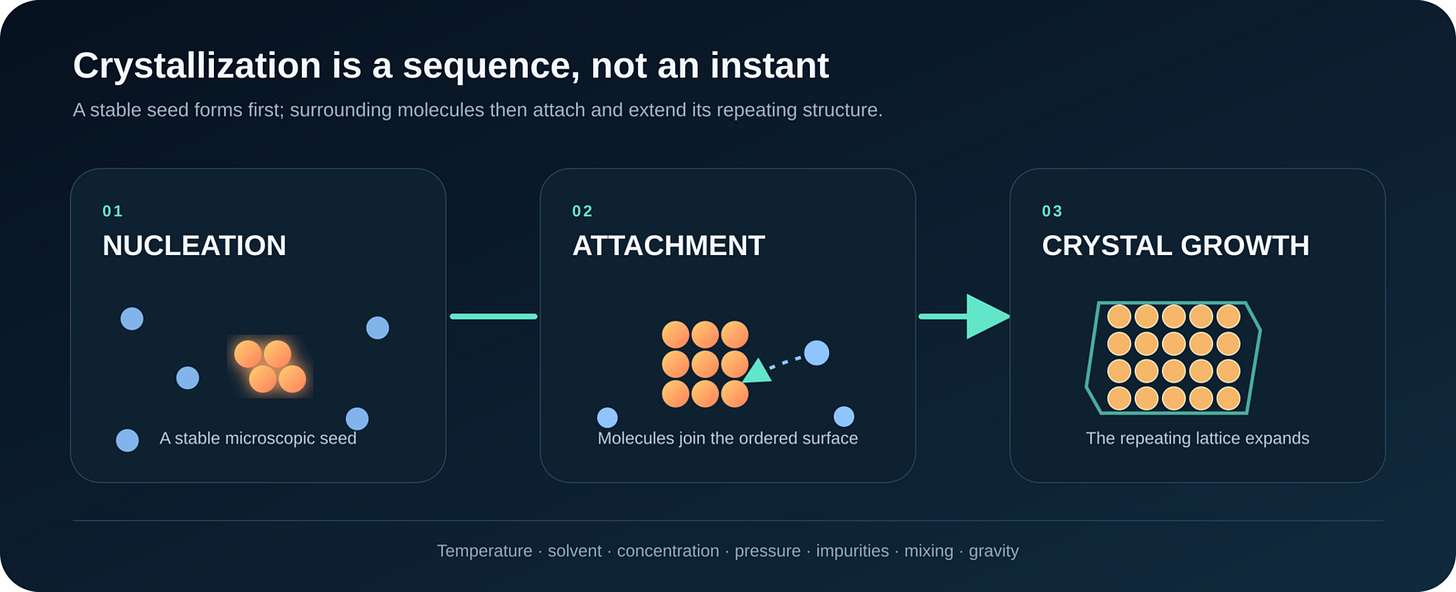
In microgravity, much of this disappears.
Molecules reach the growing surface primarily through slower diffusion, changing the kinetics of both nucleation and crystal growth. Experiments have shown that changing gravity can alter crystal nucleation, growth rates, and particle-size distributions.
This can potentially make.
- more uniform crystals,
- different crystal sizes,
- narrower particle-size distributions,
- larger and more ordered protein crystals,
- fewer certain types of defects,
- and, under some conditions, different crystalline forms.
That last point leads to one of the most important concepts in pharmaceutical manufacturing polymorphism.
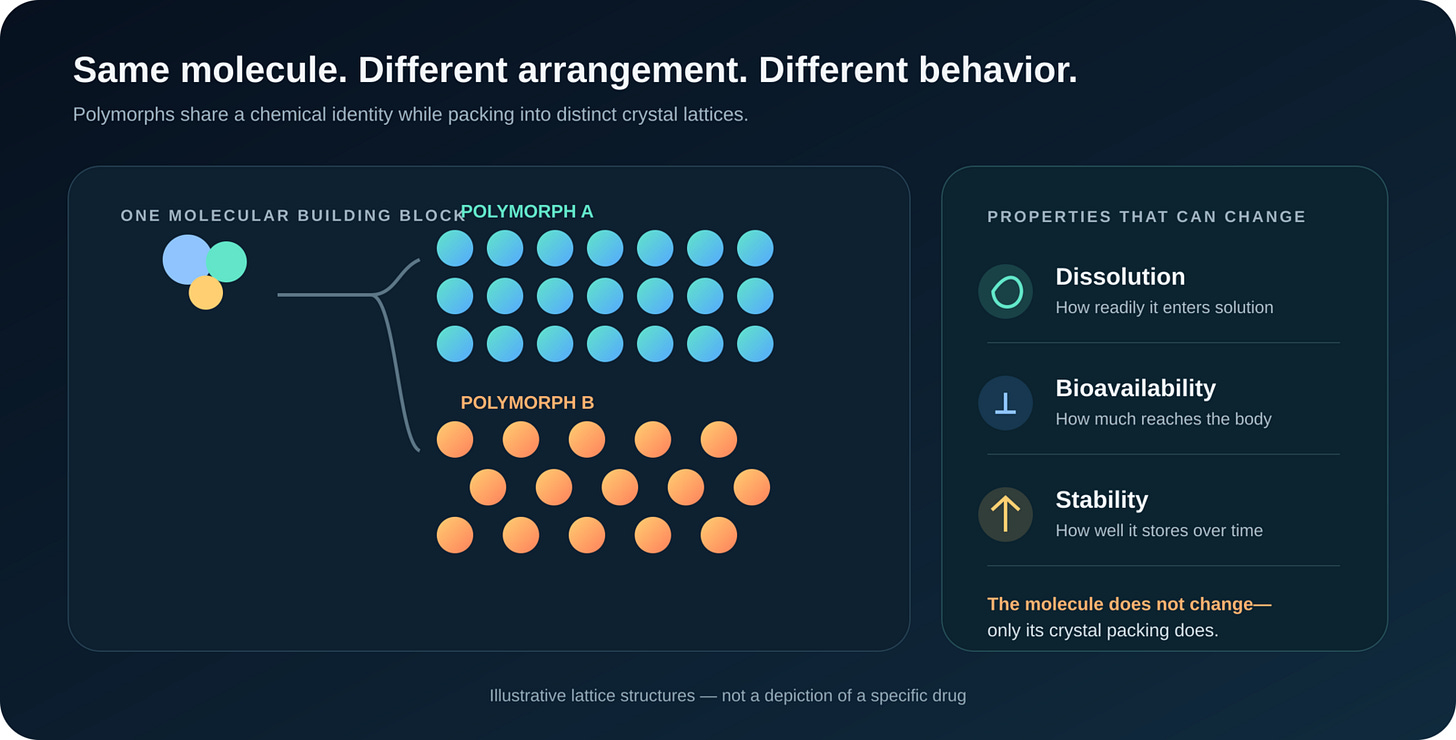
This means that it is still the same drug and the same molecule, but arranged in a different crystal structure. Think of bricks made from the same material: one structure might be packed tightly, while another is packed more loosely.
Individual crystal structures formed from the same molecules are called polymorphs and this is isnt just cosmetic.
How tightly the molecules are packed and how strongly they interact with one another can change some of the most commercially important properties of a medicine.
Different crystal forms of the same drug can behave very differently. Some dissolve more easily, improving bioavailability, while others are more stable and better suited for long-term storage.
The molecule stays the same—only its crystal structure changes—but that can affect how well the drug works and how long it lasts
.Space as the Lab
Until now, we have talked about the ability to manufacture something in space that may be impossible or very expensive to manufacture on Earth.
But there is actually an entire area of space-enabled drug discovery that may also be possible.
This means using space not simply to manufacture existing medicines, but to help discover new medicines in the first place.
Alot of medicines work by attaching themselves to a specific protein and modifying its behavior.
Let’s imagine a disease-related protein containing a tiny molecular pocket.
If scientists understand the exact 3D shape of that pocket, they can search for or design a molecule that fits into it.
This requires molecular engineering at tiny scale.
One of the important technique’s used to understand these structures is called X-ray crystallography.
The basic process is:
- isolate a protein,
- grow the protein into a highly ordered crystal,
- fire X-rays through the crystal,
- analyze the diffraction pattern,
- reconstruct the protein’s three-dimensional atomic structure.
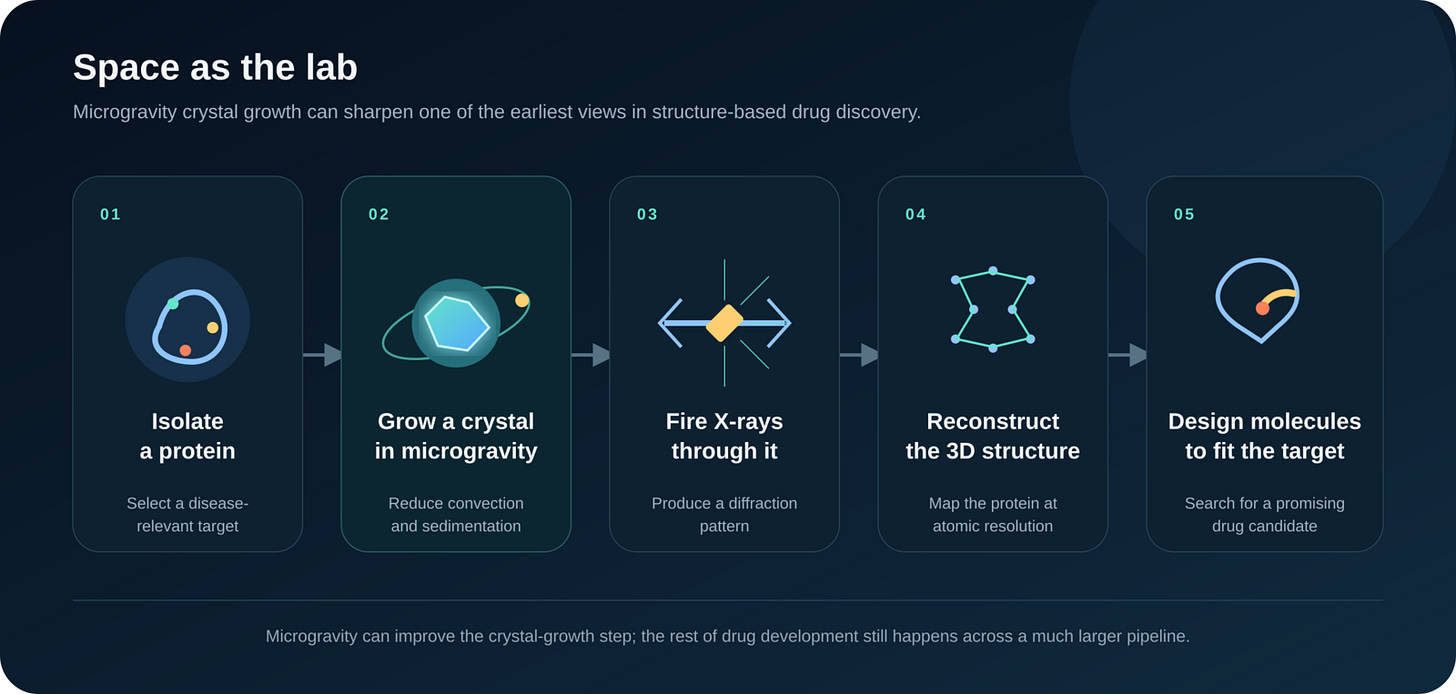
Microgravity can sometimes produce larger, more uniform, highly ordered protein crystals, providing researchers with better structural information.
Hundreds of protein-crystal-growth experiments have consequently been conducted aboard the International Space Station. NASA has documented cases where these experiments contributed to structure-based drug-discovery programs.
A manufacturing process that materially improves a patented drug, enables a new formulation, reveals a valuable polymorph, or helps create a new therapeutic can generate enormous economic value from only grams or kilograms of material.
That makes pharmaceuticals almost uniquely suited to the early space economy.
The calculation is now
What is the value created by microgravity?
For the first time, falling launch costs and autonomous spacecraft are beginning to make gravity itself a variable in the manufacturing process.
And we are only beginning to find out what becomes possible when that knob can finally be turned.
Space becoming cheaper at the same time as AI and robotics will open up and expand so much of what’s already happening, with hopefully the launch of automated labs and the such. There is a bright future ahead!
Original source: https://fundamentalfinance101.substack.com/p/space-pharma