Transcribe Audio and Video Files for Income
By Side Hustle · 2026-09-29
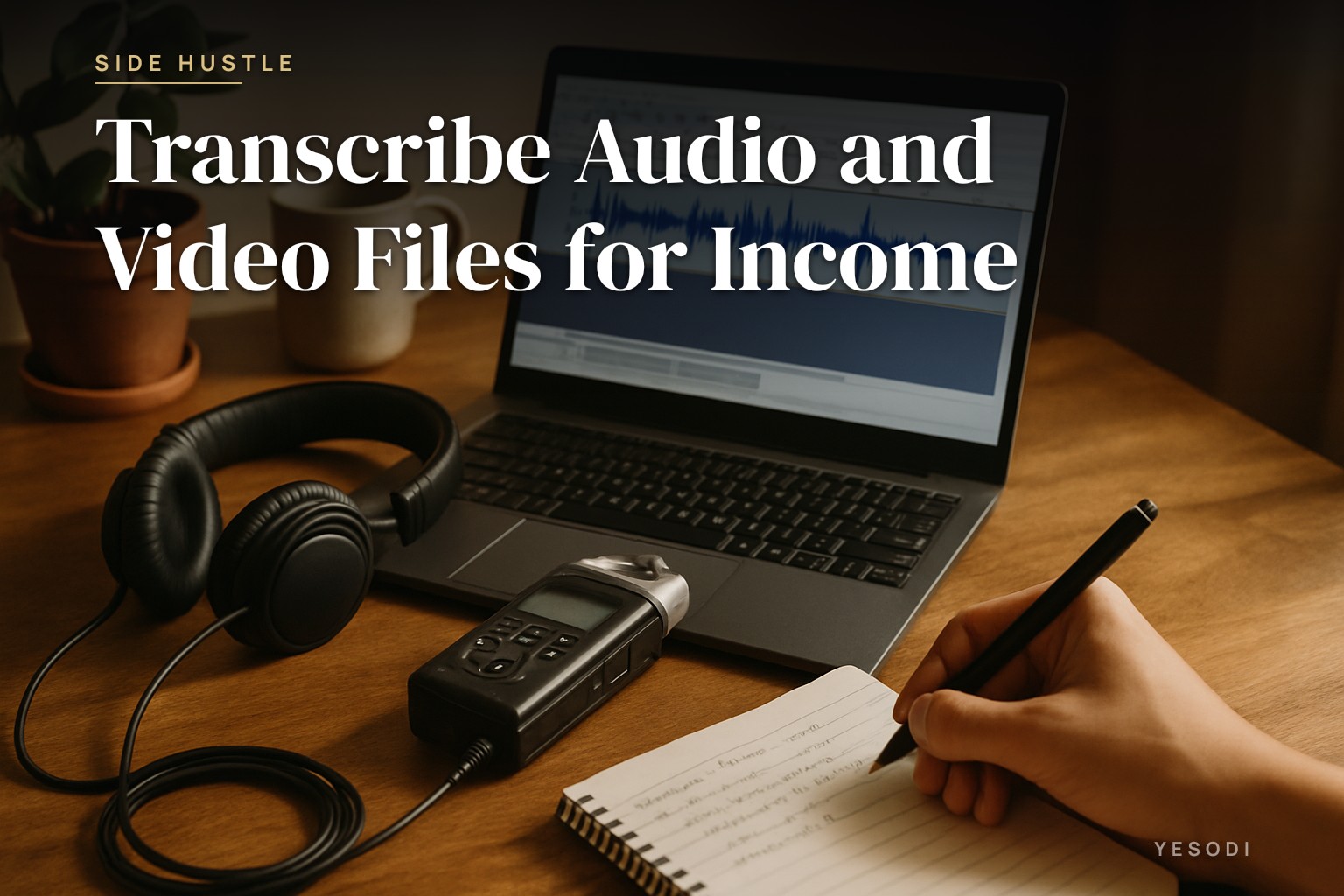
Transcription is the process of converting audio or video content into written text. Companies, podcasters, researchers, healthcare providers, legal firms, and content creators all need transcripts but don't want to spend hours doing the work themselves. That's where transcribers come in. You listen to recordings and type out what you hear, word for word. It's straightforward work with consistent demand because transcription is essentially invisible infrastructure that powers a lot of modern business and media.
The practical entry point is simple. You need a reliable computer, a decent set of headphones or earbuds, and basic typing skills. Some transcribers use transcription software that uses AI to generate a rough draft, then they edit and clean it up. Others transcribe from scratch. You can find work through established platforms that connect transcribers with clients, or you can pitch your services directly to small businesses, coaches, podcasters, and consultants in your area. Local service providers often have client calls they need transcribed but haven't outsourced the work yet.
The earning structure is usually straightforward: you're paid per finished minute of audio. A typical rate ranges from a few dollars to ten or more dollars per finished minute, depending on the audio quality, how technical the content is, and your experience level. Audio that's clear and conversational transcribes faster than technical medical or legal material. A one-hour audio file typically takes two to four hours to transcribe, so your effective hourly rate depends on the audio quality and your typing speed.
What makes transcription work as a side hustle is the flexibility and low barrier to entry. You don't need certification or years of experience to start. You can work on your own schedule, taking jobs when you have time. You can build consistency by finding repeat clients like a small business that needs monthly meeting transcripts or a podcaster who needs every episode transcribed.
The real skill isn't just hearing and typing. It's learning how to format transcripts, understanding when to use timestamps, handling unclear audio or accents, and catching your own mistakes. These skills improve quickly through repetition. As you take on more work, you develop speed and accuracy, which directly increases your hourly earnings from the same amount of work.