Designer Dog Accessories Made for Everyday Movement
By weiyi weiyi · 2026-11-02
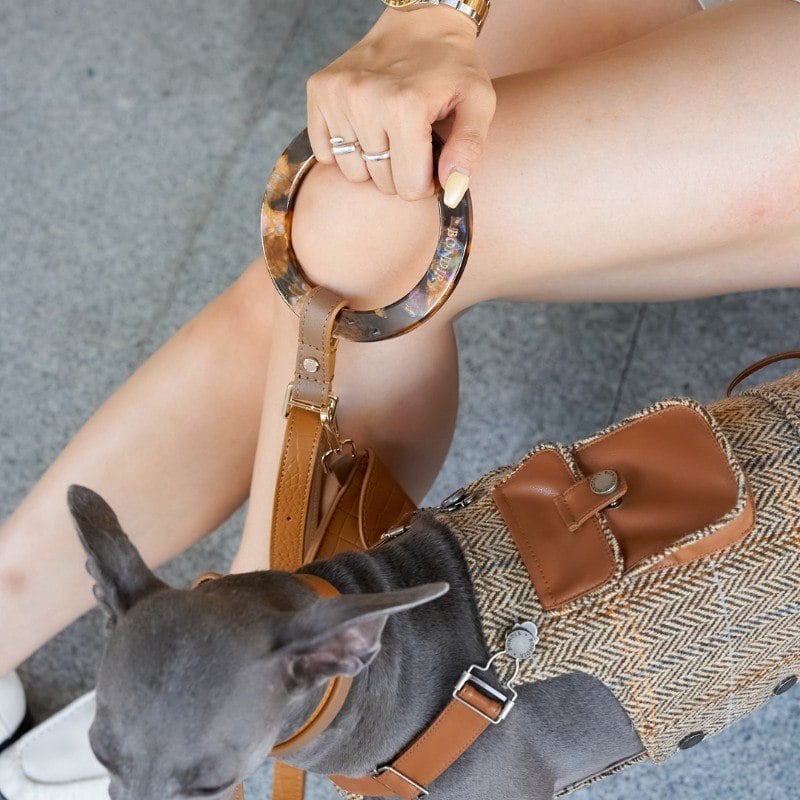
Sizing needs more than a breed label. Two dogs of the same breed can have different chest depth, neck shape and back length. Measurements should be taken with the dog standing naturally, leaving reasonable room for movement according to the product design. A chart that lists only “small” and “medium” gives buyers little help. Photographs showing where each measurement is taken can reduce mistakes without making the process complicated.
Test the item through normal behaviour. The dog should be able to walk, sit, turn and lie down without a seam cutting into the body. Check the area behind the elbows and around the neck after a short supervised trial. If a jacket shifts as the dog walks, an adjustable strap may help, but tightening everything is not a cure for poor pattern shape. Clothing should be removed if it causes overheating, distress or restricted movement.
Collars and leads introduce different safety considerations. Stitching, attachment rings, clasps and decorative components must suit the intended load and use.
Designers also need to consider the accessory after washing or exposure to rain. Does the lining keep its shape? Do the fastenings remain easy to use? Can the owner inspect decorative parts for wear? For a small dog, even a minor hard edge may sit close to the skin. Those questions can be explored with appropriate product testing rather than claimed as universal truths from one attractive prototype.
Fit is not just an aesthetic question for pet accessories. A collar needs room for comfortable movement without slipping over the head, and a decorative charm must not create an obvious snag point. Owners can measure neck size with a flexible tape and compare that measurement with the product's adjustment range. Hardware should be checked for burrs and loose rings before each outing. Photos from several angles help customers judge scale, but they do not replace accurate dimensions. A handsome accessory still has to withstand the way a real dog walks, shakes and plays.
Tiny charms can become snag points or detached small parts. An attractive clasp should not be assumed strong because it feels heavy in the hand. Select accessories according to the dog's behaviour and the product's specified purpose, particularly when choosing between a decorative collar and equipment intended for walking.
Materials affect daily comfort. A soft lining may help reduce rubbing, while a fabric that absorbs water heavily may be awkward in rain. Think about laundering, colour transfer and the durability of decorative finishes. A piece worn for a short photograph has different demands from something used on every outing. Designers can keep the playful appearance while specifying surfaces that are sensible for the animal touching them.
With designer dog accessories, care instructions matter on muddy walks and repeated fastenings, not only in a styled photograph.
Photographs should not conceal how an accessory fastens. Show the closure and adjustment range, and make clear whether decorative pieces are fixed or detachable. An owner should be able to tell whether a garment is intended for supervised occasions or routine wear. Avoid styling a collar or outfit as suitable for restraint or vehicle travel unless the product has been designed and assessed for that function. Attractive pet products become more trustworthy when their limitations are stated plainly.
A product description can do more to prevent fit problems than a long series of styled photographs. Show the intended measurements, fastening method and how an item sits on a dog standing naturally. Include a note about cases where the garment may be unsuitable, such as unusual body proportions or sensitivity to particular materials. Owners appreciate candid limitations because returning a coat after discovering that it rubs under the arms is inconvenient for everyone.
Good pet fashion acknowledges the dog's limits. Supervise new accessories, remove unsuitable pieces and avoid leaving items on an animal unattended when they pose entanglement or chewing risks. A successful design still looks lovely when the dog is moving normally, and the owner should not have to choose between the photograph and the dog's comfort.