Ghazal Mizrahi 🎤
By William Lebovics · 2026-08-18
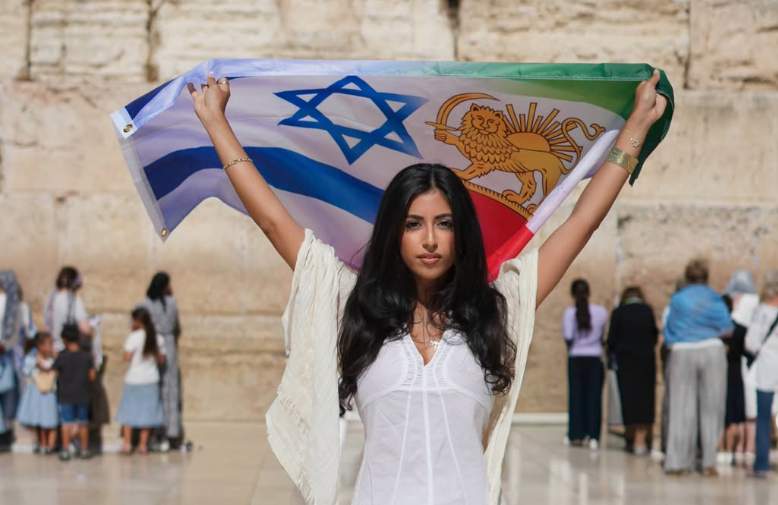
There are singers who fill a room, and there are singers who reorganize it — who walk to the microphone and quietly rearrange the emotional furniture of everyone present, so that by the final phrase the audience is not quite sitting the way they were when they came in.
Ghazal Mizrahi is the second kind. And the astonishing thing — the thing that keeps returning to you days later, at odd hours, unbidden — is that she does it without ever seeming to try.
A name that was always a prophecy
Begin, as one must, with the name. Because in her case the name is not a label. It is a thesis statement.
Ghazal — غزل — comes to us from the Arabic, meaning, in its oldest sense, to speak sweetly, to flirt, to make amorous address. From that root grew one of the most exquisite and demanding poetic forms the human species has produced: the ghazal, a chain of five to fifteen self-contained couplets, each a perfect small world, all of them bound by a single shared rhyme and refrain that returns like a heartbeat. It emerged in seventh-century Arabia, was adopted and transfigured by the Persians in the tenth century, reached its shimmering golden age in Urdu under Mir and Ghalib, and travelled west into Al-Andalus, where — and this detail should stop you — Hebrew poets were composing Ghazals by the eleventh century.
Arabic root. Persian flowering. Hebrew inheritance. One form, carried across empires and languages by people who kept insisting that longing was worth the trouble of formal perfection.
The Ghazal's eternal subject is ishq — love in its unconsummated register. The ache of separation. The beauty that persists precisely because the beloved is out of reach. And the tradition's most enduring image, the one every reader of Persian verse carries, is the wounded gazelle: the creature whose cry is so lovely that the hunter lowers his bow.
A woman named Ghazal Mizrahi, who is Persian and Jewish and American all at once, who sings in four tongues about a beloved country she cannot simply walk into — one hesitates to call this coincidence. Some people receive a name. She received an inheritance, and then had the audacity to be worthy of it.
Long Island, and the long way there
She is, in the plainest biographical terms, a Persian-Israeli singer based on Long Island, New York — which is to say she stands at one of the most fertile cultural intersections available on this earth, and has made that intersection her instrument.
Her own account of her origins is disarming to the point of comedy. The About page of her YouTube channel does not announce a mission or a movement. It says: "Hey I'm Ghazal! I've been singing for as long as I can remember! I absolutely love music, it's a huge part of my life."
That is the entire manifesto. A woman who has sung in Times Square before thousands and at Lincoln Center under those famous lights introduces herself the way a friend would across a kitchen table. There is a kind of confidence that requires no ornament, an