Residential Proxy Service for SEO and Reliable Rank Data
By weiyi weiyi · 2026-11-02
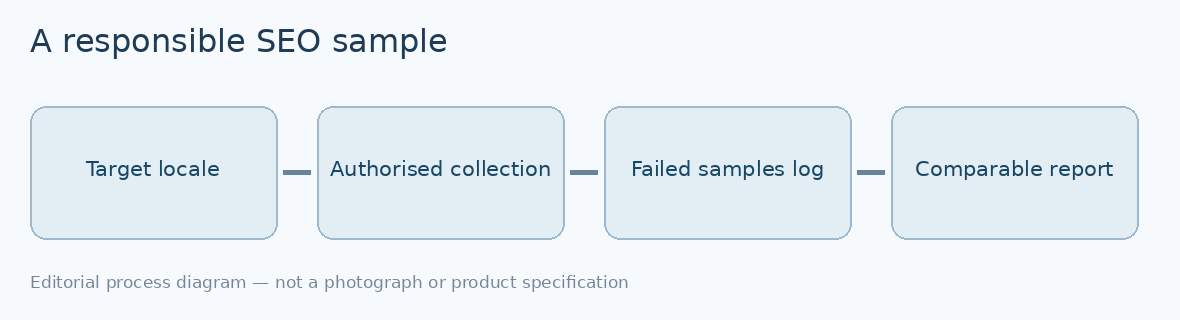
SEO tracking goes wrong before the first request if the team has not defined what it is measuring. Are you checking whether a business appears for a query in a particular city, monitoring a result type or comparing trends across countries? A broad search term can have different intent in different markets. Record language, device, target area and timing. Where search providers offer authorised APIs or structured access, those may be preferable to direct page collection. Teams must comply with platform terms and applicable law rather than treating an IP address as permission to bypass access controls.
Geolocation should be verified, not assumed from the name of a proxy pool.
The value of a residential proxy service for seo becomes clearer when its advertised city differs from the location a search platform actually detects.
A connection labelled with one city may be recognised differently by a search service, and search engines use signals beyond IP address. Make controlled checks and record unexpected regional results. Browser settings, language headers and consent screens can also affect what is displayed. If those variables change between runs, a rank movement may be a measurement artefact rather than a genuine shift.
Failed requests are part of the dataset
Rate limits matter for data quality as well as responsible operation. Excessive requests can trigger block pages, incomplete responses or captcha challenges, all of which corrupt reports if mistakenly parsed as ordinary search results. Work within authorised limits and implement clear error handling. Log which samples failed and why; do not quietly replace missing observations with a previous rank. A tidy spreadsheet that hides collection problems creates false confidence.
SEO monitoring often fails because the measurement method changes quietly. Keep the search location, language, device type and collection time consistent before comparing positions across weeks. A residential proxy service for seo may help represent a requested geography, but a proxy alone does not guarantee a neutral search result. Search engines personalise, experiment and block automated traffic in different ways. Log errors, consent pages and inconsistent locations rather than silently replacing missing results. Where providers or target sites restrict automated access, honour their terms and applicable law.
When comparing datasets, preserve failed observations instead of smoothing them away. A sudden fall in reported visibility may coincide with a changed results layout or a parsing problem. Technical documentation should distinguish a genuine ranking signal from a collection artifact. This is particularly important when reports influence client budgets or performance claims. Better proxy infrastructure can improve consistency, but interpretation still depends on honest uncertainty and careful measurement design.
Privacy and sourcing are part of the evaluation. A provider should be able to explain, at an appropriate level, how residential endpoints are obtained and what permission is associated with their use. Customers should consider retention policies, credential management and where request logs are stored. Sensitive client queries or internal identifiers should not appear in avoidable logging. Procurement involves more than testing whether a connection succeeds.
For comparison, keep a raw results record with collection time, query, location settings and parser status. If a local pack appears in one run and not another, mark that structural difference rather than treating all results as one ranked list.
For analysis, take repeated samples and look for directional changes rather than overreacting to one position. Separate organic results from ads, local packs and other features; they are not interchangeable ranks. Keep the raw observation where allowed so a reviewer can audit the report. Better SEO measurement is about controlled uncertainty. No proxy product can remove all the variability in the search experience.
Search engines change their presentation frequently. Analysts should not infer a business's true visibility from one scraped position when the observation is sensitive to layout and location.
Ethical sourcing should remain a procurement question even if it is not visible on a performance dashboard. Ask whether the provider has a responsible acquisition process for endpoints and whether users have meaningful notice or consent where appropriate. Avoid services that encourage unauthorised intrusion or evasive abuse.