A Transformer Quote Should Begin With Heat and Load Profiles
By weiyi weiyi · 2026-11-05
Overview
An engineer may choose a transformer from a catalogue because its rated power and turns ratio look right. The prototype passes a brief bench test, then runs hotter than expected in the sealed product housing. Loads are rarely as simple as their headline wattage: current peaks, switching frequency, duty cycle and the cooling path all affect a magnetic component. Custom sourcing works best when the manufacturer receives the actual electrical conditions rather than a part number copied from an old design that happened to work once.
Practical considerations
For a custom transformer manufacturer China, the enquiry should include input range, output requirements, operating frequency, waveform, isolation needs and allowable temperature rise. Define how the component is mounted and how much space surrounds it. For line-frequency units, mains insulation requirements and safety certification may dominate the design; for high-frequency power stages, core loss, leakage inductance, winding arrangement and EMI behaviour may be more important. A manufacturer can often offer alternatives, but only after the operating conditions and relevant standards are clear. Factory acceptance should include more than a single room-temperature electrical reading. A representative sample can be run through a realistic load cycle while temperatures stabilise, and the results compared with design limits. If the final assembly is potted, remember that reworkability may change; that affects how production defects are diagnosed and repaired.
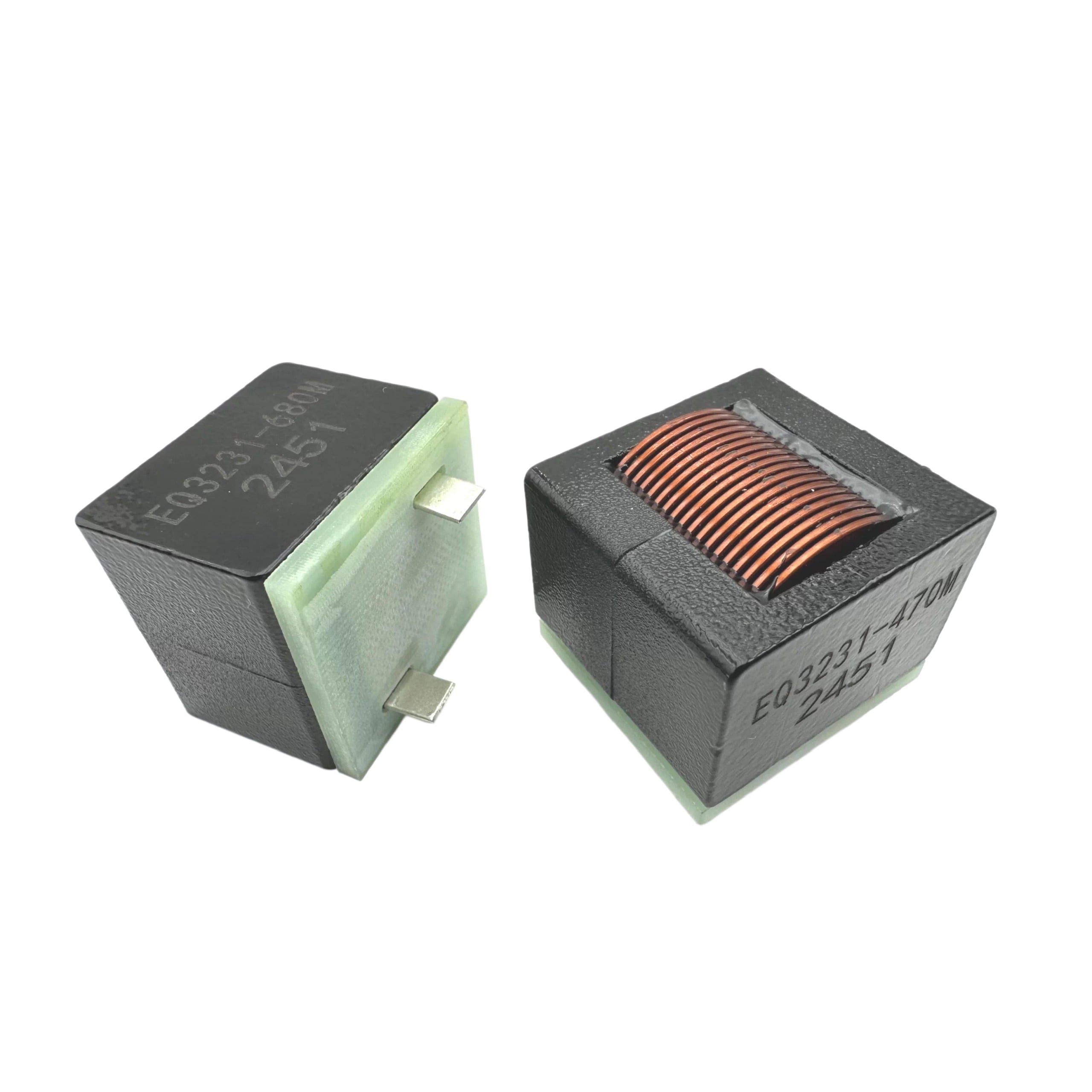
Inductors bring another set of trade-offs. The inductance value printed on a drawing may be measured under conditions that do not reflect the real DC bias current. A part can meet its nominal inductance at low current and lose much of it near saturation. Ask for the inductance-versus-current curve and the temperature conditions used for testing. Consider copper loss, core loss and ripple current together rather than selecting the lowest DC resistance in isolation. Packaging, shielding and termination style also affect EMI and assembly quality in the final power supply.
A custom magnetic components manufacturer should explain how prototypes are evaluated and how production parts are controlled. Agree on winding specifications, insulation materials, wire type, core grade, impregnation or potting and the tests performed at final inspection. Hi-pot testing, inductance, turns ratio and winding resistance may all be relevant, but the correct test plan depends on the design. If acoustic noise matters, request testing at actual switching conditions. A transformer that is electrically acceptable can still generate objectionable hum in a quiet room if magnetostriction or mechanical vibration is poorly controlled.
TrafoPSU supplies magnetic-component categories for power applications. It can be approached with the electrical schematic, representative load profile, enclosure conditions and test limits. A good design review should identify which parameters are fixed and which can be adjusted to improve cost or manufacturability. The right component is one that operates safely across the required conditions, not merely one that matches a catalogue rating on a bench at room temperature.
Lead time can change when a project moves from samples to mass production. Ferrite cores, custom bobbins and specialised insulation may have long replenishment cycles. Ask what materials are stocked, what requires tooling and what can be second-sourced. Any substitute core or wire needs engineering approval because a seemingly minor material change can alter losses and temperatures. Keep an approved drawing and record sample test results so the supplier and customer are working from the same revision. This is particularly important when several engineering teams participate in a single power-electronics project.