THE ARTIST WHO CAME BACK FROM BE'ERI
By William Lebovics · 2026-09-08
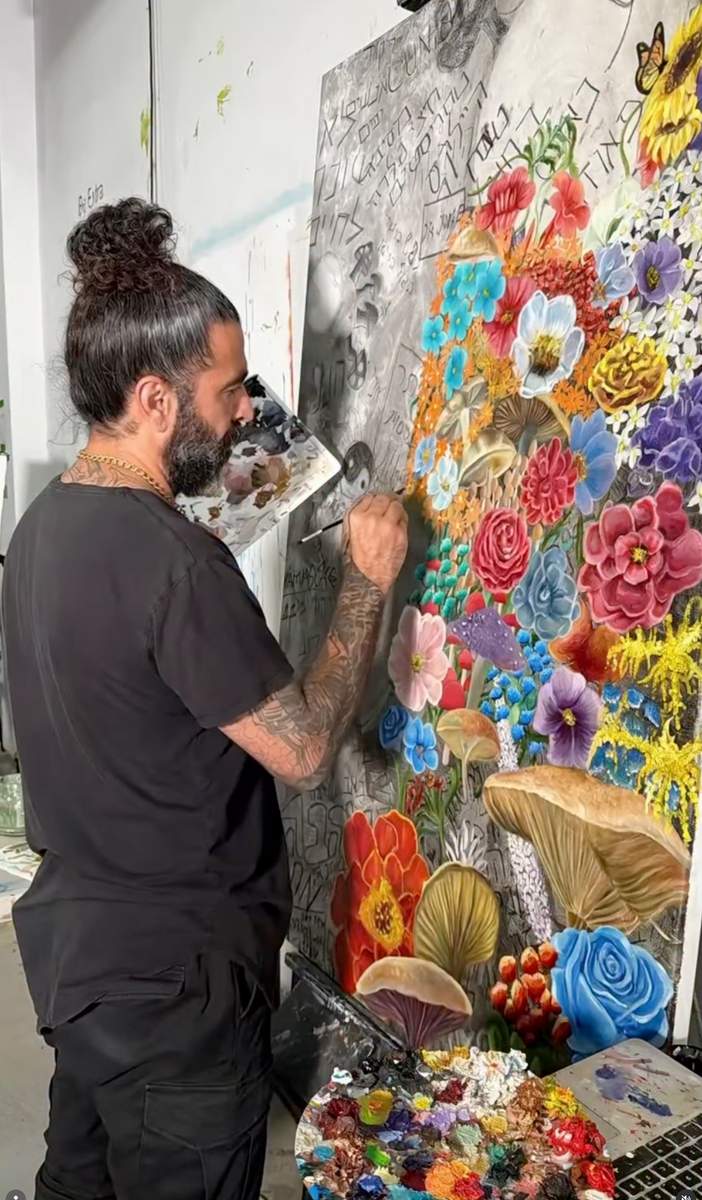
Tomer Peretz was in Israel for a wedding on October 7, 2023. What he did in the days after has determined everything he has made since.
He volunteered with ZAKA at Kibbutz Be'eri, helping to handle more than two hundred bodies and body parts, documenting the aftermath on his phone. He later gave testimony to the USC Shoah Foundation. He was not a stranger to that kind of weight. Born in Jerusalem in 1982, he served in Golani 13 during the Second Intifada, nearly two years of it in Gaza, and carried the trauma untreated for years while painting his way around it.
There was no art school. He was the kid nicknamed Asto, short for astronaut, who could not sit still, got expelled from one school and barely graduated another. He came up through graffiti, painting murals inside his own building's safe room, then moved to Los Angeles and built a career through underground art parties in the early 2010s. He has shown at Bruce Lurie Gallery, at Ouro in downtown LA, at Fabbrica Eos in Milan, at Art Basel Miami. In 2014 he was the inaugural recipient of the Arthur Szyk Prize. In 2025 he became the Museum of Tolerance's first artist in residence, with a show made alongside more than eight hundred fifty trauma survivors.
The 8 Project, which he founded in October 2023, is the reason he is on a fashion week runway.
It is a nonprofit that runs a two month therapeutic art residency in Los Angeles for October 7 survivors, bereaved siblings and IDF soldiers with PTSD, staffed with psychiatrists, trauma therapists and physical therapists, at roughly fifteen thousand dollars a participant, with proceeds returning to the program. It opened a gallery in Chelsea in the winter of 2026. It sells art, jewelry and wearable art, and that wearable work is what walks.
The objects that come out of the residency are unlike anything else that will be in the Leman Ballroom. A painting of soldiers with their fallen comrades rendered as white hands. A portrait of Andrei Kozlov, the freed hostage who joined the program five months after his release, in black and red, features deliberately incomplete. A tree sculpture built from ZAKA body bags. A pair of boots by Sahar Haba, fifteen years in the IDF, collaged with hostage posters and a QR code linking to the Bring Them Home site. Wearable art in the most literal sense available: a garment that carries a search still in progress.
Peretz's own description of his method is realism with intentional erasure, uncovering what lies beneath the surface. His description of his purpose is blunter. "We artists, we think we are so important," he told the Forward. "But if the work doesn't do something, it's just fucking art."
He is equally unsentimental about the therapy. "I do not like when therapists or psychiatrists like to dig too much about the past. I'm all about shaking the hand of the devil that was with you that day. But once you shake the devil's hand, OK, let's move on."
And on why the Chelsea galler