Blackout Curtain Fabric Manufacturer China: Testing Panels
By weiyi weiyi · 2026-11-02
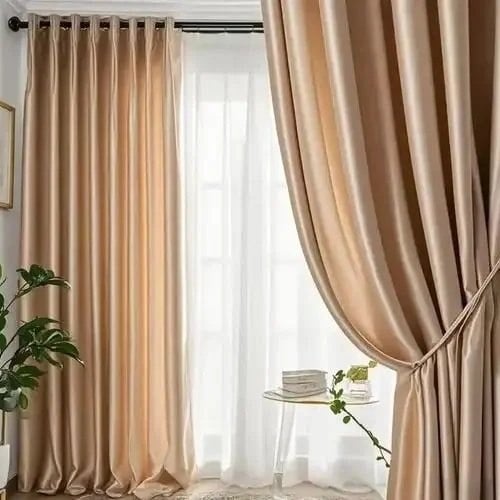
Fabric sold as blackout can achieve light blocking through different structures, including dense woven constructions and coated backings. These choices affect drape, hand feel, weight, care instructions and potentially the durability of the light-blocking layer. Ask how the intended fabric is made and how opacity is assessed. A percentage quoted without a test method, sample condition or lighting arrangement is difficult to compare with another supplier's claim.
Look at the seams. Needle holes may create rows of visible light even when the fabric body is highly opaque. Heading style, lining arrangements and curtain overlap also influence the result. Wall-to-wall darkness depends on the track, side returns, gaps above the headrail and the relationship between the curtain to the window. A fabric sample cannot solve poor installation geometry. Test a finished panel at the dimensions and fullness planned for the project.
Dimensional stability deserves attention, particularly for long curtains. Shrinkage or relaxation after laundering can lift the hem above the floor and create a bright band of daylight. Request appropriate care guidance and, for a commercial order, assess representative fabric before production. Colourfastness, abrasion and coating adhesion may matter for hospitality environments where curtains are cleaned and handled frequently. The exact tests should follow the actual end use.
For hospitality projects, a small mock-up room may save considerable rework. Use the intended track and finished curtain to check stacking, floor clearance and closure at the centre. Staff should be able to operate the curtain without catching the fabric on furniture. Observe whether repeated opening creates stress around the heading. A successful mock-up translates an attractive swatch into an installation that guests will actually use.
Blackout performance depends on more than a roll of dark fabric. A bedroom may still admit daylight through the top, sides and bottom of a curtain, especially when the rail is mounted close to the window opening. Test sample panels for light leakage at seams and compare coating feel after folding or laundering under the care instructions. Retailers should also ask about colour differences between production lots, because a replacement panel may not match an earlier shipment. Installation photographs taken at sunrise can tell a more useful story than a fabric swatch photographed under showroom lights.
Production consistency can be as important as the initial swatch. If one roll differs slightly in shade or backing behaviour, adjacent panels may look mismatched in a bright hotel room. Agree how rolls are identified and how panels for the same installation will be allocated. When the order includes several rooms, preserve approved fabric references and construction notes so replacements can be matched as closely as practical.
For fabric from a blackout curtain fabric manufacturer in China, the test method and roll identification deserve as much attention as the showroom swatch.
The buyer should distinguish fabric-level testing from an installed-room promise. A laboratory may assess the material's visible light transmission under controlled conditions. The sewn curtain introduces stitching, folds, attachment points and gaps that the fabric test never saw. If a supplier quotes blackout performance, ask exactly what was tested. Contractors and decorators can then take responsibility for track geometry and fitting details, rather than expecting the textile alone to eliminate every trace of daylight.
A buyer commissioning several colourways should approve the construction and finish for each, not assume that one dark swatch proves the behaviour of every shade. Some treatments and backing combinations may alter drape or appearance under strong backlighting. When samples are presented, request the side that will face the room and the side exposed to the window. Orientation and backing colour can matter when the curtains are partly open or when daylight silhouettes the folds.
At final inspection, assess more than a table of percentages. Hang the curtain, close it, turn off the room lights and observe the actual window at a bright time of day. Photograph gaps, note mounting adjustments and check that the material still hangs well. A successful blackout project is a coordination task between fabric selection, sewing and fitting. None of those stages can rescue the others by itself.