CPD Records That Still Make Sense at the End of the Reporting Year
By weiyi weiyi · 2026-11-05
Overview
An accountant can complete dozens of useful training sessions and still spend an uncomfortable afternoon reconstructing evidence before a CPD deadline. The problem is rarely a lack of learning. It is that a webinar invitation sits in one inbox, the course certificate is saved somewhere else and the description of what was learned has been forgotten. A better approach starts with a simple record for each activity: date, provider, subject, duration, evidence and how the topic connects to the person's work. That record is useful even if the professional body later asks for more detail.
Practical considerations
When browsing CPD courses Hong Kong, accountants should separate course relevance from credit eligibility. A programme about audit judgement may be highly relevant to one role, while updates to listing rules or tax practice may matter more to another.
Requirements vary by professional body, membership status and reporting period; the provider's description alone should not be treated as a guarantee that an activity meets every requirement. Review the latest rules directly from HKICPA, ACCA or the relevant regulator and retain sufficient evidence of participation. Course hours and recognised learning hours are not always interchangeable.
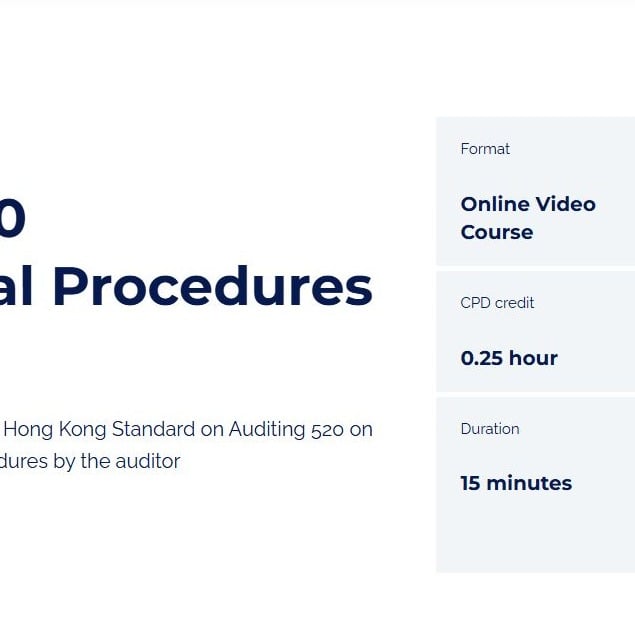
Online study makes scheduling easier, but evidence needs deliberate handling. For Online CPD courses Hong Kong, check whether the platform records completion, provides a dated certificate and identifies the course title and learning duration clearly. If a webinar includes a live Q&A, confirm how attendance is recorded. When lessons are self-paced, understand any required assessment or verification process. Someone who watches a programme during several short breaks should be able to demonstrate completion without relying only on browser history. A certificate file is easier to preserve than a screenshot taken months after the activity.
Course selection should also match the changing demands of the role. A financial reporting manager may need technical updates on disclosure and controls; a practitioner serving small businesses may spend more time on tax, ethics and client management. A sensible annual plan includes a few deeper learning activities rather than filling the calendar entirely with short, overlapping topics. After each course, note one practical change worth making, such as an additional review step in an audit file or a revised document request for clients. That creates a better link between learning and work than an untouched folder of PDFs.
Budget is only part of the comparison. Short online programmes may be affordable, but the useful questions concern instructor expertise, syllabus dates, assessment method, access period and whether course materials remain available for reference. Training on rapidly changing rules needs a clear publication or update date. If a provider offers a subscription, examine the actual catalogue before assuming it covers an entire year's needs.
CPD 360 lists professional learning material for the Hong Kong market. Accountants can use its catalogue as one source while building their personal development plan, then verify the credit treatment of individual activities against their own membership rules. Download evidence promptly, maintain a separate CPD log and review progress before the last reporting month. A few minutes of recordkeeping after each course are much easier than trying to remember a year's learning on the final weekend.
A low subscription price does not help if most courses repeat material the accountant already knows or fail to meet the relevant body's standards. It can help to keep an additional column showing the learning objective for each activity. That way, a year-end review can identify gaps instead of merely adding up hours. If too many entries cover one narrow topic, the accountant can deliberately choose future training in ethics, technology, communication or a specialised technical area relevant to the role.