LED High Bay Light Manufacturer Checks for Warehouse Aisles
By weiyi weiyi · 2026-11-02
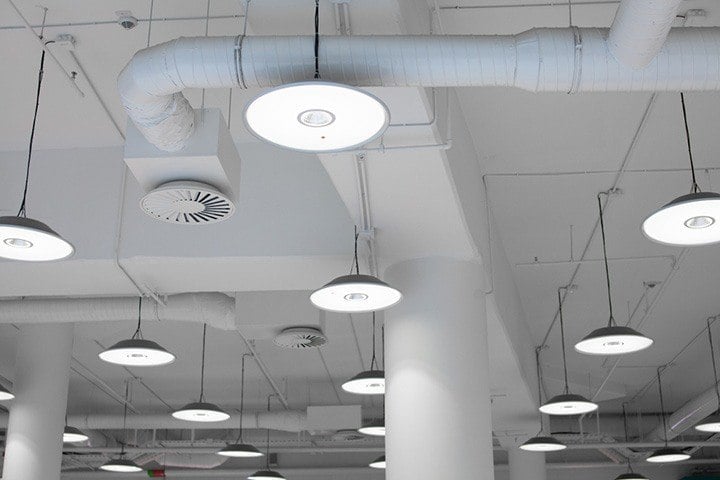
Warehouse lighting starts with the work people do below the fixtures. Picking small labels, operating forklifts and inspecting finished products may require different lighting arrangements. A general horizontal illuminance target may not describe how well a worker sees a vertical shelf face. Racks and tall equipment create shadows that a simple open-floor calculation may miss. A useful lighting proposal shows the work areas, mounting points and assumptions behind the predicted performance. Where applicable, follow local lighting and workplace standards.
Photometry before fixture counts
Photometric information matters. Beam distribution influences the spacing and height at which a fixture performs well, and a narrow beam can create intense patches with darker regions between them.
Ask an LED high bay light manufacturer for a photometric file that matches the exact optic and mounting height being proposed.
A wider distribution may be more suitable for lower mounting heights or open areas. Designers should use credible photometric data with a suitable calculation model, then check the result against the building's actual geometry. Fixture counts chosen by dividing floor area by a generic number are unlikely to capture those details.
Glare is more than a comfort complaint. A driver approaching a light at a particular angle may have reduced visibility even while floor readings appear adequate. Diffusers, optics and luminaire placement can change that experience. Consider reflective surfaces, suspended equipment and viewpoints used during normal work. An installation should be assessed from the work position as well as from a floor plan.
Thermal and environmental conditions also affect equipment choice. High-ceiling spaces may experience heat, dust, moisture or cleaning practices beyond those found in an office. Check the manufacturer's temperature and protection specifications for the intended location. Maintenance access matters because a fixture that is economical to run can still be expensive to replace above an active production line. Controls and occupancy sensing may bring savings, but they must not leave hazardous work areas unexpectedly dark.
Warehouse high-bay planning begins with the work performed below the luminaires. Narrow aisles, shelf height and forklift movement affect beam selection and glare far more than a single lumen figure suggests. Prepare a lighting layout using mounting height, aisle geometry and the relevant task illuminance targets. For a refurbishment, check emergency lighting and existing electrical capacity separately. An LED high bay light manufacturer may supply photometric files, but the buyer should verify that the file matches the exact luminaire and optical version proposed for the project.
A lighting trial should include readings at the surfaces that matter, but it should not ignore the workers' experience. A numerical target may be satisfied while reflections on metal packaging or a shiny floor remain uncomfortable. Ask whether labels are easier to distinguish and whether forklift operators encounter direct glare along their normal routes. Combine calibrated measurement with observation of the specific work. That is how a lighting plan becomes a useful installation rather than an attractive simulation.
Operating costs should be estimated from actual use. A space lit around the clock has a different potential savings case from a warehouse with two short shifts.
Occupancy controls can be helpful in low-traffic areas, but the control strategy must match safety and operational requirements. Emergency lighting and areas where workers operate machinery may require separate consideration. Energy savings do not justify unpredictable darkness in spaces where visibility is essential.
A pilot zone is often worth the effort. Measure the relevant surfaces and observe the space during ordinary operations. Ask the people working there whether shelves, labels and walkways are easier to see. Compare measured results with the lighting design and adjust if necessary. Effective high-bay lighting is a practical workplace tool whose quality is judged from the floor, not from a perfectly exposed product photograph.
Maintenance plans should identify access requirements and replaceable parts. If every fixture requires a scissor lift that blocks a warehouse aisle, replacement labour can be significant. Ask how a failed driver or luminaire would be serviced and whether matching parts will remain available. The cost of access can change the economic comparison between two equally bright lighting designs.